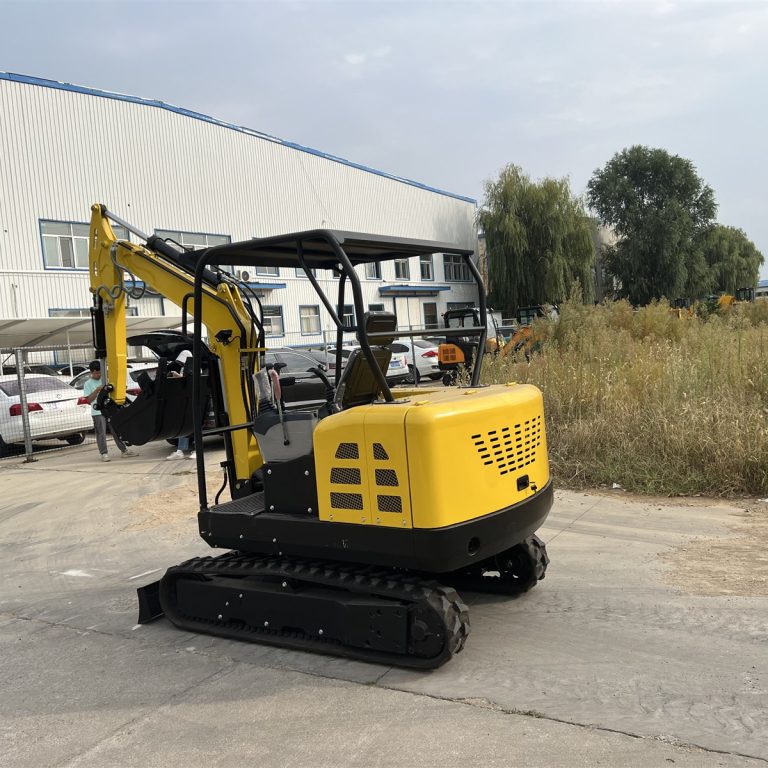
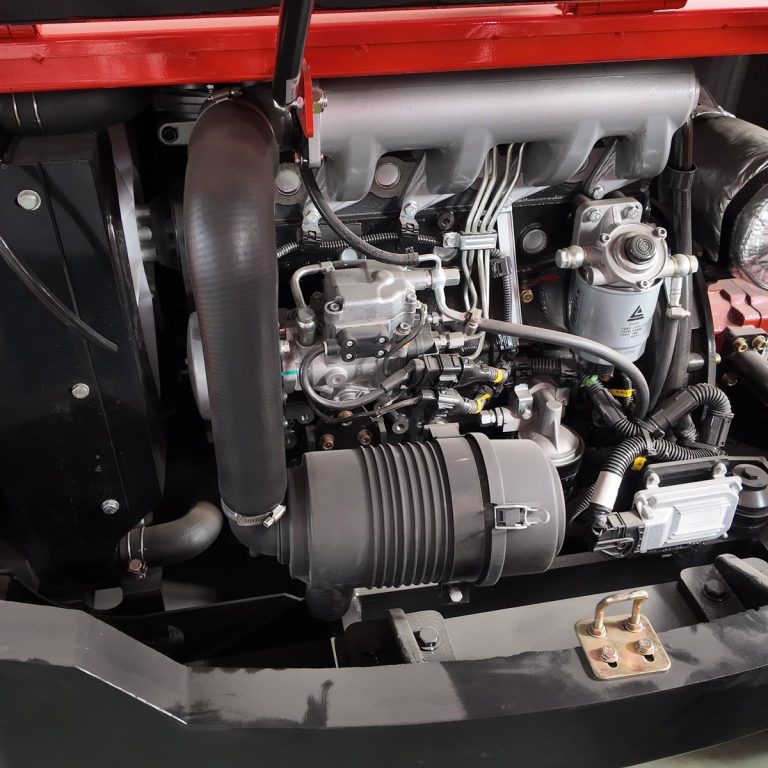
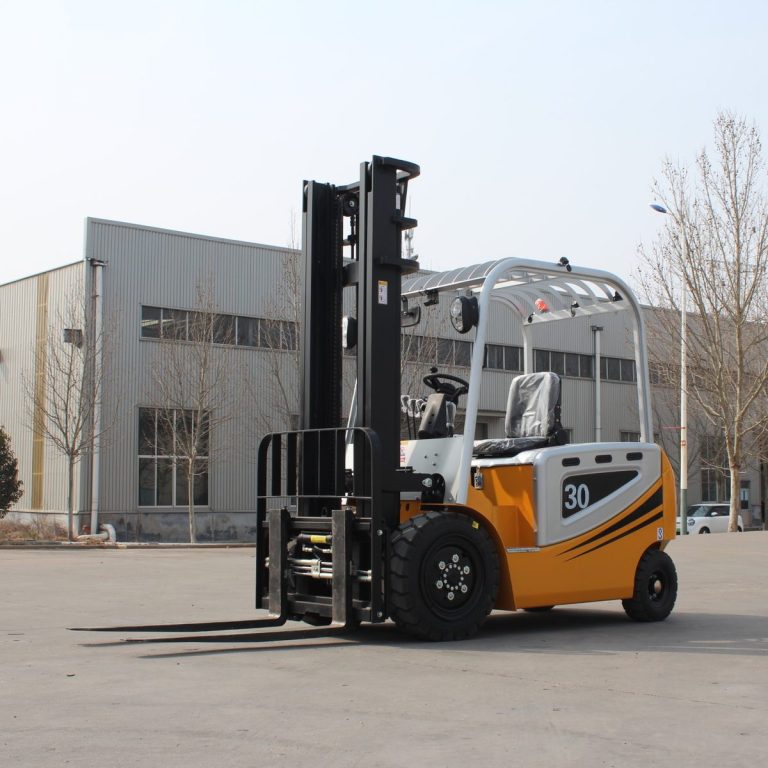
The machine is only one part of the move. Before choosing a loader, excavator or forklift, verify the load, the weakest section of the route, the handling method and the space needed to finish the job.
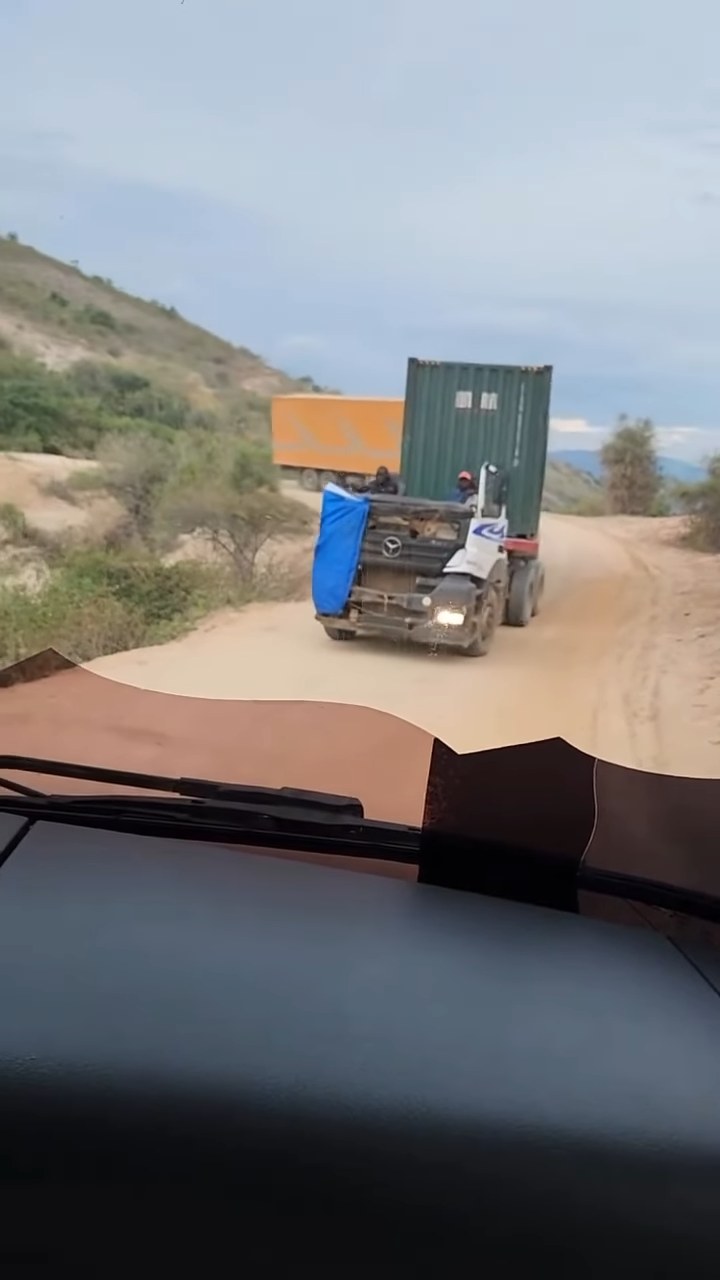
A truck carrying a container along a narrow dirt road can make a difficult move look simple on video. The camera may show that the load moved; it cannot show the load weight, ground bearing strength, vehicle configuration or the plan behind the move. If you are moving a crate, machine component, site material or container-related load, those missing details determine whether the plan is sound.
This guide is for buyers and site managers comparing machines for rough-ground material handling. It is a planning checklist, not an operating procedure or approval for a particular lift. Send Hongli the load dimensions and weight, route photos, ground conditions and destination through our contact page so we can help narrow the equipment class and identify information that still needs a site-specific review.
Start with the load, not the machine name
“Heavy” is not a specification. Write down the verified gross weight, including packaging, contents, lifting frame and any attachment. Record length, width and height, and identify the actual center of gravity if the contents are uneven. A long crate can be difficult even when its weight is within a machine’s headline rating: the load may block visibility, project beyond the path or place its center of gravity farther from the machine than the rating assumes.
Next, define how the load will be supported. A pallet carried on approved forks, a component handled with a rated lifting attachment, and a container moved by specialist transport equipment are different jobs. Do not infer an approved method from a photo of the finished move. Confirm the lifting points, attachment compatibility and capacity for the exact machine and configuration with the manufacturer or qualified supplier.
Ask where the load will start and finish. Can it be picked up without dragging? Must it be raised to clear a trailer or obstruction? Is there enough room to place it down without people stepping into the machine’s path? A machine that can lift a load in open space may still be unsuitable for the final approach.
Walk the entire route and find its weakest point
The route is a connected system. A wide, level starting area does not compensate for one narrow bend, soft shoulder, steep transition or weak crossing. Walk the route from pickup to set-down and include the return path. Measure usable width after allowing for load overhang, not simply the nominal road width. Identify fixed obstacles, overhead services, temporary materials, ditches and drop-offs.
Pay special attention to changes in surface. Compacted gravel may give way to fresh fill or saturated soil after rain. A buried pipe, culvert or service trench may have a lower allowable load than the surrounding ground. Tire or track choice cannot make an unknown crossing safe. Have a competent person assess bearing capacity and any required ground protection where the route is uncertain.
The UK Health and Safety Executive advises that construction traffic routes should be suitable in size and layout, and that pedestrians and vehicles should be separated where possible. Its site traffic guidance also emphasizes reducing reversing and providing room to turn. Local rules and the site’s own traffic plan still govern the job.
The route-first worksheet
| Check | Information to record | Why it may change the equipment choice |
|---|---|---|
| Load | Verified gross weight, dimensions, center of gravity, support points | Determines the handling method and configuration-specific capacity required |
| Ground | Surface layers, drainage, soft spots, buried services, allowable bearing pressure | May require ground improvement, mats, another route or different equipment |
| Geometry | Narrowest clear width, tightest turn, slope, crossfall, overhead clearance | May rule out a machine or require a shorter load-handling arrangement |
| Edges | Ditches, embankments, excavation edges, weak shoulders | May require an exclusion zone or a redesigned route |
| People | Pedestrian crossings, visibility, public interface, banksman positions | May require physical separation, a traffic closure or another schedule |
| Finish | Set-down clearance, trailer height, stability of receiving surface | Determines whether the load can be safely released at the destination |
If any row is unknown, treat the selection as provisional. A brochure capacity is not an answer to an unverified route.
Match the machine to the handling method
For a compact, supported load on a prepared route, a skid steer loader may be worth evaluating if an approved attachment and the exact model’s rated operating capacity suit the job. Compare wheeled and tracked configurations against the actual surface and turning space. Tracks may distribute contact differently, but they do not remove ground-bearing, slope or edge risks. Confirm the rating with the chosen attachment and load position rather than relying on a bare-machine headline.
An excavator is primarily selected for digging and earthmoving. Some jobs involve lifting with excavators, but that requires a machine equipped and rated for that task, suitable lifting points and a specific plan. The HSE’s excavator lifting guidance notes that an excavator is often not the most suitable lifting machine. Do not specify an excavator as a substitute for lifting or transport equipment merely because it is already on site.
A forklift may suit a load on suitable forks and a suitable surface, but rough, rutted ground and narrow edges can defeat the assumption behind an ordinary warehouse forklift. A rough-terrain forklift or telehandler can be considered where its configuration, capacity chart, ground conditions and site plan support the move. For a container or other very large load, specialist lifting and transport equipment may be the correct answer. A compact loader’s ability to move a smaller item near a container is not evidence that it can lift or transport the container itself.
Plan the complete move, including the stop points
Think through the route in three passes
The first pass is dimensional: can the machine and load fit through every gate, bend and work zone without depending on a pedestrian to move an obstacle at the last moment? Measure clear width at the height occupied by the load as well as at tire level. A crate can clear a gate at ground level while striking a post, branch or scaffold higher up.
The second pass is structural: where will the combined machine and load be supported? Photograph the road surface, but also find records for any culvert, bridge, buried utility or recently backfilled trench. Ask the site owner which areas have been prepared for vehicle traffic. If no reliable bearing information exists at a critical point, obtain an assessment before choosing equipment. A product brochure cannot verify the ground beneath the machine.
The third pass is operational: where can the driver see, turn, wait and stop? Mark pedestrian crossings, delivery traffic and places where a spotter can stand outside the hazard zone. Schedule a quiet period if the route passes a shared loading area. Walk the destination backwards from the desired final load position to make sure the machine has enough room to release the load and leave.
The pickup and set-down locations deserve the same attention as the route. Confirm that both surfaces can support the machine and load, and that the load can be placed without leaning on a wall, trailer or person for support. Choose where the machine will wait if access is blocked. Plan the turn or exit before entering a narrow section; reversing with a large load may create blind spots and conflict with pedestrians.
Keep people out of the travel and set-down zones. Where the route crosses a working area, establish a controlled period for the move. A trained spotter may help with visibility, but the spotter must have a safe position and an agreed communication method. A spotter cannot compensate for an undersized route or uncertain ground.
Set clear stop conditions before the machine starts. Examples include unexpected sinking or rutting, a load that shifts, an obstructed escape route, loss of visibility, people entering the exclusion zone, or weather that changes the ground. Stop and reassess rather than continuing to “get past the bad bit.” HSE guidance on safe use of vehicles on construction sites highlights firm, adequately drained routes and control of edges, gradients and pedestrian interaction.
When a different plan is the right answer
Compare the cost of changing the route with changing the machine
Buyers often try to solve a difficult route by ordering a larger machine. That may worsen the ground-bearing problem, reduce clearance or make the final turn impossible. Before moving to a higher capacity class, compare other changes: improving drainage, widening a temporary route, using engineered ground protection, changing the delivery point or dividing the load into manageable units when the goods permit it. Each change needs its own review, but it may solve the real constraint more directly than machine size.
Likewise, a smaller machine is not automatically the economical choice. If it requires multiple moves, repeated handling or an unapproved attachment, the total job may become slower and less controllable. Estimate the full cycle: unloading, securing, travel, set-down, return and any temporary traffic closure. Then compare machines against the complete cycle rather than one lifting moment.
Do not buy or assign a compact machine for the job if the load weight or center of gravity cannot be verified; the intended attachment has no approved rating for the machine; the route includes an unassessed crossing, soft shoulder or edge; the load blocks the operator’s view without a workable traffic plan; or the destination cannot accept and support the load. Those are reasons to redesign the route, split the load where practical, prepare the ground or use specialist transport and lifting equipment.
This is also why “it worked once” is weak evidence. A drier day, lighter load or slightly different route can change the result. A repeatable plan is based on documented limits for the exact machine, attachment, load and site conditions.
What to send when requesting an equipment recommendation
Send one concise job sheet: load weight and dimensions; photos of pickup and set-down; a route sketch with the narrowest point, slopes and crossings; ground type and recent weather; required lift height; intended attachment; destination country; and how often the task repeats. If you are comparing models, ask for the configuration-specific rating and supporting documents in writing. Our product catalog can help identify candidates, but the final choice must be checked against your site and actual load.
FAQ
Is a tracked loader automatically safer on soft ground?
No. Tracks can change ground contact, but the machine, load and route still need an assessment. Soft shoulders, buried services and slopes can remain unsuitable even for a tracked machine.
Can a mini excavator lift a heavy crate?
Only if the exact machine is equipped, rated and approved for the proposed lifting configuration, and the operation is planned by competent people. Excavator operating weight or bucket capacity alone does not establish lifting capacity.
Does a machine’s rated operating capacity cover every attachment?
No. Attachment weight and geometry can change the available capacity. Request the rating for the exact machine and attachment combination and the planned load position.
What if the route is mostly firm but has one muddy section?
Assess that section as a separate constraint. It may need ground preparation, protection, a different route or another machine. The firm sections do not cancel its risk.
Is moving a container the same as moving a load beside a container?
No. A container itself requires its own verified weight, approved lifting or handling points and suitable specialist equipment. Do not use an adjacent compact-machine move as proof of container-handling capability.
What should I ask a supplier before paying a deposit?
Ask for the exact model and configuration, approved attachment, rating at the planned load position, machine dimensions, ground-contact information where available, destination documents and any site conditions the supplier cannot verify remotely.
Need to compare equipment for a real route? Contact Hongli Machinery with the job sheet above. We can help shortlist machines; your site team should validate the route and operating plan before work begins.
About the author: Avicii Meng, Head of Technical Engineering, Hongli Machinery. This article explains equipment-selection questions for buyers and site managers; it does not replace a site-specific lift or traffic plan.