Buying decision: confirm the exact engine code, installed power rating and rpm, emissions documentation for the destination, routine service access, and a parts supply path for the machine you will actually receive.
An engine brand can make a mini excavator easier to shortlist. It cannot tell you whether the installed engine can be serviced where the machine will work. Two excavators advertised with the same engine family may differ in calibration, filter location, cooling layout, and the documentation supplied with the finished machine. The useful purchase question is therefore not simply “Kubota or Laidong?” It is: Can you identify, maintain, and repair the exact engine installation before a breakdown costs you a job?
If you are comparing a Hongli mini excavator, send us your destination country, proposed model, expected hours per year, operating temperature range, and local service arrangements. We can confirm the build configuration available for your order and show which documents and photos should accompany the quotation. View Hongli excavators or contact the export team.
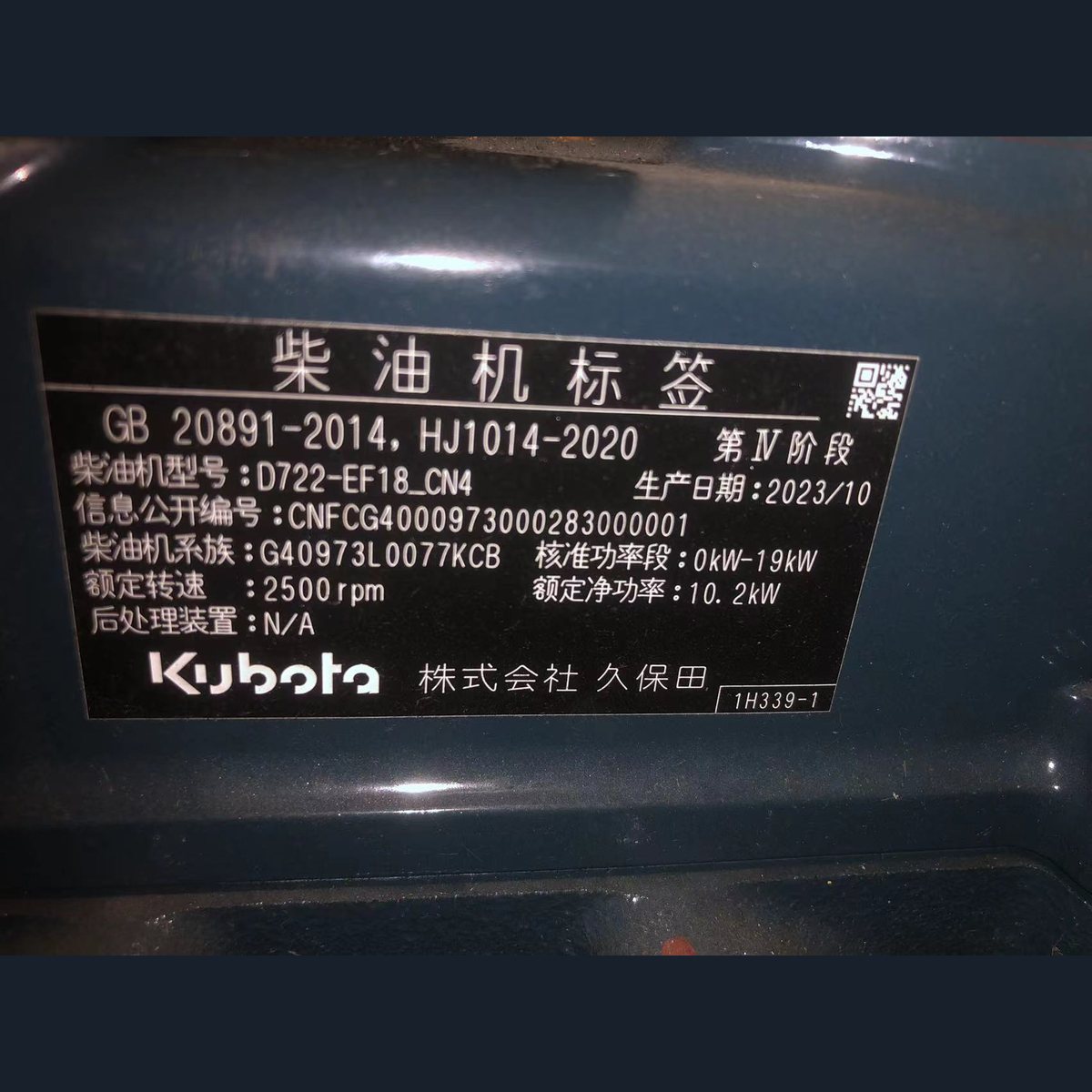
A photographed D722 variant label shows why the full suffix, rated speed and net-power basis matter. It is an example label, not evidence for a current customer order.
Start With the Installed Engine, Not the Brochure Name
Ask the seller for the engine manufacturer, full model and suffix, serial number location, and the excavator model and configuration to which that engine will be fitted. “Kubota engine” or “three-cylinder diesel” is insufficient for a parts order. Even a familiar base designation can have variants and application-specific fittings. The engine nameplate and the machine nameplate answer different questions: the first identifies the power unit, while the second identifies the complete excavator.
Before paying a deposit, request a written configuration sheet that ties the engine code to the excavator model, serial or production reference when available, transmission or hydraulic-pump interface, cooling arrangement, and promised accessories. At the pre-shipment stage, request new photographs of the actual built machine: the machine nameplate, engine nameplate, engine bay from both accessible sides, and the service points discussed below. A catalogue photo proves only what a sample looked like.
If the seller cannot identify the engine code until production, record that limitation in the quotation and set an approval gate before final payment. Do not assume the engine in a promotional photo is the engine in your machine. Our engine brand overview helps you shortlist families; this checklist helps you check the installed unit.
Power Numbers Need a Basis
An engine-power figure should include kW or hp, rated rpm, and whether the number is gross engine power or net installed power. Some quotes provide a headline rating without those conditions. That number may be correct yet unsuitable for comparison with another machine. A lower published number at one rpm is not necessarily evidence of a weaker digger, because digging performance also depends on hydraulic flow, pressure, pump matching, machine weight, and attachment choice.
Ask for the manufacturer data sheet for the exact engine variant, then ask the excavator supplier which rating appears in its machine specification. Keep both documents. If the seller offers a different engine for the same excavator model, request a revised machine specification rather than replacing only one line in a brochure. Cooling, hydraulic matching, exhaust routing, and service access may also change.
Our Laidong 385 versus Kubota D722 comparison explores two specific engine choices. It should not be used to infer that every excavator carrying those names has identical performance or certification.
The Service-Access Test That Photos Can Answer
Request an uncut walkaround video with the engine stopped and the compartment opened. Have the supplier point to the engine-oil dipstick, oil fill, oil filter, fuel filter or water separator, air cleaner, coolant fill and inspection point, belt or fan access, battery isolation point, and hydraulic-oil level and filter. These are not all engine parts, but all affect whether the machine can be maintained efficiently.
The key test is whether a routine item can be reached and replaced without removing another major component. A filter visible in a photo may still be trapped behind a frame member. Ask the supplier to show the path the filter takes out, where the drained fluid goes, and whether ordinary tools fit around it. A short service demonstration can expose a bad layout before the excavator is shipped thousands of kilometres.
Caterpillar’s own mini-excavator maintenance guidance emphasizes daily access to the radiator, fluid checks, filters, and engine compartment, while directing owners to the manual for model-specific procedures. The lesson applies to any brand: verify the actual installation, not an abstract engine specification. See Caterpillar’s daily inspection guidance for an example of the checks an operator needs to perform.
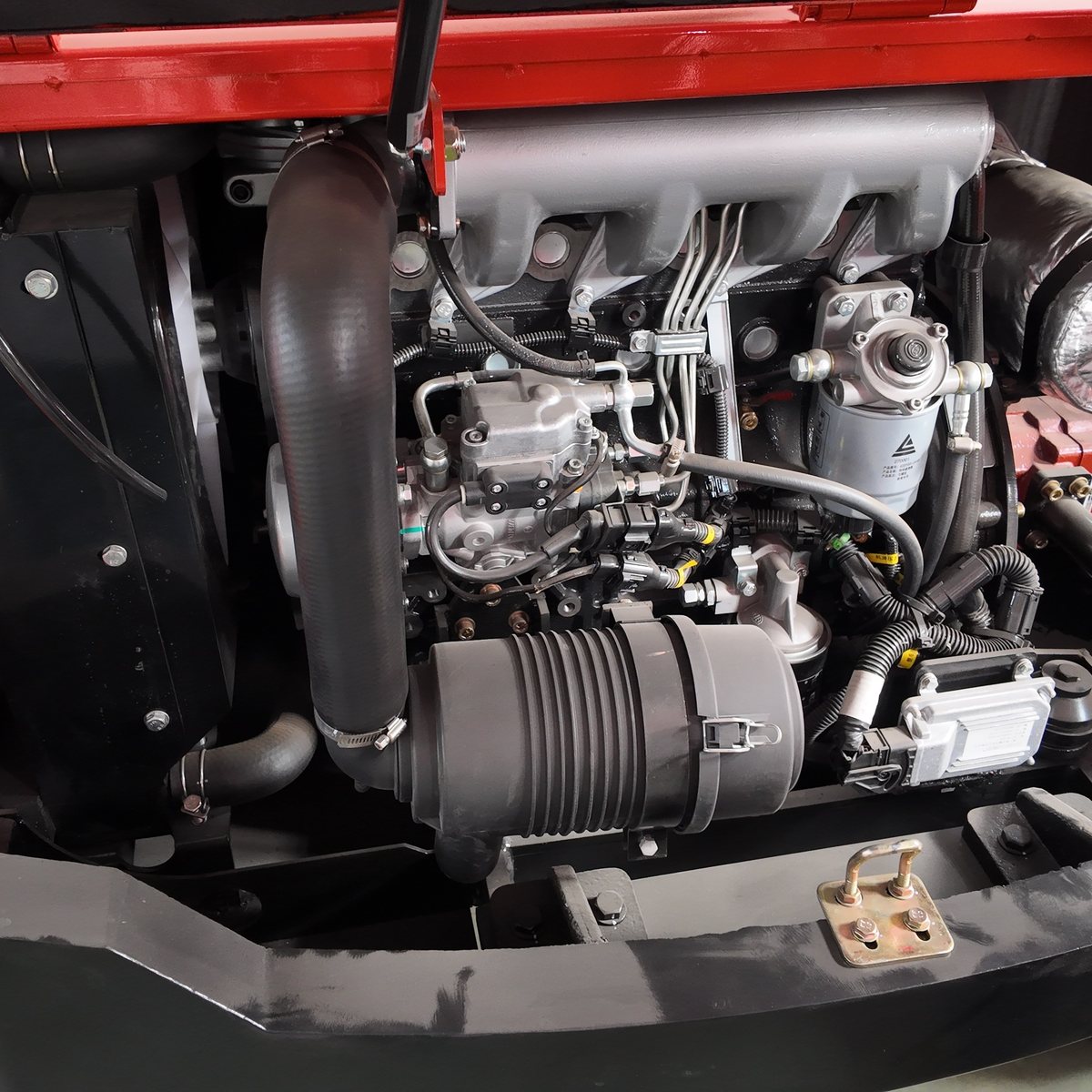
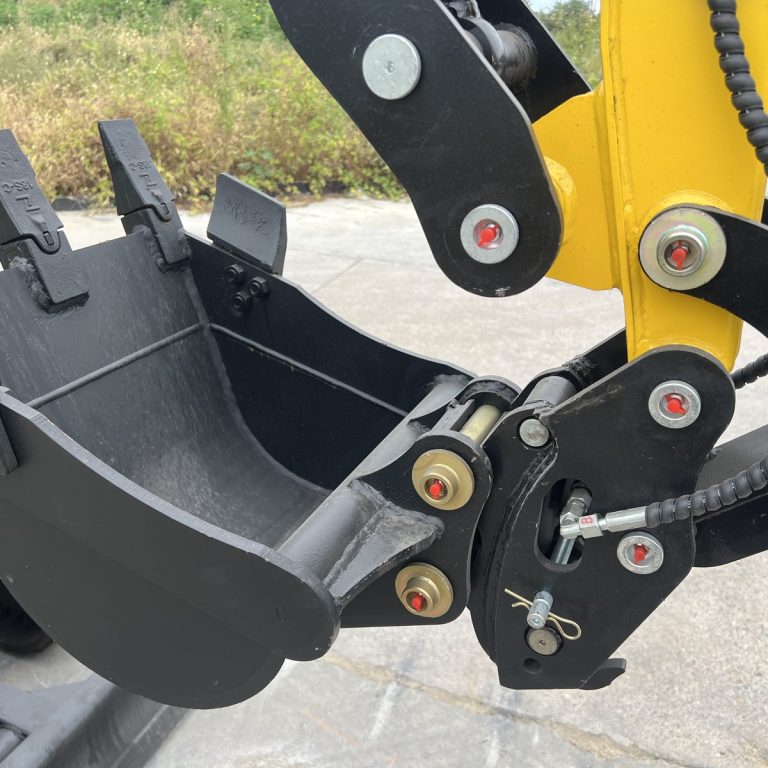
An open engine bay reveals hoses, filtration and access space. The pictured machine is an illustrative unit, not proof of any quoted engine model or emission certification.
Cooling Can Defeat an Otherwise Good Engine Choice
An engine can be well regarded and still run poorly in a machine with a blocked radiator, inadequate airflow, wrong fan arrangement, or little room to clean the cooling pack. For a dusty worksite, ask where air enters and exits, whether debris can be removed from the radiator face, and whether the cooler can be cleaned without major disassembly. For hot or high-altitude work, provide the expected conditions and ask the supplier to confirm that the proposed configuration is suitable. Do not accept “works everywhere” as a substitute for a documented operating envelope.
Inspect photographs for hose routing close to sharp edges, exhaust heat, or moving parts. Then check the real machine before shipment. This is one reason to request the complete engine-bay view instead of a close-up of the nameplate alone. The nameplate tells you what was installed; the wider view helps you judge how it was installed.
Make Parts Availability a Documented Test
“Parts are available” is a weak assurance unless the seller can show how you will order them. Request the engine parts book or a parts list for the exact variant, the maintenance manual, the part numbers for the first scheduled service, and a quote for a starter kit of routine filters and belts. If the machine uses supplier-specific brackets, hoses, sensors, or exhaust components, identify those separately; they may not be available through a local engine dealer even when standard engine filters are.
Then test the local route. Give the exact engine code and sample part numbers to a workshop or parts supplier near your jobsite. Ask whether they can identify the parts, the expected lead time, and whether they can support warranty work on an engine installed in a third-party excavator. A familiar badge can help, but local support varies by country and by engine variant. Record who gave the answer and when, because a casual sales statement is difficult to rely on later.
For a remote fleet, consider purchasing the first service kit with the machine. It is small compared with the cost of idle equipment. It is not a substitute for a repair plan: ask where injectors, starter, alternator, water pump, seals, and application-specific components would come from if they fail.
Emissions: Match Documents to the Destination and Exact Unit
An engine model name alone does not establish compliance with a destination market’s rules. Ask the importer or local authority which emissions and machinery requirements apply to this equipment, date, power class, and use. Then ask the supplier for the relevant engine label, certificate or approval reference, and machine documents for the actual configuration. Keep the label photo and paperwork in the shipment file.
Emissions standards set limits or approval requirements; they do not, by themselves, tell you that every engine must use one named device such as a DPF or SCR system. The installed emissions hardware depends on the particular certified configuration. Nor should a seller treat “EPA,” “Tier 4,” “Stage V,” or “Euro 5” as interchangeable shorthand. Our Tier 4 Final versus EU Stage V guide explains why those labels need separate verification. If the supplier cannot document a compliant configuration for your destination, do not order it on the expectation that registration will somehow be solved after arrival.
One Specification, Two Verification Gates
Use one written specification for the order and verify it twice: before the deposit and again against the actual machine before final shipment payment. The table below is a request-and-evidence checklist, not a claim about a particular Hongli model. Fill the values from the confirmed quotation and the serialised machine.
| Item to lock | Before deposit: written answer | Before shipment: evidence from the actual unit |
|---|---|---|
| Excavator identity | Model, configuration, attachments and destination | Machine nameplate and complete walkaround |
| Engine identity | Manufacturer, full model and suffix, agreed alternative policy | Engine nameplate, serial number and installed-engine photos |
| Power statement | kW or hp, rated rpm, gross or net basis | Matching engine and machine documents |
| Emissions | Destination-specific requirement and promised approval documents | Label and documents for that engine and machine |
| Cooling arrangement | Ambient-temperature assumptions and cleaning access | Engine-bay and radiator-access video |
| Routine service | Manual, service points, filter numbers and first kit | Demonstration of actual access and kit packing list |
| Parts and warranty | Supplier, local service route, exclusions and response process | Matching manuals, part numbers and warranty paperwork |
If a required item cannot be verified, agree in writing whether production can proceed, whether an alternative is acceptable, and who bears the cost of a change. A vague “equivalent engine” clause transfers too much risk to the buyer. It can change parts, emissions documents, and power characteristics without changing the machine’s sales name.
When the Cheapest Engine Option Is the Wrong Buy
The lower initial quote may be reasonable for light, occasional work near a capable workshop with ready access to parts. It can be a poor choice for a rental fleet, remote farm, island project, or contractor whose jobs have a penalty for downtime. In those cases, calculate the impact of a few idle days, freight for urgent parts, technician travel, and resale confidence. The right answer may be a better-supported engine variant, a locally distributed excavator, or a rental machine rather than the lowest-priced imported unit.
Also, do not buy a mini excavator solely because the engine is attractive. Check operating weight, digging depth, transport limits, stability, hydraulic performance and attachment compatibility. A machine that is too small for the work will stay the wrong machine with an upgraded engine. Our mini excavator size chart is a starting point for that wider decision.
Model, Options, and Adjacent Choices
For a specific Hongli model, request a current configuration sheet rather than assuming a single engine is standard across all markets and production dates. Compare the engine options with the same bucket, track, hydraulic, and cabin setup wherever possible. Ask whether an alternate engine changes the machine’s weight, dimensions, cooling parts, controls, warranty, emissions documents, or price. If it does, update the entire order specification.
A lower-cost engine may suit buyers with in-house mechanical support and short transport routes. A more widely supported engine may justify its premium where downtime and parts access dominate. If neither offered configuration has a credible service path in your region, consider another supplier or a different machine class. We would rather lose an unsuitable order than send a machine the buyer cannot keep working.
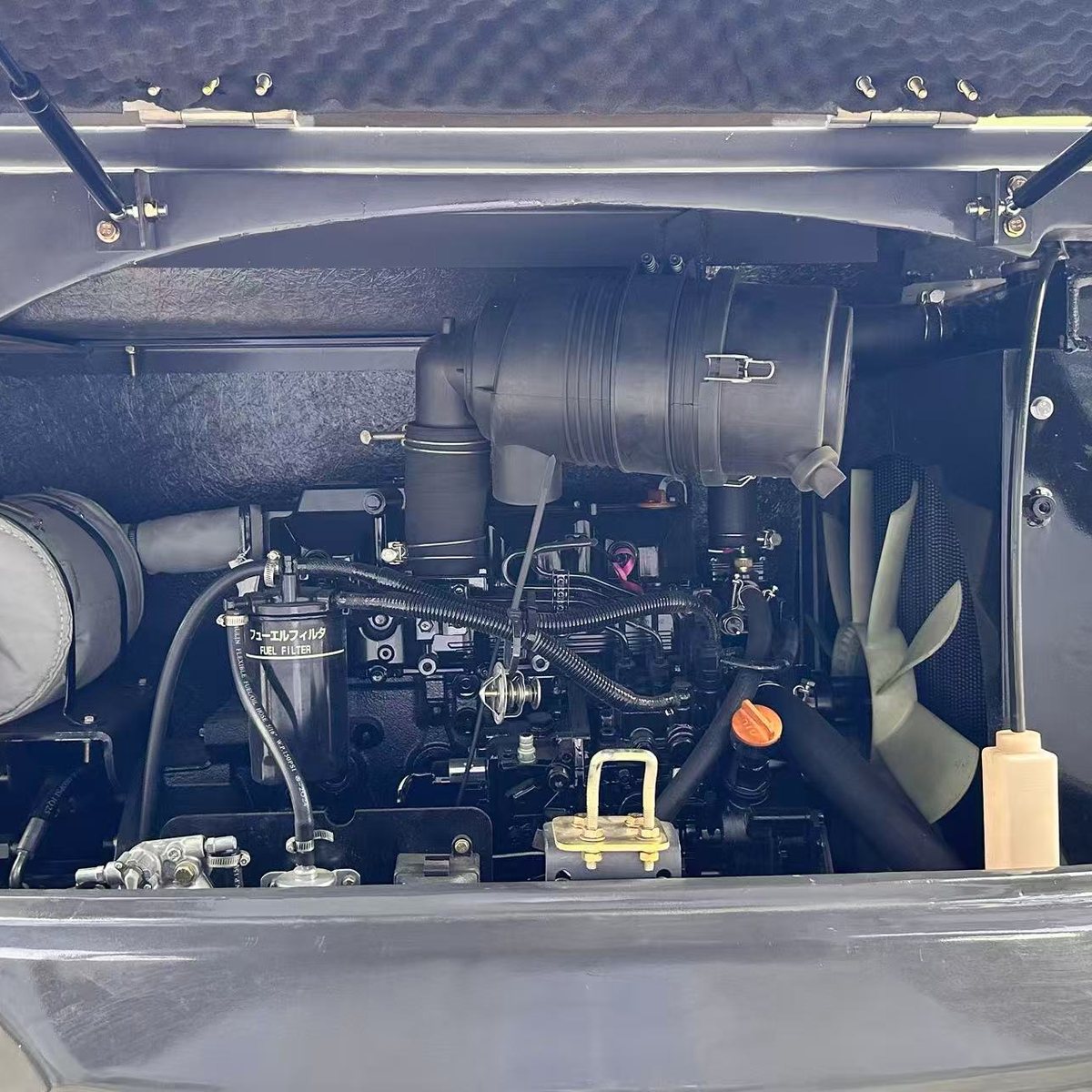
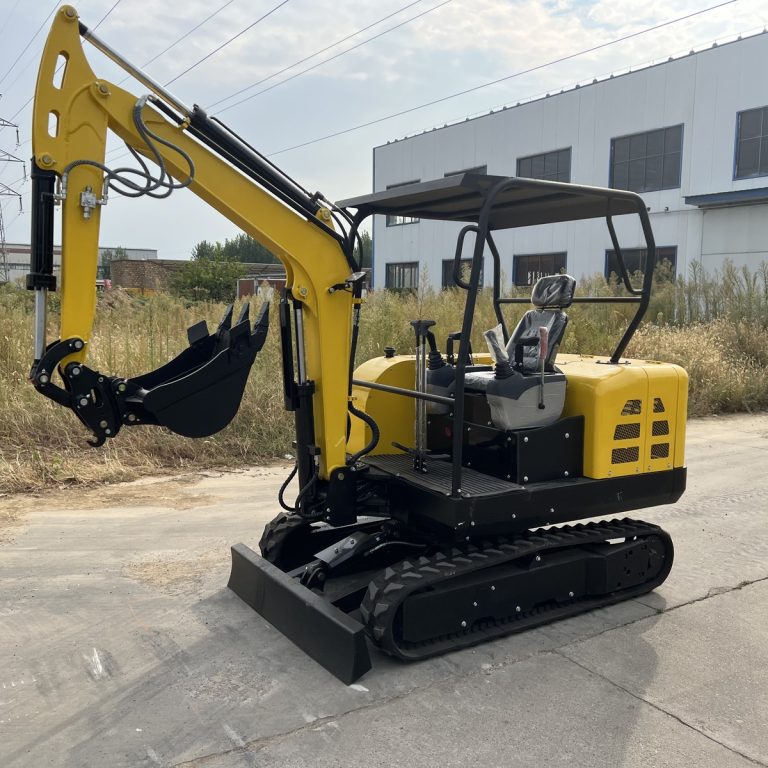
A second machine illustrates how much the installed layout can differ. Ask for fresh photos of the exact machine under quotation.
Frequently Asked Questions
Is a Kubota-powered mini excavator automatically easier to maintain?
No. The exact engine variant, local parts network, installation layout, and documentation determine practical serviceability. Check the part numbers and access on the machine you will buy.
Can I compare two mini excavators by engine horsepower alone?
No. First make sure the ratings use the same units, rpm, and gross or net basis. Then compare the complete excavator’s hydraulic system, weight, stability, and job requirements.
Does an engine nameplate prove emissions compliance?
It helps identify the engine but may not, by itself, satisfy your destination’s documentation requirements. Confirm the applicable rules locally and obtain the matching engine and machine paperwork.
What if the supplier cannot provide the engine serial number before deposit?
That can happen before a unit is built. Agree on the full engine model and permitted alternatives in the order, then require the serial number and nameplate photo of the actual unit before final payment.
Which spare parts should arrive with the excavator?
Start with the first scheduled-service items listed in the actual manual: typically relevant filters, belts and consumables. Confirm the part numbers and quantities for the chosen engine variant rather than ordering a generic kit.
When should I reject an “equivalent engine” substitution?
Reject it if the seller cannot document its power basis, emissions status, cooling and hydraulic compatibility, service access, parts route, and warranty terms for your destination. An unapproved swap should not be treated as a minor cosmetic change.
Send a Configuration We Can Verify
For a useful quote, send the excavator model or job, target digging depth and access width, destination country and port, expected annual hours, site temperature and dust conditions, preferred engine or local parts network, attachments, and expected quantity. We can then discuss available engine configurations and the evidence you should receive with the order. Request a configuration and price or email hongli@hongli-mach.com; WhatsApp: +86 131 0548 1184.
About the Author
Avicii Meng, Head of Technical Engineering | Hongli Machinery. Avicii works with buyers on machine configuration, export documentation, and practical pre-shipment checks.