Mini excavator engines are often compared by brand, but the brand name does not identify the installed engine variant, power rating or destination-market approval. Kubota, Yanmar, Perkins, Briggs & Stratton and Chinese suppliers such as Laidong and Changchai offer different configurations. The practical choice depends on the exact engine suffix, the finished machine, local parts access and the documents required where it will operate.
Quick Reference: Mini Excavator Engine Brands
| Brand or family | Why buyers compare it | Verify before ordering |
|---|---|---|
| Kubota | Multiple compact diesel variants | Full suffix, rating basis and certificate for the exact unit |
| Yanmar | Industrial diesel options across size classes | Variant, installed rating and destination approval |
| Perkins | Industrial engine and service options | Local dealer coverage and exact configuration |
| Briggs & Stratton | Gasoline options on some very small machines | Fuel type, duty cycle and local rules |
| Laidong / Changchai | Cost and local-parts trade-offs | Actual variant, emissions paperwork and service route |
At Hongli, buyers often ask which engine brand to choose. This overview explains the choices; our Mini Excavator Engine Buying Checklist shows how to verify the exact engine code, installed rating, service access, parts route and documentation before deposit. A sample photo or base engine name does not establish the configuration of the machine that will ship.
Why the Engine Brand Decision Matters
Engine choice affects maintenance access, parts ordering and the documents needed for the finished excavator. The hydraulic system, cooling package and engine installation are also determined by the machine builder. Buyers should compare the complete machine rather than treating engine brand as a stand-alone performance score.
One issue buyers often overlook is that engine selection is not just a technical decision — it is a logistics decision. A contractor in California and a rental fleet operator in Texas may both be purchasing the same 2-ton chassis, but the right engine for each situation is different. Regional parts availability, local dealer infrastructure, and downstream resale plans all feed into the choice. Understanding what the options actually are is the starting point.
Engine Brand Comparison at a Glance
| Brand | Example consideration | Buyer check |
|---|---|---|
| Kubota | Compact diesel variants | Match suffix and engine-family certificate to destination |
| Yanmar | Industrial diesel variants | Check the actual approval and nearby parts supplier |
| Perkins | Serviceable industrial engines | Confirm the exact variant and local support |
| Briggs & Stratton | Gasoline power on some micro machines | Check fuel, duty cycle and applicable approval |
| Laidong / Changchai | Value-oriented options | Check the actual certificate and parts route |
The Major Engine Brands: An In-Depth Look
Kubota
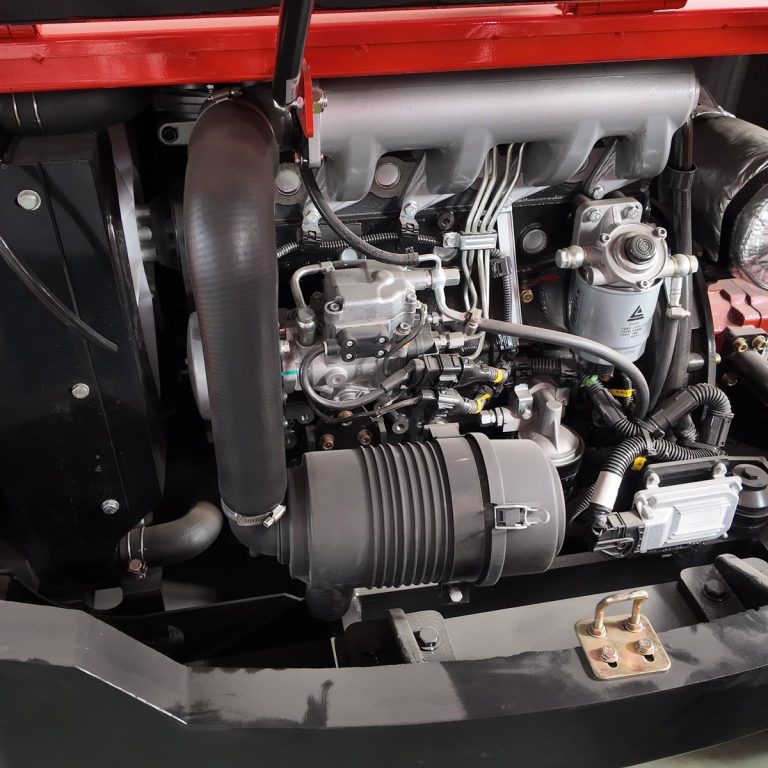
Kubota offers several D722 and D902 variants. Power and certification cannot be inferred from those base names alone. For example, Kubota lists the D722-E4B at 20.0 hp (about 14.9 kW) at 3,600 rpm on an SAE J1995 gross-intermittent basis, with specified EPA/CARB Tier 4 and EU Stage V approvals. Its older D722-E2B has a different listed emissions level despite the same base designation. A photographed D722 label on this site shows a different 10.2 kW net rating at 2,500 rpm; the figures are not interchangeable.
Kubota’s D902-K specification lists 18.5 kW at 3,600 rpm for that particular variant. The previous 15.8 kW claim did not state a suffix, rpm or rating basis, so it could not support a meaningful comparison. Request the data sheet and emissions label for the engine fitted to your excavator, then compare the complete machine’s hydraulic and working specifications.
Do not assume every Kubota engine or every machine with a Kubota badge carries the same EPA, CARB or EU approval. The engine family, production year, destination and installation must match the relevant paperwork. Use our pre-deposit engine checklist to record that evidence.
Yanmar
Yanmar offers different industrial diesel variants, including configurations listed for EU Stage V and others listed for EPA Tier 4. Its 3TNV88 product page describes an 18.4 kW at 2,000 rpm EU Stage V configuration; that page does not make every 3TNV88 installation dual-certified. Record the complete model suffix, rated output and documents for the unit under quotation.
For a buyer, the practical question is whether a nearby service shop can identify and supply parts for that exact engine. An international brand name does not guarantee a particular lead time or warranty path in every region. Ask the local supplier before ordering.
Perkins
Perkins is one option where a documented industrial-engine configuration and a reachable service provider fit the project. Perkins lists the 403J-11 at up to 18.4 kW at 2,800 rpm on its EU Stage V product page. That product page alone does not establish EPA approval for an excavator sold into another market.
Ask the local Perkins or equipment dealer whether it supports the specific engine suffix and installed application, which parts it stocks, and how warranty claims would be handled. Do not assume a Cat outlet automatically services every Perkins-powered third-party machine.
Briggs & Stratton (Vanguard)
Briggs & Stratton gasoline engines appear on some very small machines. The relevant question is whether a specific engine and excavator combination meets the intended duty cycle, local fuel and emissions requirements, and the buyer’s maintenance capacity. A lower purchase price does not by itself prove lower operating cost or suitability for commercial work.
Domestic Chinese Engines: Laidong, Changchai, Xincha
Laidong, Changchai and Xincha offer engine families used in Chinese-manufactured equipment. Their base model names do not prove power output, emissions approval or parts availability for a particular export machine. The old phrase “Euro V equivalent” is too vague for off-road machinery: EU Stage V type approval is a specific regulatory framework, not a label a seller can replace with a general equivalence claim.
Do not choose or reject an engine solely by its country of origin. Ask for the full suffix, emissions label, approval documents for the destination and a local service plan. If the seller cannot document a compliant configuration for the intended market, do not rely on a verbal assurance that import or registration will be resolved after delivery.
How to Choose: A Decision Framework
Step 1: Confirm Destination Requirements First
First identify the rules that apply to the machine, engine power class, model year and destination. For a U.S.-bound nonroad diesel engine, obtain the emissions label and the certificate information for its engine family and production year. The EPA explains that the engine-family number on the label is needed to retrieve the relevant certificate; a brand or base model alone is not enough. Confirm any import or local-use requirements with the appropriate authority or importer before paying a deposit.
Step 2: Check regional parts availability
Ask a workshop or parts seller near your operating site whether it can identify the exact engine variant and obtain its routine filters and repair parts. Request sample part numbers and a current lead-time estimate, including any supplier-specific hoses or brackets. Local support matters more than a general claim about a global dealer network.
Step 3: Match power output to machine weight
Machine weight is only one part of engine selection. Confirm the engine’s installed rating in kW or hp, rated rpm, and gross or net basis. Then check the excavator’s hydraulic flow and pressure, cooling package, attachment loads and intended duty cycle. The old table pairing engine names with weight bands was too broad to serve as a specification. Request the current build sheet for the actual excavator model instead.
Step 4: Consider downstream certification needs
If the machine may work or be resold in another market, verify that market’s requirements separately. An approval for one framework does not automatically establish approval for another, and a paper certificate must match the engine family and actual machine. Our Tier 4 Final and EU Stage V guide explains the distinction.
Check the Local Service Network, Not Only the Badge
A familiar brand can simplify service only if the local network supports the exact engine installation. Before ordering, ask a nearby workshop to identify a sample filter part number and confirm whether it can support that engine in a third-party excavator. This direct check is more useful than assuming one manufacturer’s entire dealer network will handle the machine.
Real-World Configuration Examples
Example: contractor buying for a regulated destination. The buyer first confirms the rules with the importer, then requests the actual engine-family paperwork and checks service access on the proposed excavator. The suitable brand is the one with a documented configuration and a workable local support route; this cannot be determined from the destination name alone.
Example: remote rental fleet. The fleet compares downtime exposure, local workshop capability, routine filter availability and freight lead times before choosing an engine variant. An engine with a lower purchase price may still be the worse option if a routine part is hard to obtain. These are decision examples, not claims about specific customer orders or regional dealer lead times.
Conclusion
The engine badge is a useful starting point, but the purchase decision belongs to the exact engine and installed machine. Before deposit, lock the complete model suffix, power rating and rpm, rating basis, destination-specific documents, routine service access, parts route and warranty contact. Before final payment, check the serialised machine against that same written specification.
For a step-by-step request list and pre-shipment evidence table, use our Mini Excavator Engine Buying Checklist.
Frequently Asked Questions
What is the most reliable mini excavator engine brand?
No brand is universally most reliable for every mini excavator. Compare the exact engine variant, installation, maintenance record, parts route and local service capacity for your job.
Can I import a mini excavator with a Chinese engine into the U.S.?
A Chinese engine is not automatically eligible or ineligible based on origin. For a U.S.-bound nonroad diesel machine, verify the applicable rules and the EPA engine-family certificate and label for the actual engine before ordering.
Is Yanmar better than Kubota for mini excavators?
Neither brand is universally better. Compare the complete variants, installed ratings, emissions documents and support available near the worksite.
What does EPA Tier 4 Final mean for excavator engines?
EPA Tier 4 refers to U.S. emissions requirements for covered nonroad diesel engines. Applicable limits depend on engine power and model year. The standard does not by itself mandate one named aftertreatment device for every engine.
How do I know if an engine is EPA Tier 4 Final certified?
Request the actual emissions label and engine-family number, then match them to the relevant model-year certificate and the installed machine. EPA provides a certificate lookup path; ask the importer or regulator about destination-specific requirements.
Avicii Meng is Head of Technical Engineering at Tai’an Hongli Machinery Equipment Co., Ltd. Hongli manufactures mini and compact excavators, skid steer loaders, forklifts, and backhoe loaders for export to North American and international markets. Contact: hongli@hongli-mach.com | hongli-mach.com