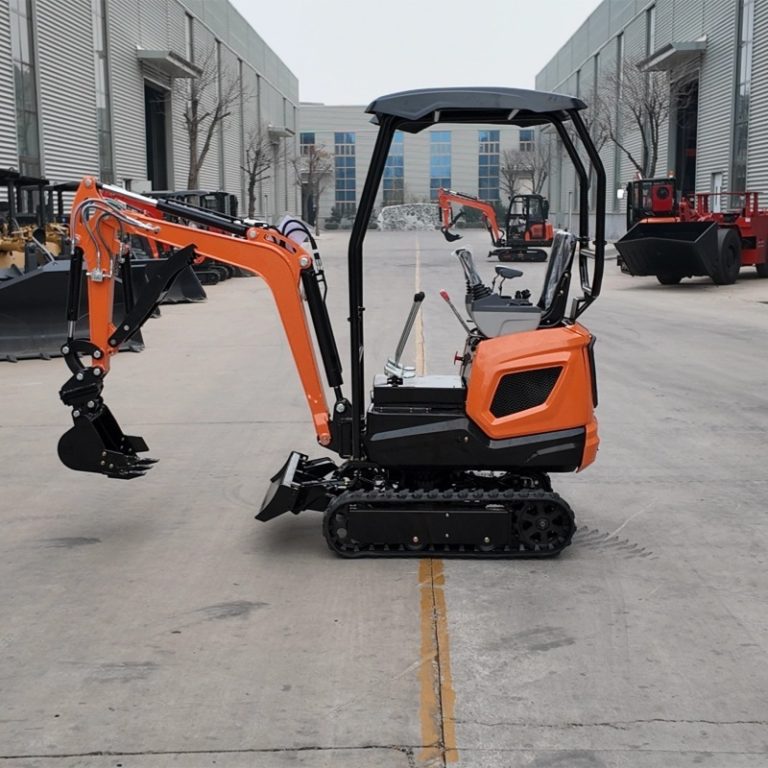
Two mini excavators can sit in the same advertised weight class and still suit different jobs. One retracts for a narrow entrance. Another gives you the enclosure you want but changes the transport calculation. A third looks attractive on maximum depth yet needs a closer look at the actual trench profile.
Our five-model shortlist is Bobcat E20, Cat 302 CR, Kubota U20-3α, Takeuchi TB225 and Hongli HL22. Compare them by access width, working range, transport weight and local support to find the right fit for your jobs.
Hongli supplies the HL22 featured in this guide.
Here, “2-ton” means the approximate metric weight class, including configurations above 2,000 kg. It does not mean every candidate weighs less than two metric tonnes or two US short tons. US and UK reference versions are identified below; obtain the local specification for the machine you intend to purchase.
The Catch: You May Be Comparing Different Configurations
Before deciding which machine gives you more for the money, make each quotation describe a complete build. Record the enclosure, arm, tracks, bucket, coupler and included equipment. Then read what the stated weight includes.
A common comparison mistake is to take a light canopy configuration from one listing and a heavier cab configuration from another, then treat the difference as a brand advantage. Similarly, the greatest advertised depth may belong to an optional arm rather than the machine being quoted.
Your comparison should answer two questions separately: does this build fit the job, and is this the build included in the price? That is more useful than finding the largest number in each brochure.
If you have not decided on the machine class yet, start with the mini excavator size chart. This shortlist is for buyers already comparing machines around the two-tonne class.
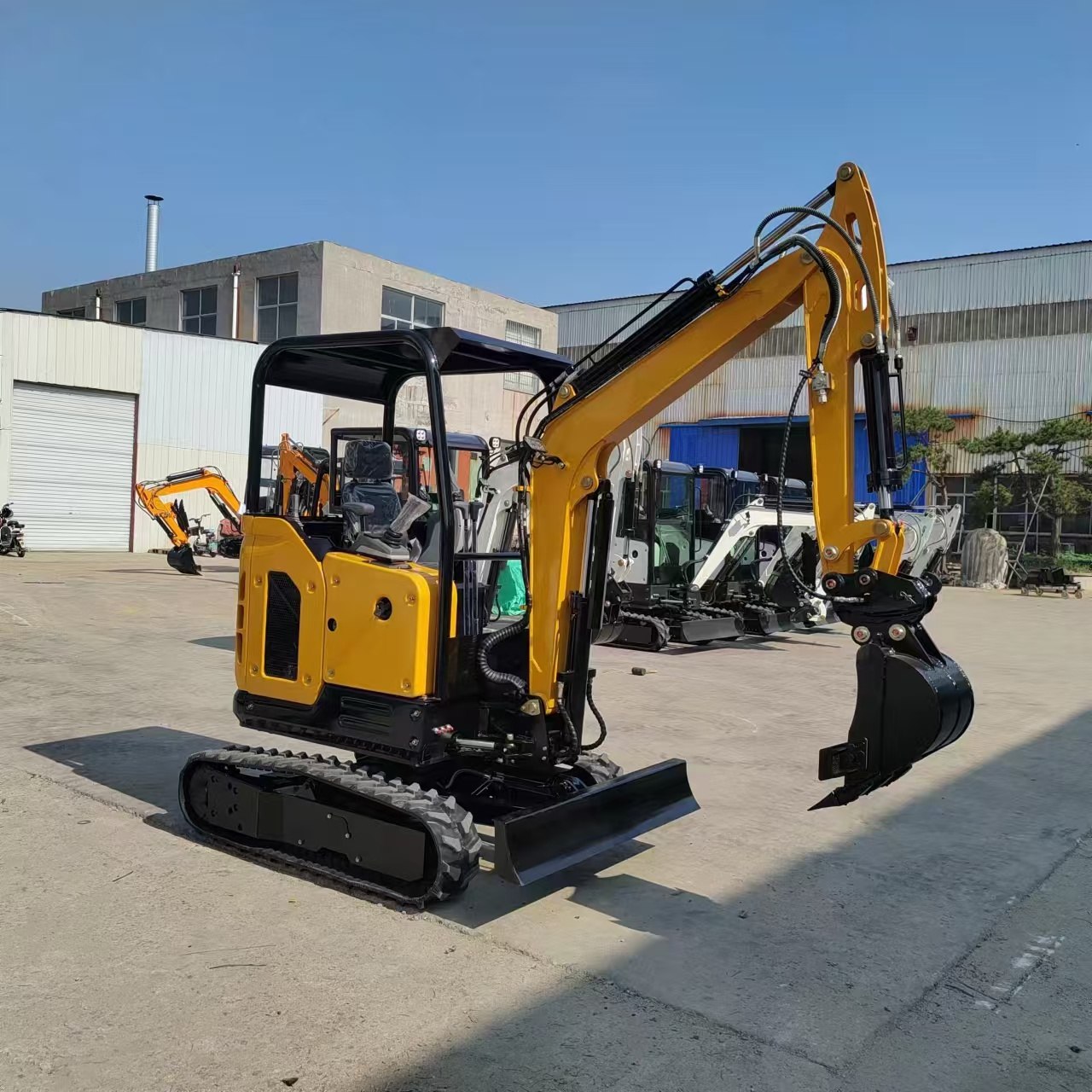
Five Candidates at a Glance
| Model and reference market | Published operating-weight reference | Why put it on the shortlist? |
|---|---|---|
| Bobcat E20 — current US page | 4,167 lb / approximately 1,890 kg | Retractable access width for narrow approaches |
| Cat 302 CR — US page | 1,918–2,262 kg / 4,229–4,987 lb across listed configurations | Configuration choice and optional joystick travel control |
| Kubota U20-3α — UK range guide | Canopy: 2,255 kg / approximately 4,971 lb; cab: 2,455 kg / approximately 5,412 lb | Zero-tail-swing layout with an adjustable undercarriage |
| Takeuchi TB225 — current US page | 2,265 kg / approximately 4,993 lb | Variable-width undercarriage and accessible routine service points |
| Hongli HL22 — catalog reference | 2,100 kg / approximately 4,630 lb | A configuration-based export option with a listed 2,752 mm maximum digging depth |
These are source-specific operating-weight references, not ready-to-load shipment weights. Converted values are rounded. For transport planning, use the weight of the actual machine and equipment being carried.
1. Bobcat E20: Start Here When the Entrance Is the Constraint
The current US E20 page describes an undercarriage that retracts to 38.6 in (about 980 mm) and expands to 53.5 in (about 1,359 mm). Its outer blade sections fold to match the reduced access width.
That makes it a useful candidate when an entrance would rule out a wider fixed arrangement. Measure the route beyond the gate too: a machine that passes the opening still needs space to turn, expand and work.
Consider it when: narrow access is a recurring restriction and you can accommodate the operating setup once inside.
Look elsewhere when: the actual job needs a larger working envelope or your route does not permit the required setup. A retractable undercarriage does not make every confined site workable.
For Europe, review the E20z R2-Series separately. Bobcat’s European page lists 1,980 kg operating weight and 2,364 mm digging depth. It is not a metric relabeling of the US E20; do not combine their specifications in one quotation comparison.
2. Cat 302 CR: Compare the Build as Carefully as the Model
Caterpillar lists minimum and maximum canopy and cab weights for the 302 CR. Its published range spans 1,918–2,262 kg, while the headline weight represents the maximum cab figure. This is a useful example of why a model name alone does not settle transport planning.
The product page also presents Stick Steer as an option, allowing joystick travel control. Ask to try the quoted arrangement if frequent repositioning is part of your day.
Consider it when: you want to compare enclosure and control choices against a specific work routine.
Look elsewhere when: the configuration you want exceeds your transport or access constraints. Do not use the minimum canopy weight to justify a fully equipped cab purchase.
Keep the arm configuration on the quote as well: the page contains separate working-range tables. Choose the arm that suits the excavation rather than assuming the headline depth applies to every offered build.
3. Kubota U20-3α: Check the Weight Behind the “U20” Name
Kubota’s UK range guide lists 2,255 kg canopy and 2,455 kg cab operating weights for the U20-3α. It separately lists lower machine weights, so those two labels should not be interchanged.
The guide describes zero tail swing and tracks adjustable between 1,300 and 1,500 mm (51.2–59.1 in). That combination is relevant where rear clearance matters and the approach accommodates its width.
Consider it when: the work area makes rear swing an important selection factor and the quoted configuration fits your transport plan.
Look elsewhere when: your essential entrance is narrower than the published retracted width or your weight allowance is below the configured machine’s requirement.
This is a UK-document reference. A US buyer should establish local availability and the applicable specification with the supplier rather than treating a UK listing as a US offer.
4. Takeuchi TB225: Include Daily Servicing in the Demonstration
Takeuchi’s current US page lists 2,265 kg operating weight and 2,580 mm digging depth, with a variable-width undercarriage. It also describes an overhead hood and side panels that open to reach routine service points.
That gives a buyer something practical to assess during a demonstration: can you reach the checks you will perform regularly, and can you see what needs attention without unnecessary dismantling?
Consider it when: you want an adjustable-width machine and can evaluate its operating setup, controls and service access in person.
Look elsewhere when: the complete machine and tools exceed your transport allowance, or the working range falls short of recurring jobs. Convenient service access is useful, but it does not replace suitable excavation capacity.
Use the local configuration sheet for the final comparison; enclosure and regional equipment can change the package.
5. Hongli HL22: Compare the Required Digging Position
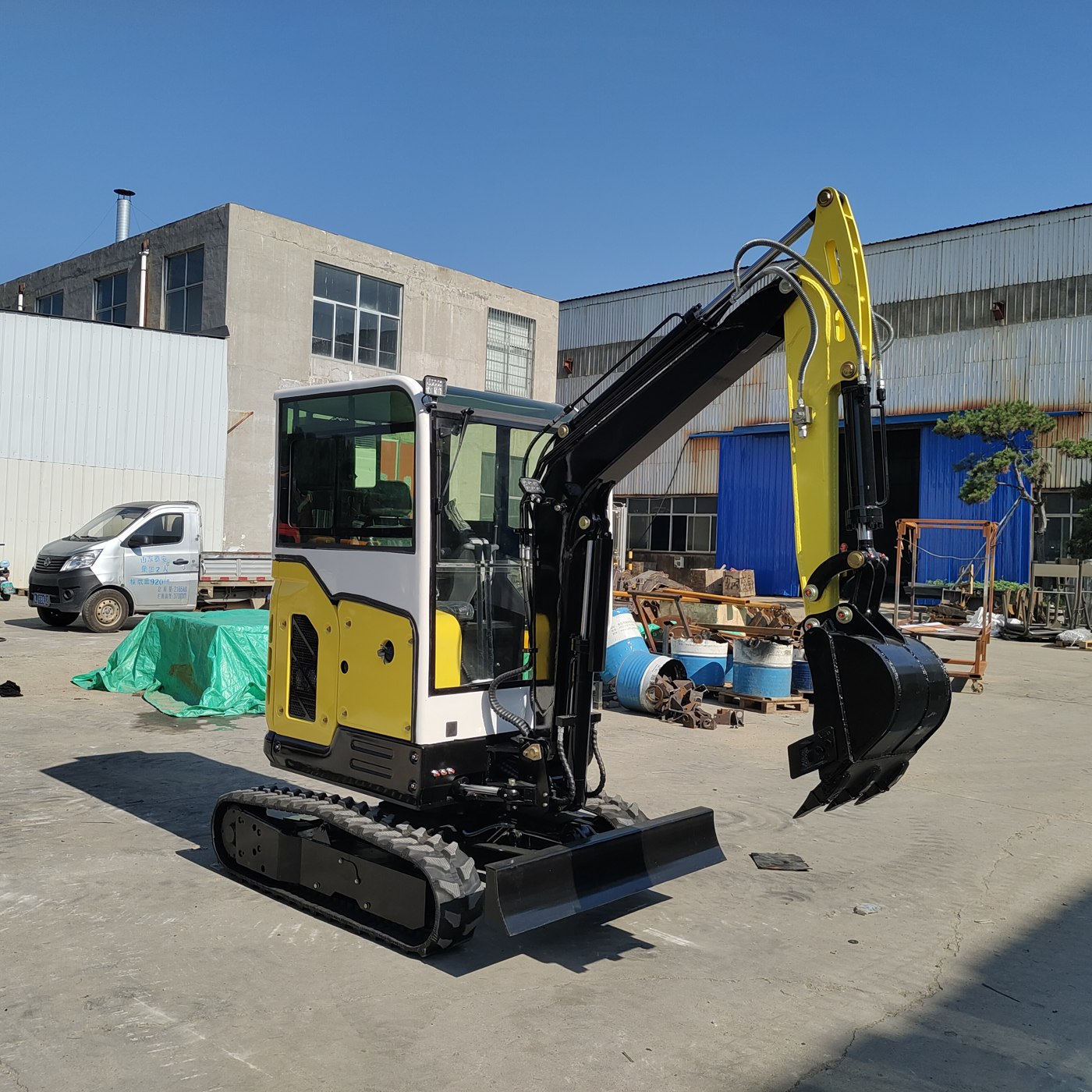
The Hongli HL22 catalog lists 2,100 kg operating weight, 1,350 mm overall width (53.1 in), a 0.07 m³ bucket and 2,752 mm maximum digging depth (about 9 ft).
It belongs on the shortlist when the route admits that width and you want an export quotation built around the excavation and equipment you need. Send the required depth together with the machine’s proposed position, not just a request for “a two-ton machine.”
Consider it when: the documented working envelope fits your jobs and the supplier’s written configuration, delivery and support arrangements meet your requirements.
Do not choose it when: access is narrower than the quoted machine, you need a lifting capacity that has not been established, or your business depends on local service that has not been arranged.
Specify the engine, enclosure and undercarriage alongside the working-range requirements in your order.
Make a Shortlist by Eliminating the Wrong Fit
Imagine an installer who regularly passes between existing buildings, excavates short service trenches and moves between customers.
First, the installer records the narrowest point along the route and the available work area. A machine too wide for the approach leaves the shortlist even if its excavation figures look attractive. A retractable candidate stays only if there is room to use it in the manufacturer’s prescribed working setup.
Next comes the excavation profile. Draw where the tracks can stand, the required trench depth and where the spoil must go. A maximum depth measured at one position is not a promise that the bucket reaches every point in that drawing. The digging-depth guide explains how to check the required bucket position against the working-range drawing.
Then consider the recurring attachment. If the job requires a powered tool, send its flow, pressure and return requirements with the inquiry. If it only needs digging buckets, keep the initial package focused on those tasks. Paying for an option you rarely use is different from buying one that makes your usual work possible.
Finally, compare delivery and support for the machines that pass those checks. Request detailed offers for the two strongest fits.
Compare the Complete Delivered Cost
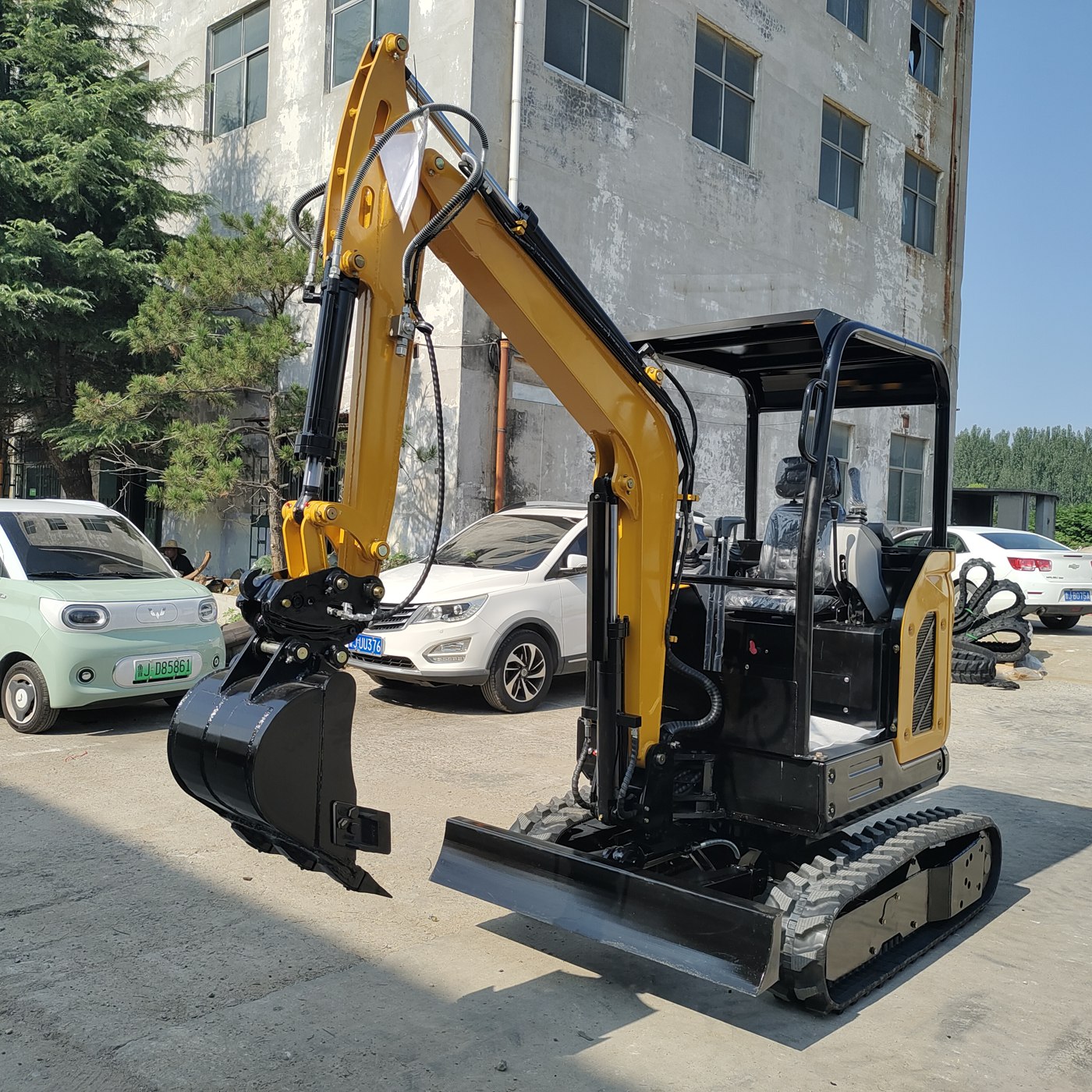
Ask each supplier to quote against the same job brief and identify what is included. Keep the actual model-specific components visible rather than pretending different configurations are interchangeable.
For a US delivery, distinguish collection, delivery to a port and delivery to your address. For a UK or EU delivery, make the same distinction and identify the treatment of applicable taxes and import charges in the offer. Do not compare a destination-ready quotation with an equipment-only price as if the difference were entirely machine cost.
A useful written offer identifies the enclosure, arm, bucket, coupler, auxiliary equipment, engine version, delivery scope and applicable documentation. It also explains who handles diagnosis, how parts are obtained, and which labor or freight costs the warranty covers.
Request a delivered total for your postcode and selected configuration. Include additional setup costs, and compare service arrangements alongside the purchase price.
If the purchase requires an additional trailer or hired transport, include that in the decision. Use the configured machine and carried equipment—not the “2-ton” label—to establish the load to be transported.
Questions Buyers Ask About 2-Ton Mini Excavators
What is the best 2-ton mini excavator?
There is no single winner for all buyers. Start with the machine that fits your access and excavation profile, then compare the complete configuration and support offer.
Does a 2-ton mini excavator weigh less than 2,000 kg?
Not necessarily. A nominal class is not a weight limit. Read the operating-weight definition and the quoted configuration. Also distinguish metric tonnes from US short tons before comparing figures.
Can I tow one with my existing vehicle and trailer?
The class name cannot answer that. Establish the actual transported load, then check the vehicle, trailer, hitch and applicable requirements for your location and use. Include the tools and other items carried with the machine.
Is the machine with the deepest specification the best for trenching?
Only if its working envelope suits the trench from the available setup position. Reach, spoil placement, bucket choice and access can change the practical result. Maximum depth alone does not establish output per hour.
Are US and European models directly comparable?
Use the exact regional model and configuration. Similar names can refer to different versions, while weight definitions and included equipment can differ. Treat a foreign-market specification as background until the local offer identifies the supplied build.
When should I leave the Hongli HL22 off my shortlist?
Leave it off when the route or task does not fit, the required capacity is undocumented, or the delivery and service arrangements do not meet your needs. Choosing a suitable alternative is better than ordering a configuration that cannot support the work.
Request an HL22 Comparison Against Your Job
Send your destination, access measurements, excavation sketch, intended attachments and delivery requirements. Tell us which competing configuration you are evaluating so the comparison can address the same work.
Ask Hongli for an HL22 configuration and quotation. We will discuss the documented machine against your requirements, including where another configuration or class deserves consideration.
Source Notes
Manufacturer information reviewed November 19, 2026: Bobcat Company, US “E20 Compact Excavator” and European “E20z Mini Excavator, R2-Series”; Caterpillar, US “302 CR Mini Excavator”; Kubota UK, “Range Guide,” U20-3α entry; Takeuchi US, “TB225 Compact Excavator”; Hongli Machinery, “HL22 Small Excavator.” These support the model-specific specifications and features above. Regional availability, order equipment and commercial terms require the supplier’s current offer.
By Avicii Meng | Hongli Machinery.