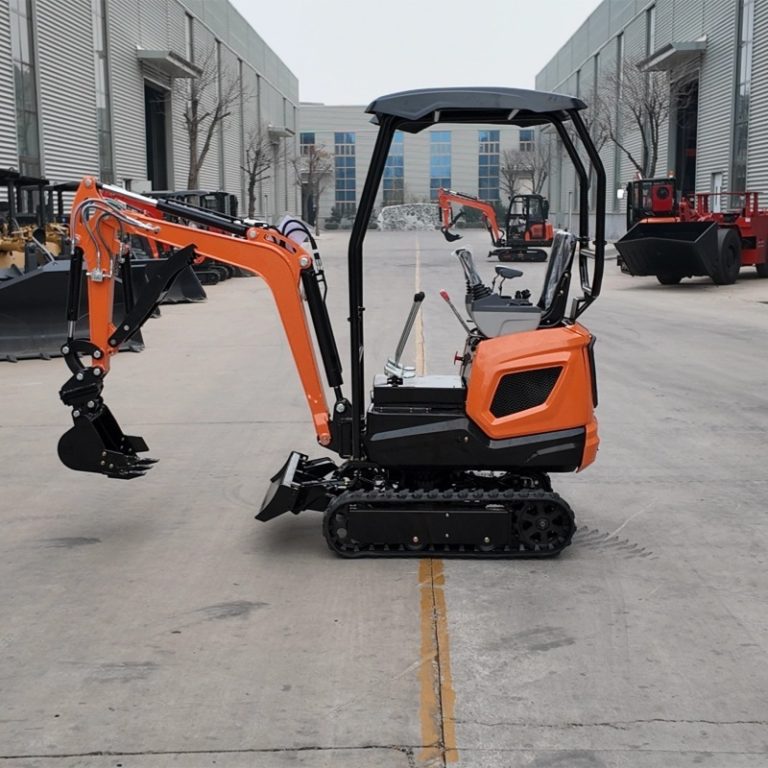
Maximum digging depth, vertical-wall depth and flat-bottom depth answer different questions. Check the working-range drawing against the excavation you actually need.
The brochure says the excavator can dig deeper than your trench. That sounds like the decision is made—until you ask where the machine must stand and what shape it has to finish.
Maximum mini excavator digging depth is a geometric limit for a stated configuration and reference position. It does not, by itself, establish the depth of a straight vertical cut, the length of level bottom available from one position, or the ability to complete a whole working cycle on your site.
A useful buying check connects the required excavation to the actual boom, arm, bucket and coupler configuration. Then it checks access, the permitted machine position and the route for removing the material.
Send Tai’an Hongli Machinery Equipment Co., Ltd. your required excavation depth, bottom dimensions, available access width, site sketch, intended attachments, destination and expected quantity. Ask for a working-range drawing for the proposed build before choosing on maximum depth alone.
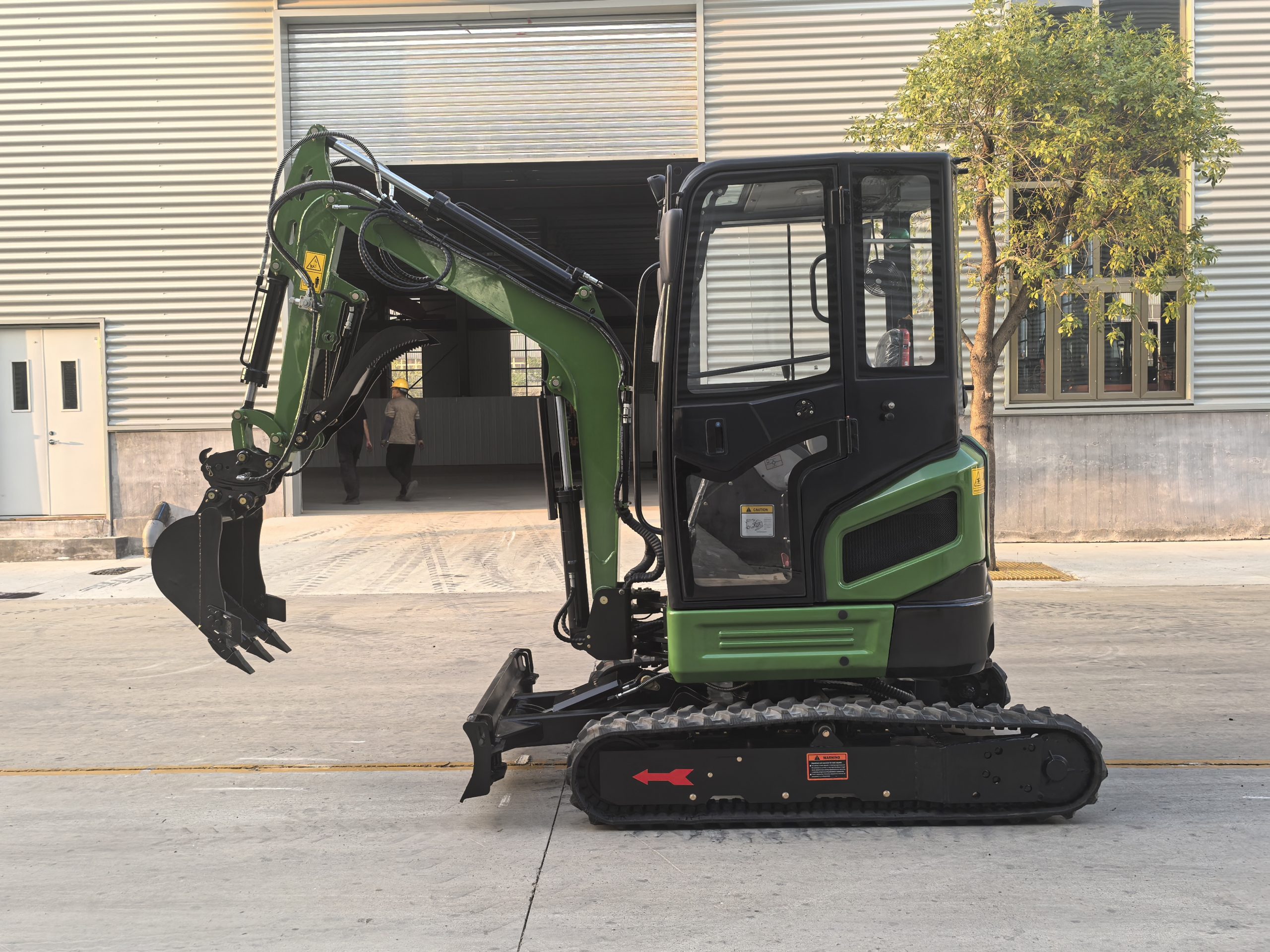
Reaching the Bottom Is Not the Same as Finishing It
Imagine a hypothetical buyer planning a 2.4-metre-deep excavation. A machine advertised with a 2.7-metre maximum digging depth appears to leave 300 mm to spare.
Now add two details: the excavation needs a 1.2-metre-long level-bottom section in the side view, and the tracks will stand on a platform 200 mm above the original ground level. The bottom is therefore 2.6 metres below the track-supporting level, not 2.4 metres.
The apparent 300 mm difference has become 100 mm before checking horizontal reach. Even that remaining difference does not prove suitability. The drawing must show whether the bucket can work across the required bottom section from the permitted machine position, rather than merely touch its deepest point.
Three missing pieces now matter: the horizontal location of both ends of that bottom section relative to the drawing’s origin, the bucket movement needed to form it, and a route to withdraw and discharge the material. The 2.7-metre headline answers none of those on its own. These are hypothetical dimensions, not a recommendation for a particular excavator or excavation arrangement.
The useful question is: “Can this configuration finish this shape from this position?” There is no universal depth allowance that replaces that check.
Three Depth Figures You Should Keep Separate
Maximum Digging Depth
This is the deepest reach shown for the specified work equipment, measured from the stated reference level. Check the drawing for the measuring point and the configuration used.
It is a useful screening figure. If the required excavation is outside the documented working range, the machine needs a different configuration or a different job arrangement. But passing that first screen does not complete the selection.
Do not assume maximum depth and maximum horizontal reach happen at the same bucket position. They are different limits on a moving work envelope, rather than the two sides of a rectangle the bucket can work everywhere inside.
Maximum Vertical-Wall Digging Depth
Where published, this describes a different geometric capability: the vertical face the work equipment can form within the stated working arrangement. It should not be replaced with the maximum digging-depth figure.
It is also not a statement that an unsupported vertical excavation is suitable for your ground or project. Machine geometry and excavation design are separate decisions.
Flat-Bottom Digging Depth
Some specifications state digging depth for a defined length of level bottom. Keep that length attached to the number: a depth quoted for a particular flat-bottom length is not a promise for any trench or foundation length.
John Deere’s 210 P-Tier specification lists maximum depth, depth at a defined flat bottom, and maximum vertical wall separately. This is a larger excavator, not a mini-excavator recommendation; its specification illustrates why the three labels must not be treated as interchangeable.
Likewise, Caterpillar’s 320D working-range document distinguishes maximum digging depth, level-bottom depth and vertical-wall depth for a named boom and stick arrangement. Neither manufacturer’s figures establish the corresponding limits of a Hongli machine.
A Checklist for Reading the Working-Range Drawing
Use the table to organise a discussion with the supplier. It is a selection checklist, not an operating procedure or an excavation design.
| Check | What to request or identify | What the answer should establish |
|---|---|---|
| Configuration | Boom and arm version, bucket, coupler and relevant options | The drawing applies to the equipment being quoted |
| Reference level | Ground line and the drawing’s measurement convention | Job depth is compared with the correct datum |
| Maximum depth | Measuring point and stated work-equipment arrangement | The required depth is within the documented geometric limit |
| Vertical face | Published vertical-wall limit or a configuration-specific review | Maximum depth is not being substituted for a different cut shape |
| Level bottom | Stated bottom length and corresponding depth, where available | The required bottom geometry has been considered |
| Horizontal position | Drawing origin and permitted machine positions on the site | Required points are evaluated at their actual horizontal distance |
| Working cycle | Bucket movement, withdrawal, swing and material discharge | The assessment goes beyond reaching one endpoint |
| Unresolved information | Missing dimensions, assumptions and required confirmation | An unknown value remains open rather than becoming an invented specification |
Put the Site on the Drawing Before Choosing a Model
Return to the example above. Draw the original ground line, the platform 200 mm above it and the required bottom 2.4 metres below it. Then mark the 1.2-metre-long bottom section and the machine position. A side view makes the 2.6-metre vertical requirement explicit; a plan view adds the bottom width, access route and nearby obstructions.
Next, give the supplier the horizontal distance to each end of the bottom section. Those distances must use the same origin as the working-range drawing. A radius measured from the swing centre cannot be compared directly with a site measurement taken from the track edge.
The review can now be specific: does the plotted range cover both endpoints at the required level, and can the selected bucket move through the intervening cut? If the supplier can only show the maximum-depth point, the level-bottom question remains unanswered. If the machine must reposition, identify which part can be completed from each permitted position.
Do not create your own closer machine position merely to make the geometry fit. Suitable ground support, excavation protection and permissible positioning need a site-specific assessment by the responsible people. A reach diagram does not authorise working at an excavation edge.
This turns a vague “it should reach” into a reviewable selection decision. It still does not predict production in the actual ground or replace the contractor’s excavation plan.
What a Hongli Depth Figure Does—and Does Not—Tell You
The HL26U product page lists a catalog maximum digging depth of 2,745 mm. That is a useful reference for shortlisting the model. It does not establish a 2,745 mm vertical-wall depth or a level-bottom depth for an unspecified bottom length.
If one of those values is needed but not documented for the proposed build, request confirmation. Do not estimate it as a percentage of maximum depth, or borrow it from another excavator of similar weight.
When comparing the HL20 with another model, compare how each fits the same site sketch. A model number or nominal weight class does not define the shape of the working envelope.
Our mini excavator size chart helps narrow the machine class. Use the detailed depth and site check after that first shortlist. Buying a larger machine solely to increase one maximum can introduce access and transport constraints without resolving the real positioning problem.
A Longer Arm Changes the Question
An optional longer arm or different boom arrangement needs its own confirmed working-range information. Do not add the extra arm length directly to the original maximum depth and treat the result as a specification.
Ask what the option changes beyond depth: applicable bucket combinations, digging-force figures, lifting information and transport dimensions. Keep each figure tied to the same configuration. A longer reach is not evidence that the original loading or digging capabilities remain unchanged.
The bucket and coupler belong in that configuration check too. A drawing for a different attachment arrangement may not represent the geometry you are buying.
For the separate mounting question, use our bucket compatibility checklist. A bucket fitting the pins or coupler is necessary, but it does not validate the complete job geometry.
Check the Route Out, Not Just the Point at the Bottom
An excavation job includes moving material out of the cut. Ask whether the proposed arrangement leaves room for the bucket to withdraw, the work equipment to move, and the material to be discharged into the intended place.
Maximum dumping height alone does not describe every loading arrangement. A truck body or spoil position also has a horizontal location, and obstructions can restrict the path between digging and discharge.
Similarly, a machine that enters a narrow site may lack room for the work equipment or rear body to rotate through the required cycle. Check the whole working envelope and tail clearance, rather than treating access width as proof of working clearance.
A short video showing an unloaded bucket reaching a position can clarify movement. It does not, by itself, demonstrate production in your ground, the ability to cut the specified bottom, or suitability for lifting a load at that radius.
When You Should Choose a Different Machine or Method
In the hypothetical example, the purchase should remain open until the supplier can address the 2.6-metre vertical requirement and the 1.2-metre bottom section from a permissible position. Repeating the 2.7-metre maximum is not an answer to that job.
A larger machine may be appropriate when the required working range is genuinely beyond the smaller option and the site can accommodate it. But if the controlling problem is access, ground support, positioning or the excavation design, simply moving up a weight class is not automatically the answer.
For an occasional task outside the documented capability of the machine you otherwise need, renting suitable equipment for that task may make more sense than making a poor long-term purchase. Consider a different work method with the responsible contractor where appropriate.
Hongli should be checked against the same standard. We should not win an order by relabelling maximum depth as vertical-wall capability or promising a working range that has not been established for the quoted build.
Frequently Asked Questions
How deep can a mini excavator dig?
It depends on the model and work-equipment configuration. Begin with the documented maximum depth, then check the excavation shape, reference level and permitted machine position. A weight class alone is not a dependable depth specification.
Is maximum digging depth the same as vertical-wall depth?
No. They describe different aspects of work-equipment geometry. Where the vertical-wall value is required, obtain the relevant figure or review for the actual configuration; do not substitute maximum depth.
What does flat-bottom digging depth mean?
Where specified, it relates depth to a stated length of level bottom. Keep the bottom-length condition with the figure. It does not guarantee the same depth over any excavation length.
How much extra digging depth should I allow?
There is no universal allowance that replaces a site and configuration check. State the required excavation, reference levels and available positions, then review them against the actual working-range drawing.
Will a longer arm solve a reach problem?
It may change the available range, but the option needs its own verified information and compatibility review. Check the implications for the bucket, digging and lifting figures, and transport arrangement before choosing it.
Can I calculate lifting capacity from digging depth or digging force?
No. A reach diagram and a digging-force figure do not establish an allowable suspended load. Obtain the applicable lifting information and appropriate job assessment for the actual configuration and load position.
Send the Excavation Shape, Not Just the Target Depth
For a useful selection discussion, provide required depth, bottom width and length, track-supporting level, permitted machine positions, access width, nearby obstructions, intended bucket and coupler, material conditions, destination and expected quantity.
Contact hongli@hongli-mach.com, WhatsApp +86 131 0548 1184, or the Hongli enquiry form. Ask for the working-range information applicable to the proposed build and make unresolved dimensions clear before ordering.
About the Author
Avicii Meng, Head of Technical Engineering | Hongli Machinery
Avicii Meng works with Tai’an Hongli Machinery Equipment Co., Ltd. on machinery configuration and technical purchasing information for export buyers.