This is one of the most common engine decisions on a Chinese-built mini excavator, and the answer surprises most buyers: in the configurations we quote, the Laidong 385 is rated above the Kubota D722 on power. At 18.1 kW, the domestic engine is the stronger unit on the specification sheet.
So why do buyers pay a premium — often several thousand dollars — to replace a more powerful engine with a less powerful one?
Because power is not what they are buying. They are buying emission documentation, parts availability, and resale value. Whether those are worth the money depends entirely on where the machine is going and how long you plan to own it.
This guide sets out the actual difference, the real cost of the upgrade, and the markets where each engine is the correct specification.
The Specification Comparison
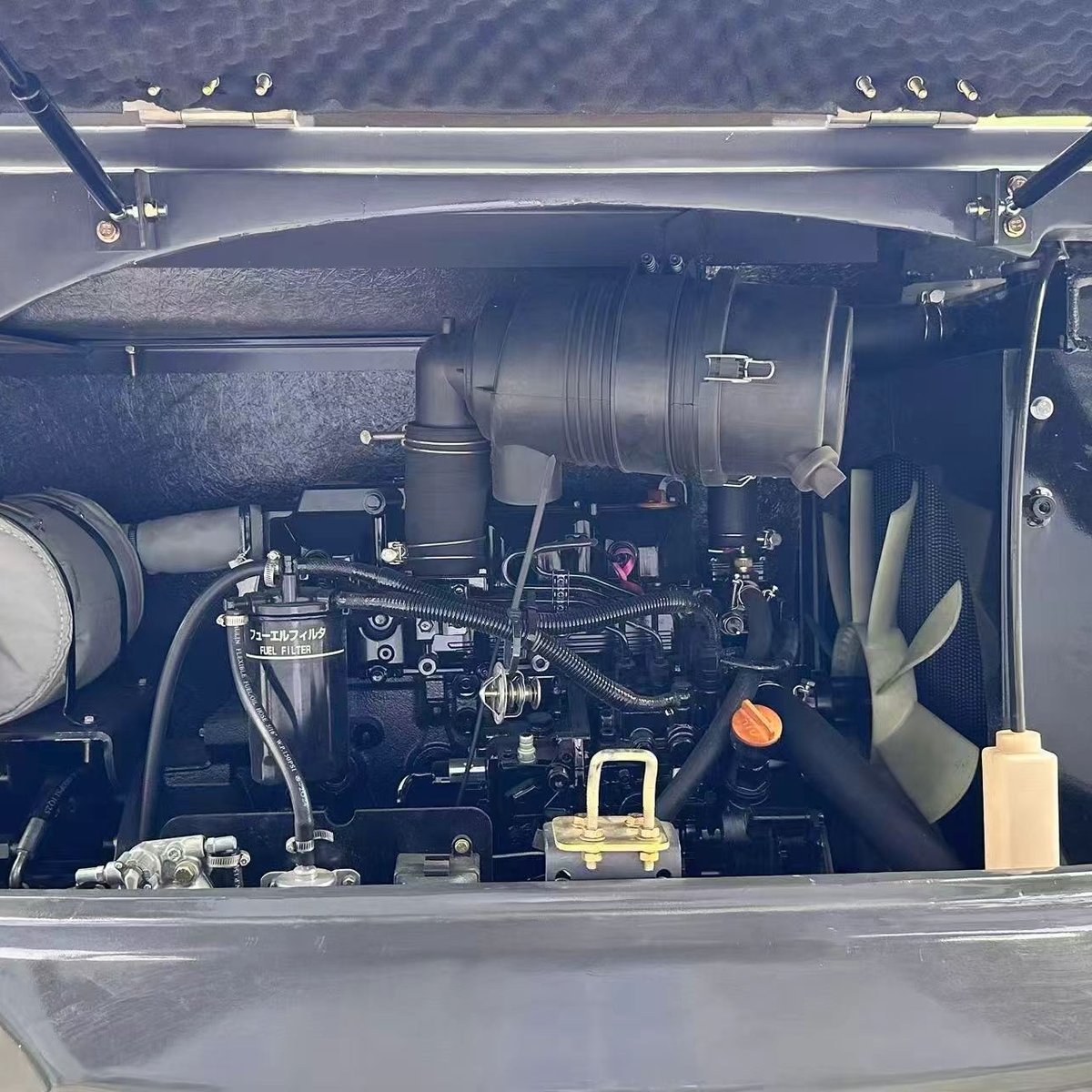
| Laidong 385 | Kubota D722 | |
|---|---|---|
| Rated power | 18.1 kW (as configured in Hongli quotations) | Varies by variant and rated speed — confirm the exact figure for the model quoted |
| Origin | China | Japan |
| Typical application | 1.5–2 ton class | Sub-1 ton to 1.5 ton class |
| Emission documentation | Chinese national emission standards; a 385BT variant at 18.8 kW is available | Certified variants available for regulated markets — verify family and certificate for your destination |
| Global parts network | Limited outside China and some export markets | Extensive — agricultural and construction dealers worldwide |
| Typical resale impact | Lower | Higher |
On power, the important point is the direction rather than the exact figures. In the configurations Hongli quotes, the Laidong 385 is rated at 18.1 kW, which is above the output of the D722 variants typically fitted in this class. Engine power figures vary with the specific variant, rated speed, and whether gross or net output is quoted, so ask your supplier for the exact model designation and the rated power at rated speed rather than comparing headline numbers from different sources.
In practice, hydraulic system matching matters more than peak engine output on a machine this size — the pump and valve configuration determine how power reaches the ground. Neither engine is the limiting factor on a well-configured 1.5–2 tonne excavator working normal duty cycles.
What the Upgrade Actually Costs
This is the part that is rarely published, so here are figures from our own quotations:
On the HL18 (1.4 tonne class): the Laidong 385 is the base configuration. Upgrading to a Kubota D722 adds approximately RMB 9,000 to the machine price. Upgrading to a Kubota D902 instead adds approximately RMB 9,500.
On the HL10 (0.85 tonne class): the base engine is a Koop unit. Adding a Kubota D722 to this smaller machine costs substantially more as a proportion of machine value — around RMB 13,000 — because the base machine price is lower.
A note on the 385BT option. The Laidong 385BT (18.8 kW) is a cleaner-emission variant certified to Chinese national emission standards, and adds roughly RMB 3,000. Chinese national standards are a separate regulatory framework from EU Stage V and US EPA requirements — a 385BT is not a substitute for a machine requiring EPA or EU documentation. For buyers whose market recognises Chinese national certification, or who simply want a cleaner engine without needing specific foreign documentation, it is a middle option that often gets overlooked.
Converted to export pricing, the Kubota upgrade typically represents a meaningful percentage of the machine’s FOB cost — enough that it should be a considered decision rather than an automatic one.
When a Certified Engine Configuration Is Necessary — Not Optional
An important framing point before the specifics: what regulated markets require is a compliant, documented engine configuration — not the Kubota brand specifically. Yanmar and Perkins configurations can satisfy the same requirements. Kubota comes up most often in this comparison because it is the common upgrade path from a Laidong base configuration, not because it is the only route to compliance.
Machines bound for the United States. An engine configuration conforming to applicable EPA nonroad emissions requirements is a customs requirement, not a preference. The standard Laidong 385 does not carry EPA certification. A machine arriving without conforming engine documentation can be held at the border.
Important qualification: a brand name alone does not establish compliance either. The specific engine family, model year, emissions label, and Certificate of Conformity must all be confirmed for your destination. Our guide to EPA-compliant excavators covers what documentation to request.
Machines bound for regulated European markets. Similar principle — machines placed on the EU market generally require configurations complying with applicable EU Stage V and type-approval requirements.
Buyers who plan to resell within a few years. A documented Japanese engine holds residual value better on secondary markets, largely because the next buyer recognises the name and can source parts. If your ownership model involves selling machines every three or four years, the premium is partly recovered at disposal.
Buyers in regions with strong Kubota dealer coverage. This is the practical argument, and here the brand does matter. Kubota engines are used across agricultural and construction equipment worldwide, which means filters, belts, injectors, and service knowledge are available locally in many markets. If your nearest Laidong parts source is a shipping container away, that changes the calculation regardless of what the engine costs.
When the Laidong Is the Right Specification
This section matters as much as the previous one, and most suppliers will not tell you this.
Markets that do not require foreign emission documentation. Requirements are set country by country rather than by region, and they change — countries within the same continent frequently have different rules, and some are tightening. Check your specific destination’s current requirement rather than assuming based on the region. Where a market does not require EPA or EU documentation, paying for certification you will never be asked to produce adds cost without adding capability.
Buyers keeping the machine long term. If you intend to run the machine until the end of its service life rather than resell it, the residual value argument disappears. What remains is acquisition cost and parts access.
Operations where the machine is one of several. Fleet buyers who already run domestic-engine equipment often have parts relationships and technician familiarity that make the Laidong the lower-friction choice.
Buyers who need the power. At 18.1 kW the Laidong is the more powerful engine. On machines working consistently at high hydraulic demand, that is a genuine consideration rather than a consolation.
The honest position: we sell both configurations, and the Kubota upgrade is more profitable for us. It is still the wrong purchase for a buyer in a non-regulated market who plans to keep the machine for a decade.
Parts Availability: The Argument That Actually Decides It
Emission compliance is binary — either your market requires documentation or it does not. Parts availability is the factor that varies by buyer, and it is usually what should settle the decision.
Ask this question before ordering: how far is the nearest source of filters, belts, and common service items for each engine, and what is the lead time?
For a Kubota engine in most developed markets, the answer is a local dealer with parts on the shelf. For a Laidong engine in the same market, it may be an order shipped from China with a multi-week lead time.
In markets where Chinese equipment is already common, the position often reverses — local suppliers stock domestic engine parts because that is what the installed base uses.
A machine down waiting for a filter costs more than the engine premium. Whichever engine you specify, confirm the parts route before the machine ships, and consider ordering an initial stock of consumables with the machine — filters, belts, and common wear items are inexpensive to include in the original shipment and expensive to source urgently later.
What About the Kubota D902?
Buyers comparing the D722 often encounter the D902 as well, and the distinction matters.
Both are Kubota three-cylinder diesels, but the D902 has larger displacement and higher output than the D722. Exact figures vary by variant and rated speed, so request the specific model designation and rated power from your supplier rather than relying on general figures.
On our HL18, the D722 upgrade adds roughly RMB 9,000 and the D902 approximately RMB 9,500 — a small difference for meaningfully more output. For a 1.8-tonne machine, the D902 is usually the better-matched choice, and the marginal cost over the D722 is minor.
If you are comparing quotations from multiple suppliers, confirm which Kubota model is being offered. A quotation specifying “Kubota engine” without a model number could be either, and the difference in output is substantial at this machine size.
Our guide to mini excavator engine brands covers the full range of options including Yanmar and Perkins configurations.
A Decision Framework
Work through these in order:
1. Does your destination market require foreign emission documentation?
Check the specific country’s current requirement rather than assuming based on region. If documentation is required, the decision is made — specify a configuration with verifiable certification for that market, whether that is Kubota, Yanmar, or Perkins. Then confirm the engine family and certificate.
2. Where is your nearest parts source for each engine?
Call and ask about lead times on filters and common service items. This is the single most useful ten minutes you can spend before ordering.
3. How long will you keep the machine?
Short ownership cycles favour the engine with better resale recognition. Long ownership shifts weight toward acquisition cost.
4. What is the power requirement?
For most 1.5–2 tonne applications, either engine is adequate. If the machine will work at sustained high hydraulic demand, note that the Laidong is the more powerful unit and the D902 is the closer Kubota match.
5. Then compare the price difference against the answers above.
If the market does not require certification, parts are available locally, and you plan to keep the machine, the Laidong is the correct specification and the premium is money that could go toward a hydraulic upgrade or a second bucket instead.
Frequently Asked Questions
Is the Kubota D722 more powerful than the Laidong 385?
In the configurations Hongli quotes, no — the Laidong 385 is rated at 18.1 kW, above the D722 variants typically fitted in this class. Buyers upgrading from Laidong to D722 on a 1.5–2 tonne machine are paying for emission documentation, parts availability, and resale value rather than for power. The Kubota D902 has higher output than the D722 and is the closer match for machines in this class. Engine power figures vary by variant and rated speed, so confirm the exact model and rated output with your supplier.
How much does the Kubota upgrade cost?
On our HL18 the Kubota D722 adds approximately RMB 9,000 over the standard Laidong 385 configuration, and the D902 approximately RMB 9,500. On the smaller HL10 the Kubota upgrade is proportionally more significant. Figures vary with configuration and order quantity — request an itemised quotation showing both options to compare directly.
Does the Laidong 385 have EPA certification?
The standard Laidong 385 does not carry EPA certification and is not suitable for machines being imported into the United States. A cleaner-emission variant (385BT, 18.8 kW) is certified to Chinese national emission standards, which is a separate regulatory framework from US EPA or EU Stage V requirements and is not a substitute for them. Confirm your destination’s specific requirement before ordering.
Which engine has better parts availability?
It depends entirely on your location. Kubota engines are used across agricultural and construction equipment worldwide, so parts and service knowledge are widely available in many markets. In regions where Chinese equipment dominates the installed base, domestic engine parts are often easier to source locally than Japanese ones. Check lead times with your nearest supplier for each before deciding.
Should I always choose the Kubota?
No. Where your destination market does not require foreign emission documentation, where local parts support exists, and where the machine will be kept long term rather than resold, the Laidong is the correctly specified engine. Paying for certification you will never be asked to produce adds cost without adding capability. Note also that where certification is required, Kubota is one route among several — Yanmar and Perkins configurations can meet the same requirements.
Specifying Your Engine Configuration
We supply both configurations and can quote either. To receive an itemised comparison, send us:
Machine model or size class:
Destination country and port:
Emission documentation required (EPA / EU Stage V / none / unsure):
Nearest parts source for engine service items:
Expected ownership period:
Expected quantity:
We will quote both engine options side by side with the price difference shown separately, so you can see exactly what the upgrade costs on your specific configuration — including telling you when we think the standard engine is the better purchase.
Contact: hongli@hongli-mach.com · WhatsApp +86 131 0548 1184
About the Author
Avicii Meng is Head of Technical Engineering at Tai’an Hongli Machinery Equipment Co., Ltd., where he works on export-oriented excavator configurations, engine compliance requirements, and OEM manufacturing projects for international markets. Hongli manufactures mini and compact excavators, skid steer loaders, forklifts, and backhoe loaders for export to global markets. Contact: hongli@hongli-mach.com | hongli-mach.com