
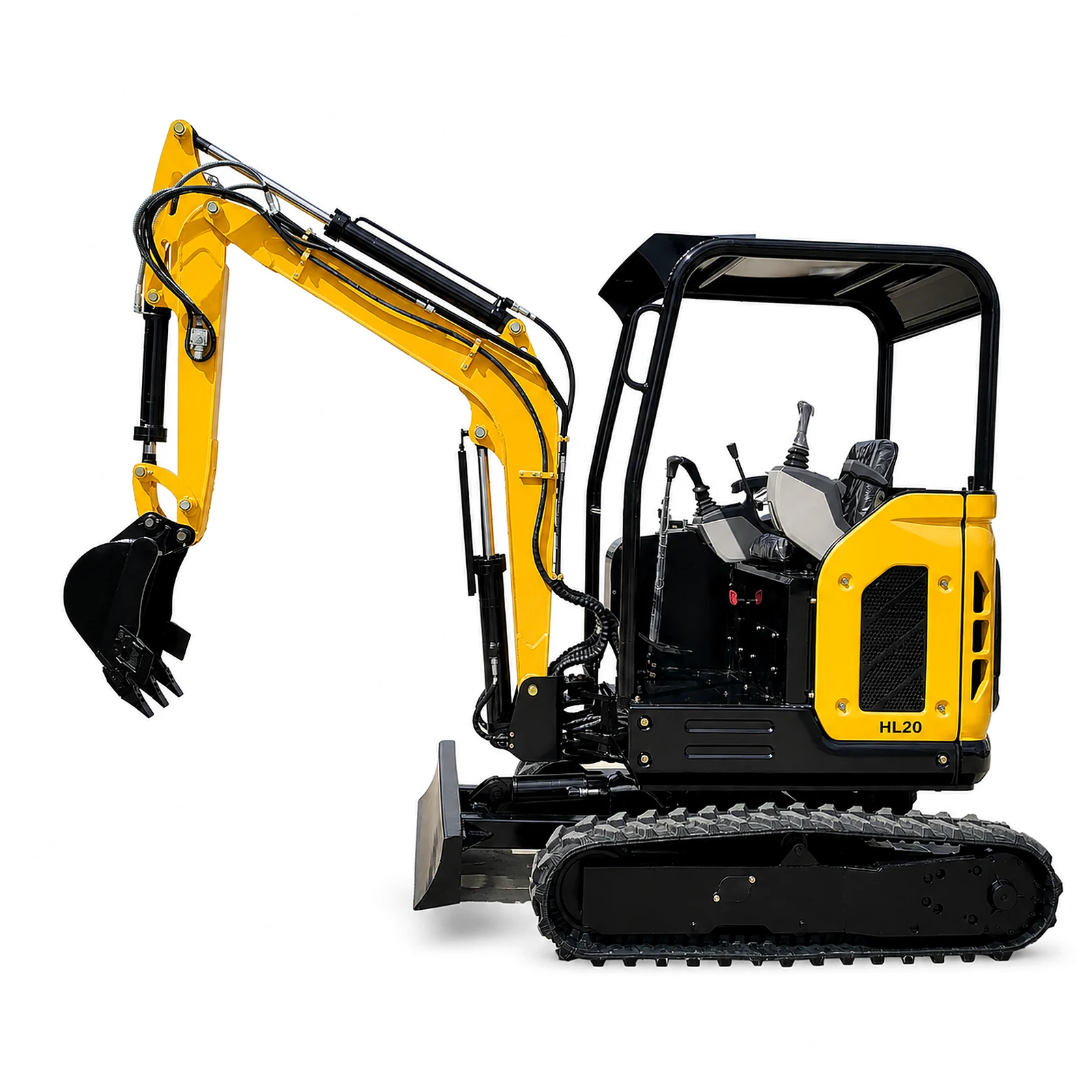
2.1 t catalog operating weight · 1,060 mm overall width · 0.07 m³ bucket · 2,418 mm maximum digging depth
The Hongli HL20 is a small excavator with a catalog operating weight of 2.1 tonnes, an overall width of 1,060 mm and a 0.07 m³ digging bucket. Its listed maximum digging depth is 2,418 mm and maximum digging radius is 4,112 mm. Tai’an Hongli Machinery Equipment Co., Ltd. supplies the HL20 with configuration choices that must be identified in the quotation, including engine, enclosure and undercarriage equipment.
Send us the narrowest clear opening on your access route, the space available at the digging position, required trench depth, destination country and expected quantity. Request an HL20 configuration review so we can assess the machine against your site before discussing options.
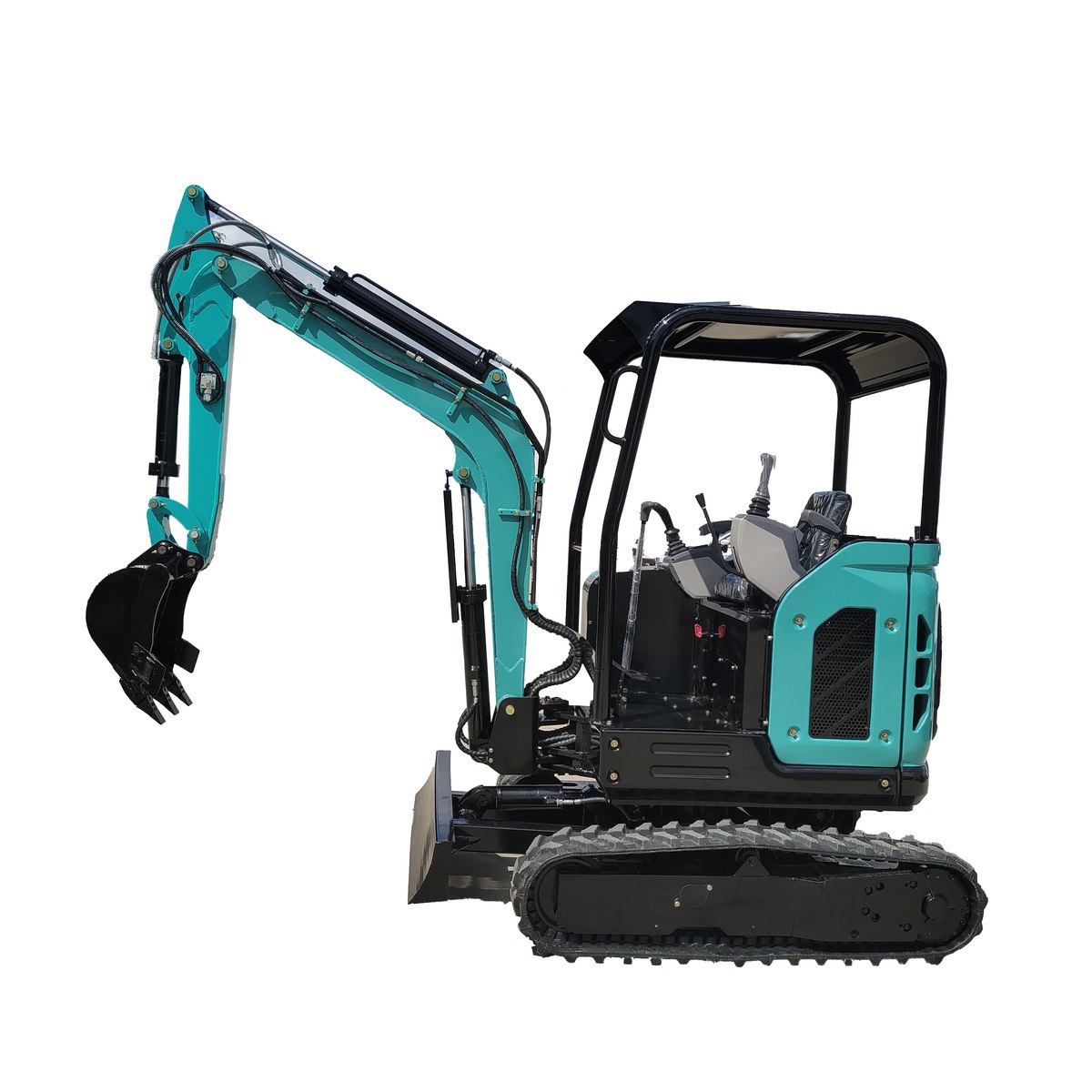
Check the working position after checking the gate
The HL20’s 1,060 mm catalog width is a useful starting point for restricted access. It does not describe every clearance needed to complete the job. An excavator can pass an entrance and still lack room to turn, position the bucket or unload inside the site.
Separate your measurements into three stages: the travel route, the place where the machine will stand, and the path through which the attachment and material must move. Measure permanent obstructions along the whole route, including projecting gate hardware and the inside of bends. A clear opening measured only at the entrance can miss a narrower passage farther in.
For example, a hypothetical 1,100 mm opening leaves only 40 mm of total nominal clearance around a machine listed at 1,060 mm. If centered perfectly, that is 20 mm on each side. This subtraction is a screening calculation, not permission to drive through. The actual machine width, route alignment, uneven surfaces and projections still need checking. We would not approve that passage from the catalog figures alone.
Next, show us where the tracks will stand and where the trench, wall and spoil pile will be. The space needed to pass straight between two walls differs from the space needed to rotate alongside them. The HL20’s listed 55° left and 45° right boom-swing angles describe boom movement. They do not establish a zero-tail-swing classification or prove that the rear body clears a wall.
If you choose retractable tracks, request the actual retracted and expanded dimensions and the operating instructions for that build. The catalog lists the option but does not supply both widths. Do not assume 1,060 mm is the minimum setting, or that selecting the option guarantees passage through a one-metre opening. Also check blade width and any other component that could remain wider than the tracks.
The distinction between access and work is useful beyond this model. Bobcat’s guide to selecting excavators for tight spaces describes measuring passages and using retractable undercarriages for entry before expanding them for digging. That guidance illustrates the principle; the HL20’s dimensions and operating instructions must come from its own configuration documents.
When the HL20 is worth considering
Consider the HL20 for utility trenching, landscaping, farm maintenance or confined construction when its measured access envelope and working range fit the actual site. Its relatively narrow catalog width is the reason to investigate it, rather than assuming every excavator around two tonnes occupies the same space.
It can also be a useful model for a dealer to evaluate when customers repeatedly ask about restricted entrances. Ask those customers for access measurements and applications before choosing stock. A narrow machine does not solve every confined-site problem, especially when the operator needs substantial room to rotate or handle material.
Do not buy the HL20 if your decision depends on an unverified one-metre access claim. If the task requires a demonstrated lifting capacity, sustained powered-attachment performance or a trench geometry beyond the supplied data, obtain the corresponding evidence before selecting it. Operating weight and bucket volume cannot replace those checks.
If access is generous and the job needs more working reach or a different operating envelope, compare another model. We would rather recommend a suitable alternative than sell an HL20 whose main benefit does not address your constraint.
HL20 catalog specifications
The following figures describe the supplied catalog configuration. The separate HL20 technical sheet agrees with the principal dimensions and working-range figures. Final equipment, transport measurements and engine identity should be written into the order specification.
| Specification | Catalog value |
|---|---|
| Model | HL20 |
| Operating weight | 2.1 t / 2,100 kg |
| Digging bucket capacity | 0.07 m³ |
| Bucket width | 430 mm |
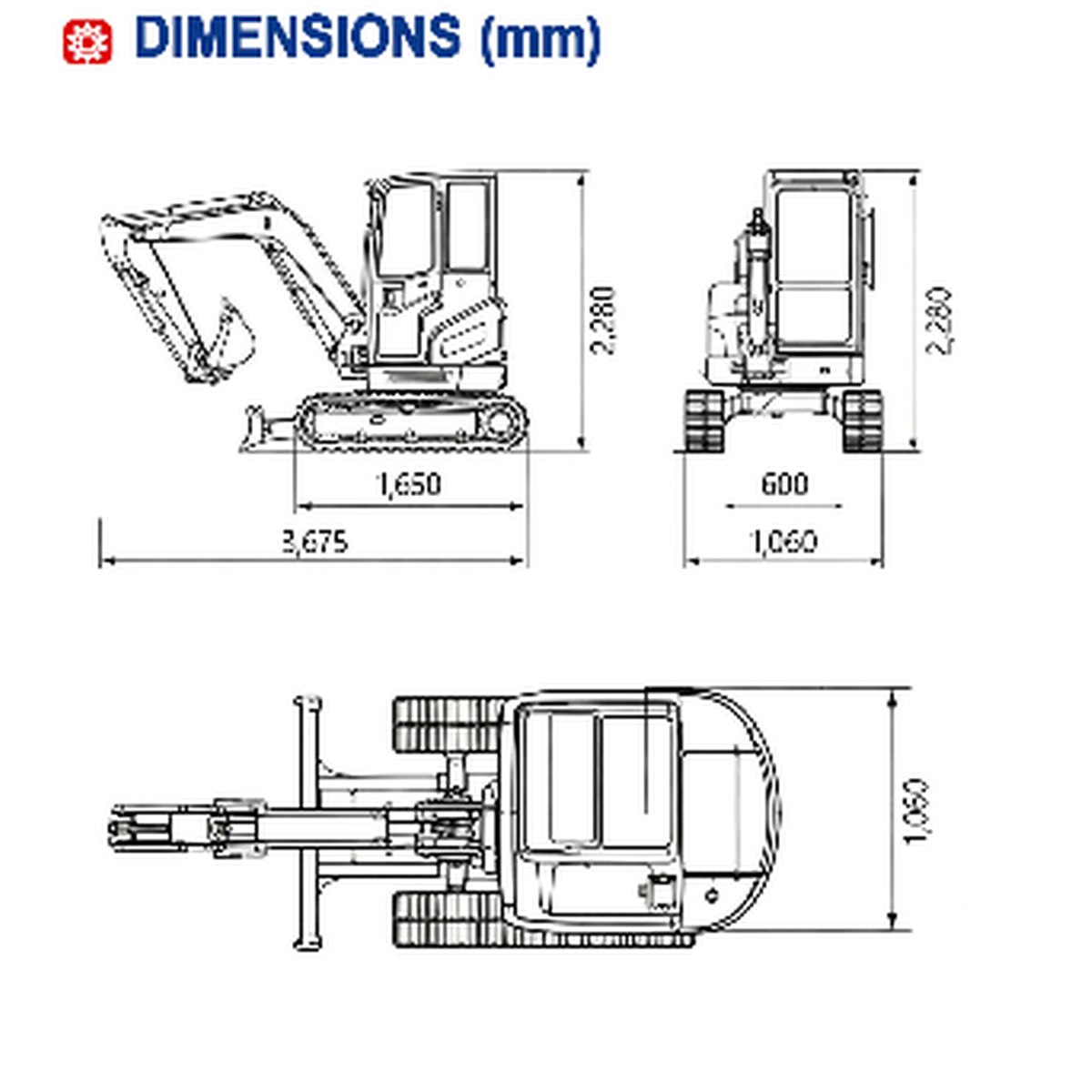
| Overall length | 3,675 mm |
| Overall width | 1,060 mm |
| Overall height | 2,280 mm |
| Body width | 1,060 mm |
| Body swing radius, catalog label | 894 mm |
| Body rotation angle | 360° |
| Boom swing angle, left/right | 55° / 45° |
| Maximum digging radius | 4,112 mm |
| Maximum digging depth | 2,418 mm |
| Maximum digging height | 3,210 mm |
| Maximum unloading height | 2,125 mm |
| Minimum swing radius, catalog label | 2,148 mm |
| Maximum dozer-blade digging depth | 297 mm |
| Maximum dozer-blade lifting height | 230 mm |
| Track type | Rubber tracks |
| Individual track width | 230 mm |
| Track length | 1,650 mm |
| Fuel tank capacity | 16 L |
| Hydraulic tank capacity | 22 L |
| Engine selection | Confirm the exact engine in the quotation |
What the dimensions mean on a site
Width and transport measurements
The catalog lists both overall width and body width as 1,060 mm. The separate technical sheet repeats those values. This agreement supports using 1,060 mm for an initial comparison, but it does not provide the dimensions of every optional undercarriage or enclosure.
The listed 3,675 mm length and 2,280 mm height also need matching to the delivered machine and its transport position. An enclosed cab, the attachment position and installed accessories may change the dimensions relevant to loading or a height restriction. Request a dimensioned drawing for the quoted build rather than inferring them from a photograph.
Likewise, 2.1 tonnes is the catalog operating weight, not a confirmed shipment gross weight. A trailer decision needs the configured machine and everything transported with it. Do not reserve the entire payload allowance for the machine while overlooking a coupler, spare buckets or other equipment.
Digging depth and unloading position
The 2,418 mm maximum digging depth describes a limit in the working envelope. It is not a stated vertical-wall digging depth. For a trench beside a foundation or boundary, give us the required depth and horizontal offset from the machine, then ask whether that geometry is achievable with the proposed boom, arm and bucket.
Maximum radius, digging height and unloading height are also separate limits. Do not combine 4,112 mm radius and 2,125 mm unloading height into a claim that both are available at one bucket position. A receiving vehicle or spoil location needs checking against the working-range drawing and the chosen attachment.
Bucket size and the trench specification
The catalog bucket is 0.07 m³ with a listed width of 430 mm. The separate technical sheet describes its width as excluding side teeth. Confirm the widest cutting profile if excavation width matters to your job, particularly when quoting a narrow service trench.
A different bucket needs more than a capacity comparison. Its mechanical interface, weight and intended material must suit the machine. Our mini excavator bucket compatibility guide explains the interface checks. There is no supplied bucket-digging-force figure here, so we do not turn the bucket volume into a claim about breaking hard ground or hourly production.
Choose the options that answer your constraints
The HL20 catalog lists a side-swing boom, hydraulic quick coupler, Yanmar engine, enclosed cab with air conditioning, hydraulic pilot control and retractable tracks among the available choices. Its technical page also lists steel tracks and a two-speed hydraulic travel motor. Confirm each item individually, because an option list is not a statement that every photograph or base quotation includes it.
Engine: The catalog cover identifies Kubota, while the separate HL20 technical sheet describes a Laidong 385 build. Ask which exact engine is included in the current quotation, its identification details and the documents applicable to your destination. For power comparisons, request rated speed and the power definition as well as the number. Our engine buying checklist sets out that request. Brand alone does not establish the machine’s certification.
Retractable undercarriage: This is worth investigating when access is the constraint. Obtain both width settings, blade arrangement and operating instructions before deciding. We do not advertise an unprovided minimum width or infer lifting performance from the track option.
Canopy or enclosed cab: Compare the actual height, ventilation or air-conditioning equipment and service access. A canopy photograph does not prove a particular protective certification. If your application requires certified protection, request the relevant documentation for the enclosure offered.
Pilot control and two-speed travel: Ask what the quoted build includes and request a demonstration where control arrangement matters to the operator. The two-speed option has no speed pair in the catalog, so it should not be described with invented low and high travel speeds.
Quick coupler and powered tools: A coupler can simplify changes between compatible tools, but its installed geometry and weight belong in the configuration review. For a breaker, auger or other hydraulic tool, obtain auxiliary flow, pressure and return requirements. The 22 L hydraulic tank is a reservoir capacity, not an attachment-flow rating.
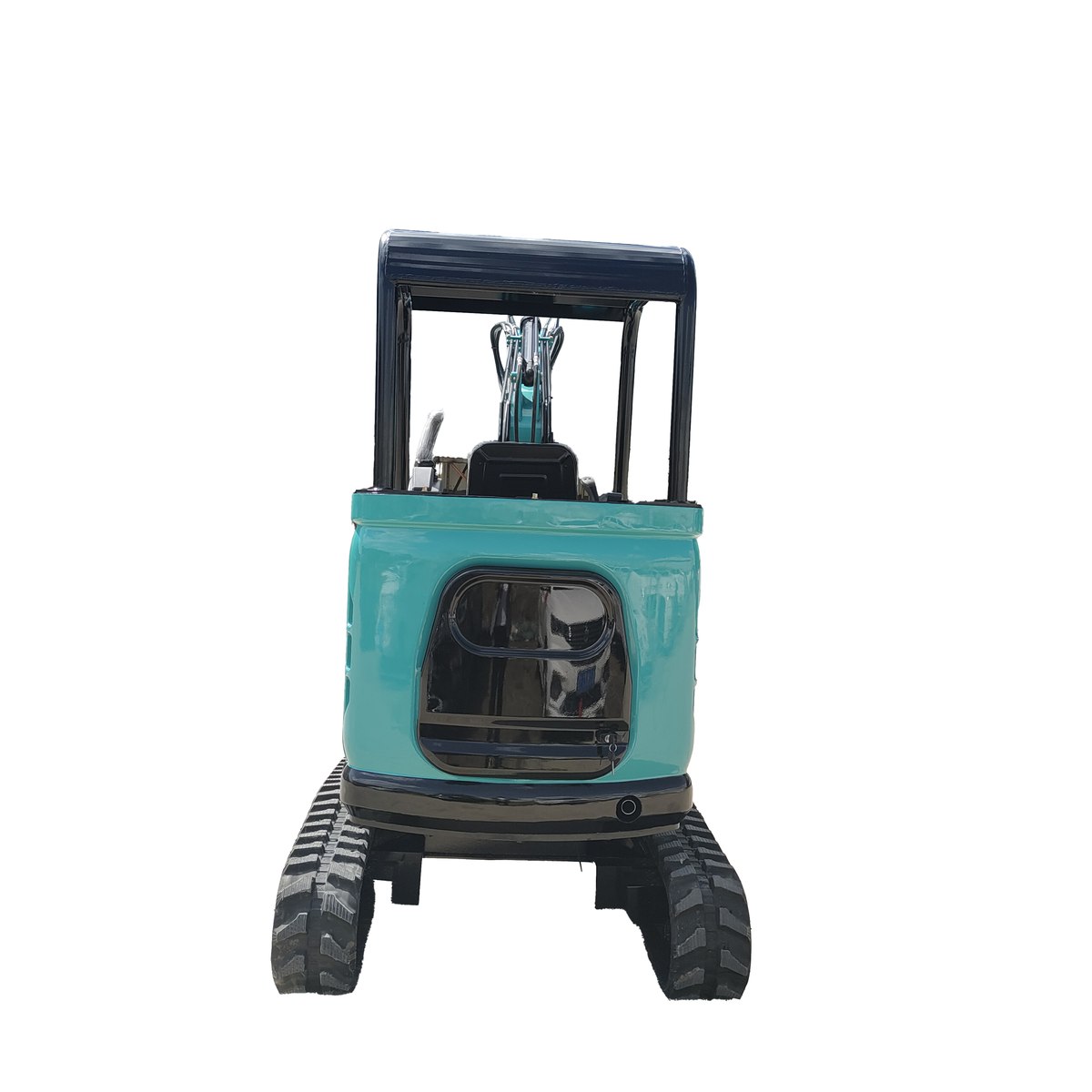
HL20 or HL22: compare width and working range together
The HL22 catalog also lists 2.1 tonnes and a 0.07 m³ bucket. It lists 1,350 mm overall width, compared with the HL20’s 1,060 mm. That is a 290 mm difference in the supplied overall-width figures, not evidence that one model is universally better.
The HL22 also lists 2,752 mm maximum digging depth and 4,390 mm maximum digging radius, against 2,418 mm and 4,112 mm for the HL20. Those are 334 mm and 278 mm greater, respectively. They describe catalog envelope differences, not tested productivity or lifting-capacity advantages.
If restricted access is decisive, start by verifying the HL20’s actual build. If your route admits either machine, compare the task geometry and equipment before choosing. The HL22 sheet separately lists 1,060 mm body width, so do not confuse its body-width entry with its 1,350 mm overall width or infer a retractable setting from those two numbers.
For a broader comparison, the mini excavator size chart explains the measurements to consider. If neither model meets the site requirements, review the excavator range rather than forcing a choice between them.
HL20 buying questions
Is the HL20 exactly a two-tonne excavator?
Its catalog operating weight is 2.1 tonnes. Use that figure for this catalog build rather than treating the model name as a weight statement. Obtain the actual configured and transport weights before making loading decisions.
Can the HL20 pass through a one-metre gate?
The listed overall width is 1,060 mm, so that figure does not support passage through a 1,000 mm opening. Retractable tracks are listed as an option, but their minimum width is not supplied. Ask for the complete access width of the quoted configuration.
Why is the HL20 listed as narrower than the HL22 at the same weight?
Operating weight does not specify machine width. The supplied sheets list 1,060 mm overall width for HL20 and 1,350 mm for HL22, despite the same nominal weight. Confirm their actual undercarriage configurations rather than guessing the design reason from the numbers.
Does every HL20 have a Kubota engine?
No single engine can be assumed from the available documents. The catalog cover shows Kubota, the separate technical sheet describes Laidong 385, and Yanmar is listed as an option. The current quotation must identify the engine actually offered.
Does the boom-swing feature make the HL20 zero tail swing?
It does not establish that classification. Boom movement and rear-body clearance are different checks. Request the rear swept envelope of the selected build if it will work beside a wall or another fixed obstruction.
Is the 430 mm bucket width the finished trench width?
Not necessarily. The technical sheet describes that width as excluding side teeth, and the excavation profile also depends on the selected bucket and the work. Confirm the cutting width for the tool you intend to order rather than promising a 430 mm finished trench.
Send us the route and the job before requesting a quotation
To review an HL20 order, send Tai’an Hongli Machinery Equipment Co., Ltd. the following information:
- Narrowest measured clear opening, bends and height restrictions along the access route.
- Space available for the tracks, rear body, digging operation and spoil placement.
- Required trench depth, width, material and main attachments.
- Engine requirements, preferred enclosure and undercarriage options.
- Transport arrangement, destination country and expected quantity.
Request an HL20 configuration and quotation, email hongli@hongli-mach.com, or contact WhatsApp +86 131 0548 1184. We can compare the proposed build with your constraints and identify when another model is a better fit. The quotation should define the equipment being supplied, rather than leave the buying decision to a model badge.
About the author
Avicii Meng, Head of Technical Engineering | Hongli Machinery
Avicii Meng works with Tai’an Hongli Machinery Equipment Co., Ltd. on machinery configuration information and buyer guidance. For order-specific dimensions, equipment and documents, contact the Hongli team with your application and destination.