Budget mini excavators in 2026 are a legitimate procurement option — not a compromise. Compared with earlier generations of low-cost export machines, many current models offer a wider choice of engines, pilot controls, cab options, and hydraulic configurations at competitive price points.
This guide covers what you actually get in the budget mini excavator category, where the real tradeoffs are, and which specifications matter most when you are working with a constrained acquisition budget.
Quick Answer: Budget Mini Excavator Price Ranges (2026 FOB)
- Under 1 ton: $2,000 – $5,000
- 1–1.8 ton: $4,500 – $9,000
- 2–2.6 ton: $8,000 – $15,000
Price ranges are indicative, based on Hongli factory quotations and publicly available Chinese supplier listings reviewed in July 2026. Final landed cost varies by engine specification, cab configuration, compliance requirements, and destination port.
Budget Mini Excavator Specs by Size Class (2026)
| Size Class | Operating Weight | FOB Price Range | Common Engine Options | Hydraulic System | Typical Buyers |
|---|---|---|---|---|---|
| Micro | Under 1 ton | $2,000–$5,000 | Kubota D722, domestic diesel | Gear pump | Homeowners, garden contractors |
| Mini | 1–1.8 ton | $4,500–$9,000 | Kubota D902, Yanmar 3TNV88, domestic | Gear pump / pilot optional | Landscapers, rental fleets |
| Small Compact | 2–2.6 ton | $8,000–$15,000 | Kubota D1105, Yanmar 3TNV88, Perkins 403J-11, domestic | Gear pump or piston pump | Contractors, utility teams |
Engine model names alone do not confirm compliance status. Certification status must be verified for the exact engine family, model year, emissions label, and destination market before ordering.
The word budget means different things depending on your reference point. For a contractor accustomed to pricing on Kubota or Bobcat machines, a $12,000 FOB price on a 1.8-ton excavator sounds almost too low to be credible. For a buyer sourcing directly from a Chinese manufacturer for the first time, the same price may feel like the upper end of what they expected.
In practical terms, the budget category in 2026 covers machines from roughly $2,000 to $15,000 FOB — a range that includes everything from sub-1-ton micro excavators for residential use to capable 2.6-ton machines suited for light commercial work.
What separates a good budget machine from a poor one is not primarily price. It is specification transparency, component sourcing, and the manufacturer’s willingness to provide verifiable compliance documentation. A $9,000 machine with a documented, market-compliant engine configuration and clearly specified hydraulics is a fundamentally different procurement than a $9,000 machine with an unknown domestic engine and no certification paperwork.
Where Budget Mini Excavators Make Sense
Not every application requires a premium machine. Budget mini excavators are a rational choice in several scenarios:
Rental fleet expansion is one of the clearest use cases. Rental operators adding machines to meet seasonal demand often prioritize acquisition cost over brand premium, particularly for machines that will be operated by varying skill levels on light-duty residential jobs. A $7,000–$9,000 machine may offer a shorter initial payback period than a $25,000 dealer-supported alternative, depending on utilization, maintenance costs, and downtime.
Entry-level contractors purchasing their first machine face a genuine capital constraint. A budget machine that allows a contractor to take on excavation work while building cash flow is often more valuable than a premium machine that delays market entry by 18 months.
Non-regulated markets where U.S. EPA documentation is not required — and where local regulations allow domestic-engine configurations — can represent particularly competitive markets for lower-cost options. Buyers in Southeast Asia, the Middle East, Africa, and South America can access a wider range of machine configurations without the certification premium, making the sub-$10,000 category particularly active.
Agricultural applications with intermittent use cycles — seasonal trenching, drainage work, pond maintenance — may not justify the total cost of ownership of a premium machine. For machines used only a few hundred hours per year, a lower-cost configuration may provide a more rational return on investment, provided that parts support and maintenance are available.
One issue that comes up regularly: buyers sometimes assume that budget means disposable. In practice, a well-specified budget machine from a reputable manufacturer with a certified engine and proper hydraulics is not disposable — it is simply acquired at a lower cost because the supply chain is shorter and the brand premium is absent.
The Key Specifications That Determine Value
At the budget end of the market, specification differences between machines at similar price points can be significant. These are the variables that matter most:
Engine Brand and Certification
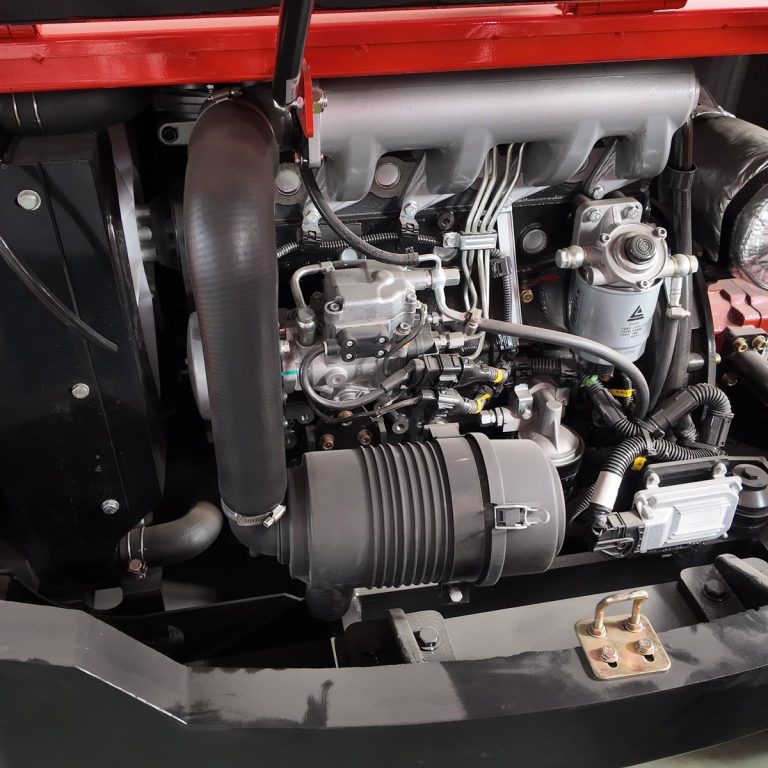
This is the single largest cost driver and the most important specification for U.S. and European buyers. A domestic Chinese engine — Laidong, Changchai, or similar — will price a machine $3,000–$6,000 lower than the same chassis with a Kubota or Yanmar engine. That price difference is real, but so is the difference in certification status, parts availability, and long-term reliability under continuous use.
For U.S.-bound machines, compliance requirements should be verified before purchase. U.S.-bound machines must use an engine configuration that conforms to applicable EPA nonroad emissions requirements. Buyers should verify the engine family, model year, emissions label, Certificate of Conformity, and import documentation before shipment. Note that specifying a Kubota or Yanmar engine model alone does not guarantee compliance — the specific configuration, model year, and certification documentation must be confirmed with the supplier.
For buyers in non-regulated markets, domestic engine configurations represent genuine value. For U.S. or European buyers, the certified engine premium is not optional — it is a compliance cost that must be factored into the total acquisition budget.
Hydraulic System Grade
Entry-level budget machines use gear pump hydraulic systems with standard multi-way valves. These are functional for light excavation, trenching, and grading work. They are not appropriate for high-cycle production applications or operators who expect the joystick response of a premium machine.
Mid-grade configurations add piston pumps and load-sensitive valve systems, which improve efficiency, reduce heat generation under continuous load, and extend hydraulic component life. At the $10,000–$15,000 price point, piston pump systems are available and represent a meaningful upgrade from gear pump configurations.
Pilot control — the hydraulic joystick system that replaces mechanical lever controls — is available on some machines in this price range. Pilot controls can improve operating comfort, reduce fatigue, and provide more precise control, particularly for experienced operators working longer shifts. If the machine will be operated daily by a skilled operator, pilot control is worth specifying even at a modest price premium.
Cab Configuration
Base price typically means no cab — an open ROPS frame only. Enclosed cabs add cost, and air-conditioned enclosed cabs add more. For buyers in hot-climate markets, an air-conditioned cab is not a luxury; it is a productivity requirement. For buyers in temperate climates using the machine seasonally, an open frame may be entirely adequate.
Budget for cab options separately from the base machine price. An open-frame machine quoted at $7,000 may cost $9,500–$10,500 with a full enclosed cab and air conditioning — still competitive, but a different number than the headline quote.
Track Type
Rubber tracks are standard on most mini excavators and appropriate for most applications: landscaping, residential work, utility trenching, and light construction. Steel tracks are an add-on, typically priced separately, and matter for buyers working on hard rock, demolition sites, or terrain where rubber track wear would be excessive.
Track width and configuration also affect ground pressure and stability. Wider tracks reduce ground pressure — relevant for buyers working on soft ground or finished surfaces.
Budget Mini Excavator Options by Size Class
Under 1 Ton — Micro Excavators
Price range: $2,000 – $5,000 FOB
Micro excavators in this class are primarily used for residential landscaping, indoor demolition, confined utility work, and garden applications. They are the most price-accessible machines in the category and the most compromised in terms of performance.
At this size, engine options range from single-cylinder gasoline units — the lowest acquisition cost — to single-cylinder diesel configurations, to Kubota D722-powered variants at the upper end of the price range. The Kubota D722 option adds meaningful cost but delivers a substantial improvement in engine quality, fuel efficiency, and available certification.
Typical buyers: homeowners with ongoing property maintenance needs, small landscaping contractors, indoor renovation crews.
1 to 1.8 Ton — Mini Excavators
Price range: $4,500 – $9,000 FOB
This is the most active segment of the budget mini excavator market. Machines in the 1.5–1.8 ton range are among the most widely offered export configurations from Chinese manufacturers and the sweet spot for buyers seeking capable performance at a competitive price.
At this weight class, the choice between a domestic engine and a Kubota D902 or equivalent Yanmar represents the primary price variable. The domestic engine configuration at the lower end of the range is appropriate for non-regulated markets. The certified engine configuration at the upper end is what U.S. and European buyers need to specify.
Hydraulic configurations at this size typically default to gear pump systems. Pilot control is available as an upgrade on some models and worth requesting if the machine will see daily use.
Typical buyers: landscaping contractors, small general contractors, residential excavation businesses, rental operators adding fleet capacity.
2 to 2.6 Ton — Small Compact Excavators
Price range: $8,000 – $15,000 FOB
At the upper end of the budget category, 2–2.6 ton machines offer meaningfully more capability: greater hydraulic flow, higher breakout force, deeper dig depth, and more robust undercarriage. These machines can handle utility trenching, foundation work, and light commercial excavation that would exceed the capacity of smaller machines.
Engine options at this size include Kubota D1105, Yanmar 3TNV88, and Perkins 403J-11 in certified configurations, as well as domestic alternatives for non-regulated markets. Piston pump hydraulic systems are available at this size and worth specifying for buyers who will use the machine in production applications.
Typical buyers: general contractors, utility companies, municipal maintenance teams, rental fleet operators.
Factory-Direct vs Dealer-Supported Mini Excavators
| Factor | Factory-Direct Chinese Machine | Established Dealer Brand |
|---|---|---|
| Acquisition Cost | Lower | Higher |
| FOB Price (1.8T) | $5,000–$9,000 | $20,000–$30,000+ |
| Configuration Flexibility | Usually higher | Usually lower |
| Local Dealer Support | Limited or importer-dependent | Generally stronger |
| Parts Availability | Must be confirmed before purchase | Usually well established |
| Resale Value | Usually lower | Usually higher |
| Quality Consistency | Varies by manufacturer and configuration | Generally more standardized |
| Best Fit | Cost-sensitive, specification-driven buyers | Buyers prioritizing support and resale |
The gap between factory-direct and dealer-supported machines is real across multiple dimensions — not just price. A factory-direct machine with a certified engine addresses the compliance gap, but differences in local support, parts infrastructure, and quality consistency remain factors worth evaluating before purchase.
Real-World Configuration Example
To illustrate how budget specifications translate into real procurement decisions: a landscaping contractor purchasing a first machine for residential and light commercial work in a regulated market faces a clear choice.
A 1.8-ton machine with a Kubota D902 EPA-certified engine, gear pump hydraulics, and an enclosed cab with air conditioning from a Chinese factory-direct manufacturer will price in the $9,000–$12,000 FOB range. That configuration delivers compliance documentation, a certified engine with established parts availability, and operator comfort adequate for a full working day.
The same chassis with a domestic engine and open frame prices $4,000–$5,000 lower. For a buyer in a non-regulated market, that configuration is rational. For a U.S. buyer, the compliance risk at customs outweighs the acquisition savings.
For buyers considering factory-direct options in the 1.8–2 ton range with configurable certified engine options, requesting itemized quotes from multiple manufacturers — specifying engine model, hydraulic grade, and cab configuration separately — is the most reliable way to compare actual value rather than headline price.
What to Watch Out For
Vague engine specifications. If a supplier quotes a machine without specifying the engine model — not just the brand — ask for clarification before proceeding. “Kubota engine” without a model number could mean several different engines with different power outputs, displacement, and certification status.
Missing certification documentation. A legitimate EPA-certified engine comes with specific certification documentation that can be referenced against EPA’s certification database. Request this documentation before placing an order, not after.
Unrealistic lead times. Budget machines from established manufacturers typically carry lead times of 30–60 days for standard configurations. Quotes promising delivery in under two weeks on a custom configuration should be verified carefully.
Single-number quotes. A professional manufacturer will provide an itemized quote that separates machine base price, engine upgrade cost, cab configuration, track specification, and any export documentation fees. A single number without line items makes it impossible to understand what you are actually buying.
How to Get an Accurate Budget Quote
Specify clearly when you inquire:
- Machine weight class (in tons)
- Engine brand and certification required
- Hydraulic system grade (gear pump or piston pump)
- Cab type (open / enclosed / enclosed with A/C)
- Track type (rubber / steel)
- Destination port and country
- Compliance documentation required
To receive a factory-direct quote based on your specific requirements, contact us at hongli@hongli-mach.com or via WhatsApp at +86 13181780976. Most quotations are prepared within 24 hours of receiving a complete specification.
Frequently Asked Questions
What is the cheapest mini excavator you can buy in 2026?
Entry-level micro excavators under 1 ton are available from Chinese manufacturers starting around $2,000–$3,000 FOB with basic gasoline engines. Diesel-powered configurations with domestic engines start higher. For U.S.-bound machines requiring EPA certification, the practical minimum rises to the $5,000–$7,000 range for a 1-ton class machine with a certified engine.
Are budget mini excavators from China reliable?
Reliability depends on the specific manufacturer and component specification, not the country of origin. A Chinese-manufactured machine with a Kubota engine, documented hydraulic specifications, and proper quality control is a reliable machine. A machine with an unknown engine and no documentation is a risk regardless of price. Specifying certified components and requesting factory inspection documentation significantly reduces reliability risk.
Can I import a budget mini excavator from China without EPA certification?
Generally, a new mini excavator imported into the United States must use an engine configuration that conforms to applicable EPA nonroad emissions requirements, unless a specific lawful exemption applies. The importer should verify the engine family, model year, emissions label, Certificate of Conformity, and EPA import declaration requirements before shipment. Using a properly documented engine configuration from an established engine manufacturer is one common approach, but the engine brand and model name alone do not establish compliance — the specific configuration and documentation must be confirmed.
What is the best budget mini excavator for landscaping?
For landscaping applications, a 1.5–1.8 ton machine with rubber tracks, a certified diesel engine, and an enclosed cab provides the most practical combination of performance, compliance, and operator comfort. Pilot control is a useful upgrade for operators who will use the machine daily. Specific model recommendations depend on your destination market, service infrastructure, and budget — contact a factory-direct manufacturer with your full specification for accurate pricing.
How long do budget mini excavators last?
Service life depends primarily on engine quality, hydraulic system specification, maintenance practices, and operating intensity. A properly specified and maintained machine can provide several years of productive service, but expected service life varies substantially with workload, component quality, and operator practices. Buyers should ask suppliers for warranty terms, maintenance schedules, and verifiable operating references rather than relying on advertised hour figures.
Conclusion
The budget mini excavator category in 2026 offers genuine value for buyers who approach procurement with clear specifications rather than lowest-price shopping. The machines exist. The certified engine options exist. The compliance documentation is available.
What separates a successful budget procurement from a costly mistake is not the price point — it is the specificity of the inquiry. Buyers who arrive at the quoting stage knowing which engine certification their market requires, what hydraulic grade their application demands, and what documentation their customs process expects will find competitive options in the sub-$15,000 range that perform reliably over a multi-year service life.
Those who treat budget as a synonym for “whatever is cheapest” will eventually find out why that approach has a poor track record.
About the Author
Avicii Meng is Head of Technical Engineering at Tai’an Hongli Machinery Equipment Co., Ltd., where he works on export-oriented excavator configurations, engine compliance requirements, and OEM manufacturing projects for international markets. Hongli manufactures mini and compact excavators, skid steer loaders, forklifts, and backhoe loaders for export to global markets. Contact: hongli@hongli-mach.com | hongli-mach.com