A quick coupler that fits an attachment tells you nothing about whether your excavator can actually run it — that depends on hydraulic flow (GPM) and pressure (PSI), not the coupler pin size.
Most buyers find out their auxiliary hydraulics can’t run an attachment after it’s already on the machine — an auger that stalls under load, a breaker that overheats the hydraulic oil within an hour, a grapple that opens but won’t close with authority. All of it bolted on fine. None of it about the coupler. This guide covers what actually determines compatibility, so you’re not finding out the hard way.
Tell us your machine’s model or tonnage, the attachment you’re considering, and how you plan to use it — we’ll tell you straight whether it’ll work as-is, whether you need a hydraulic upgrade, or whether the attachment isn’t a fit for that machine at all. Reach us at hongli@hongli-mach.com or WhatsApp +86 131 0548 1184.
The compatibility problem nobody explains before you buy
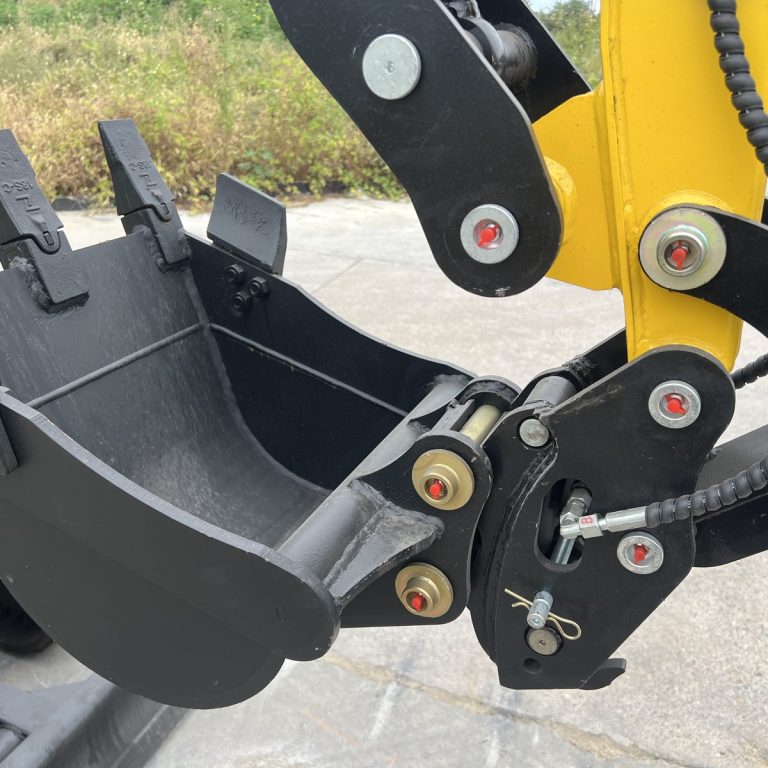
Attachment listings talk about coupler type — pin-on, hydraulic quick coupler, wedge-lock — because that’s the easy part to standardize and the easy part to sell. A quick coupler is a mechanical interface. Even within the same size class, pin diameter, pin spacing, mounting width and the approved coupler interface must match. Mechanical fit still needs to be checked separately. If a coupler will stay on the machine, confirm the bucket-side interface separately; our bucket compatibility guide explains what to record.
What actually determines whether an attachment works is the auxiliary hydraulic circuit feeding it: how much oil flow it delivers (measured in gallons per minute, GPM) and at what pressure (pounds per square inch, PSI). Every hydraulic attachment — breakers, augers, grapples, hydraulic thumbs, mulchers, compactors — is designed around a specific flow and pressure range. Undersupply it and the attachment underperforms or stalls. Oversupply it and you risk blowing seals or damaging the tool. The flow available at the excavator’s auxiliary ports must fall inside that range; total pump flow is not necessarily the flow available to the attachment, and no coupler changes that.
Flow and pressure are the headline numbers — they’re not the whole checklist
Flow and pressure get all the attention because they’re the two numbers both the machine and the attachment publish. Real compatibility also depends on several things that don’t show up in a marketing spec sheet:
- Case drain — a dedicated, low-pressure return line for internal leakage inside the attachment’s motor. Many mulcher heads explicitly require one; run a mulcher without a case drain and trapped case pressure can cook the motor’s seals, regardless of whether flow and pressure look fine on paper.
- Back pressure — resistance in the return line. Too much of it, and an attachment rated for a clean return can run hot or sluggish even with the correct flow going in.
- Hose and fitting diameter — undersized hoses restrict flow to the attachment even when the pump can supply it.
- Cooling capacity — sustained high-flow use needs a cooler sized for it, or oil temperature climbs over a long shift.
- Relief valve setting — this sets the pressure ceiling the circuit will ever deliver. If it’s set below what the attachment needs, the attachment never reaches its rated pressure no matter what the pump is capable of.
- Machine weight versus attachment weight — not a hydraulic spec at all, but a stability and lift-capacity question that gets overlooked in the same conversation.
These requirements may be split between the attachment’s specification sheet and its installation documentation, while the excavator’s documentation describes the available supply. Check both, especially for case drain and return back-pressure limits. It’s worth asking for both before you buy.
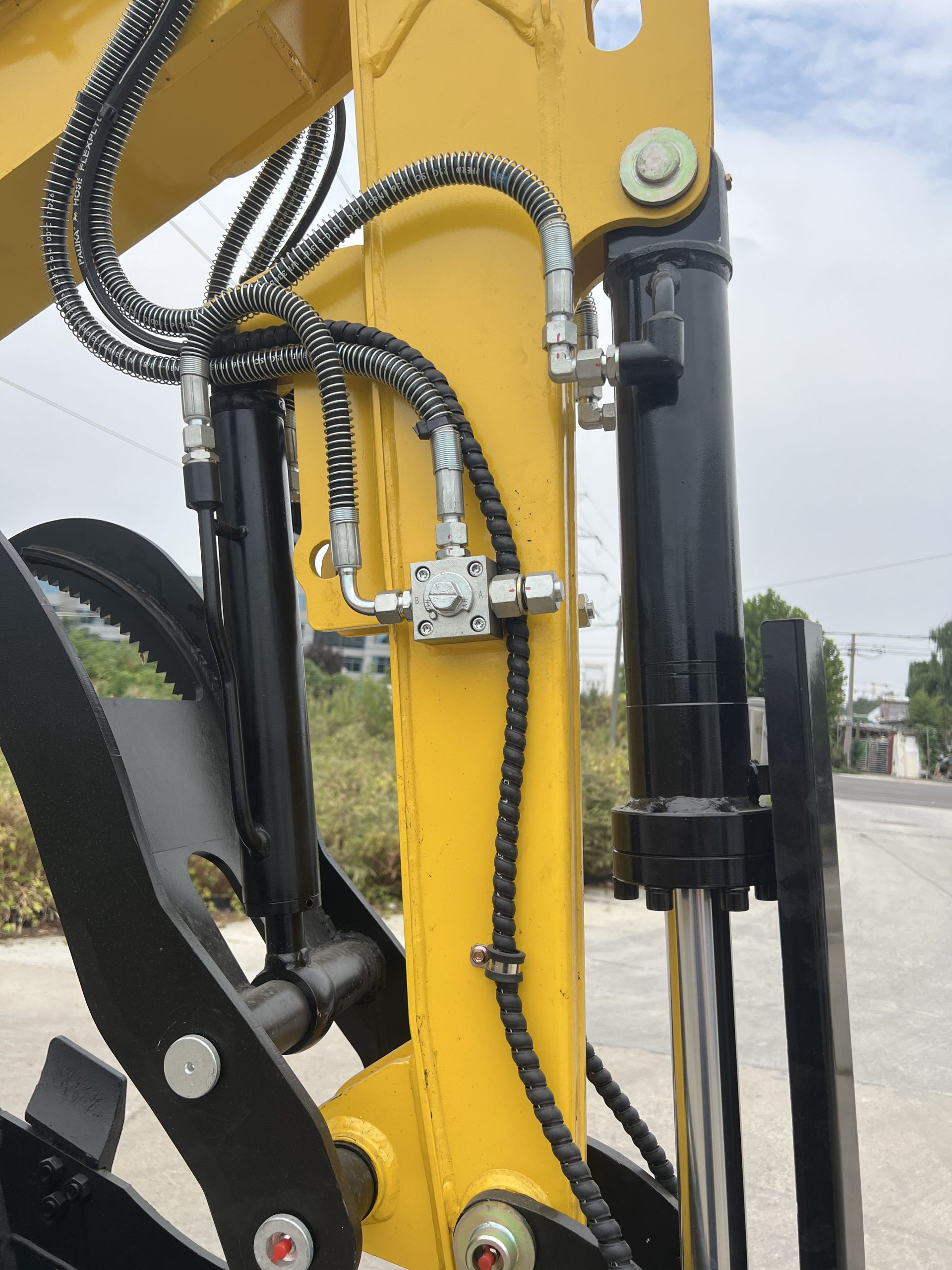
There’s a second layer most buyers don’t know to ask about: one-way versus two-way auxiliary flow. A one-way (single-acting) circuit sends oil out to the attachment and lets it return through a separate line — fine for a hydraulic breaker, which only needs flow in one direction to hammer. A two-way (double-acting) circuit can reverse flow direction, which is what a hydraulic thumb or grapple needs to open and close with force in both directions. A compatible one-way circuit can run a suitably sized breaker, but cannot power both directions of a conventional double-acting thumb without an appropriate additional valve arrangement. Which direction opens or closes the thumb depends on the installation.
In a two-way circuit, one command supplies pressure to port A while port B returns oil to the reservoir; the opposite command supplies B while A returns. The two lines exchange supply and return roles.
Augers are a partial exception worth knowing about: most need to reverse — to back out of a stuck hole — but that doesn’t automatically mean the machine needs a two-way auxiliary circuit. Some auger drives get their reverse function from a reversing valve built into the auger’s own drive unit, running off a standard one-way circuit; others expect the machine to supply two-way flow directly. Which setup a specific auger uses is a question for that auger’s documentation, not an assumption to make from the machine side. The required valves and controls depend on the installation. Digga’s flow-reversal valve is one documented example for suitable single-flow hammer circuits; confirm compatibility with the specific drive and machine.
It shows up on your excavator’s hydraulic spec sheet, under a line most buyers skip past: rated auxiliary flow and pressure, and whether the circuit is one-way or two-way.
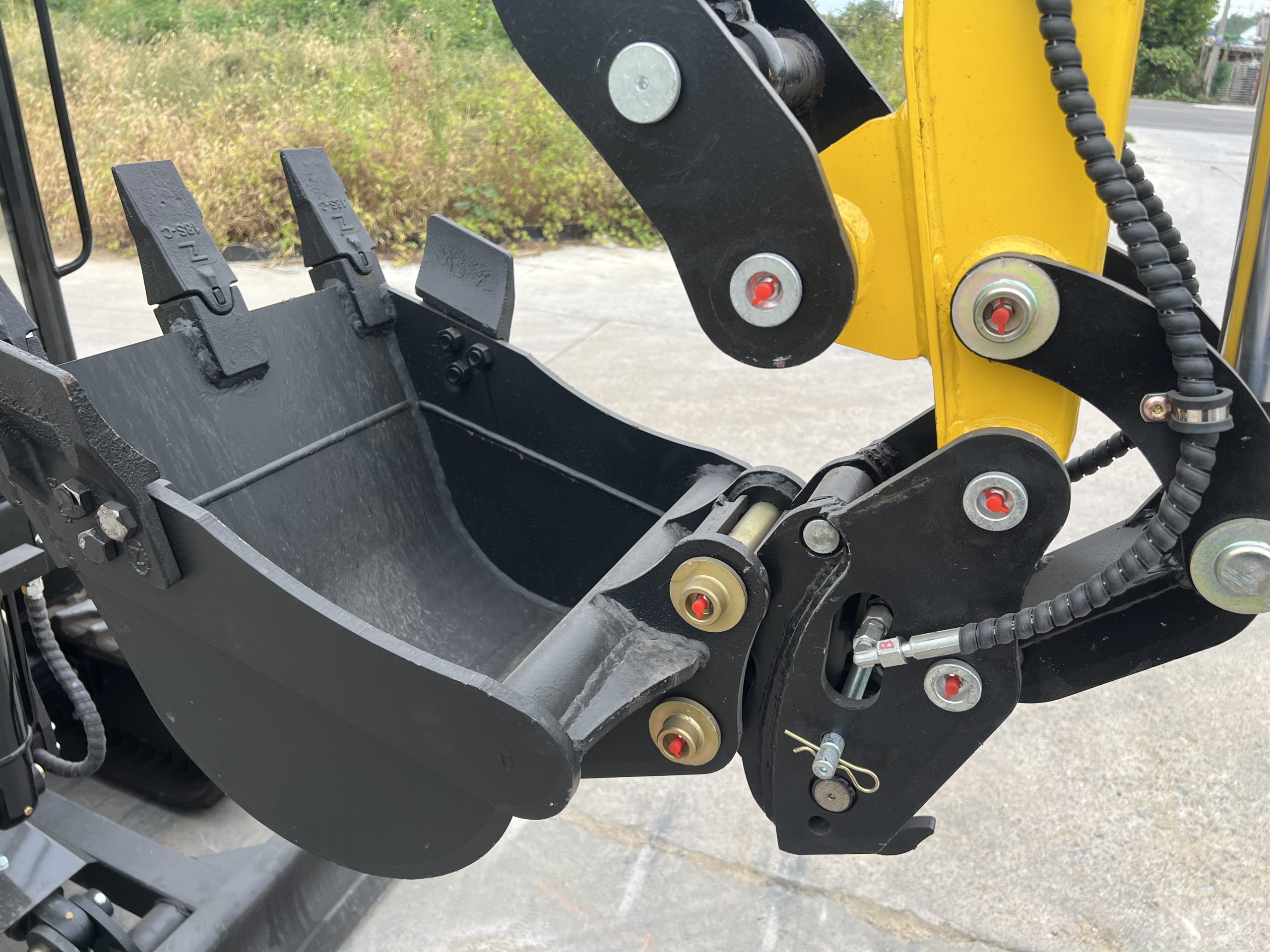
The coupler is a separate question from the hydraulics — and couplers aren’t all the same either
Worth separating out, because sellers often blur these together, and the coupler category itself has more than one tier:
- Pin-on — a fixed mechanical mount with no quick-release. Swapping attachments means pulling and re-driving pins by hand.
- Hydraulic quick coupler — locks the mechanical connection from the cab in seconds, which is a real time saver over pin-on. On most designs, though, the hydraulic hoses still need to be connected manually — you’re still getting out of the cab to plug in the attachment’s hydraulic lines before it will actually run.
- Fully automatic hydraulic coupling — connects both the mechanical mount and the hydraulic hose lines without leaving the cab at all. This is the tier that actually delivers “never get out of the seat,” and it’s worth confirming which tier a “quick coupler” spec actually refers to, since sellers use the term loosely.
None of these three change what flow or pressure your machine’s pump actually produces, and none of them convert a one-way circuit into a two-way one. A coupler claim — of any tier — is a claim about connection convenience, not about hydraulic function. Both still have to be checked separately.
Who this actually works for — and who it doesn’t
This works well if: you’re adding an attachment that falls within your machine’s factory-rated auxiliary flow and pressure, using the circuit type (one-way or two-way) it already has. A hydraulic thumb or breaker sized to your machine’s tonnage class can be a suitable starting point, but its pressure settings, controls, return requirements and mounting still need confirmation.
This doesn’t work if: you’re trying to run a high-flow attachment — a larger mulcher head, a high-flow breaker, a cold planer — on a machine that shipped with standard-flow auxiliary hydraulics and no factory high-flow option. Retrofitting high-flow hydraulics onto a machine that wasn’t built for it means a larger pump, larger plumbing, and usually a larger cooler, and the labor to fit all three. On a 2–3 ton machine, that retrofit can cost more than the price difference to the next tonnage class up that ships with high-flow standard. If that’s your situation, the honest answer is usually to buy the machine already equipped for it — even if that means a different model than the one you were originally looking at, from us or from anyone else.
Typical hydraulic requirements by attachment type
This is a compatibility checklist, not a spec sheet for any specific model — actual flow and pressure requirements vary significantly by manufacturer and model within the same attachment category. Confirm the exact numbers for your machine and the specific attachment before ordering.
| Attachment | Typical flow need | Circuit type | Notes |
|---|---|---|---|
| Hydraulic thumb | Model-specific; dedicated thumb circuit or suitable auxiliary supply | Two-way for a conventional double-acting cylinder | Manually positioned thumbs need no hydraulics; pin mounting alone does not mean a thumb is manual |
| Auger | Confirm the selected drive’s flow range | Two-way supply, or an approved reversing valve on a one-way supply | Reverse rotation may come from a reversing valve in the auger drive rather than a two-way machine circuit — confirm per model. Torque, not just flow, determines drilling speed in hard soil |
| Standard breaker | Model-specific; check the manufacturer’s permitted range | One-way | Runs on impact frequency; oversupplying flow doesn’t make it hit harder |
| Hydraulic grapple / grapple bucket | Model-specific | Two-way for gripping | Pressure and return roles switch for opening and closing; powered rotation may require additional controls |
| Compactor / plate tamp | Model-specific | As specified by the manufacturer, commonly one-way motor flow | Higher-flow models exist specifically for larger compactors |
| Mulcher head | Varies substantially with head size and motor version | Manufacturer-specified motor supply and return; do not assume reversal is permitted | Check cooling, carrier limits and case drain where required; not all compact heads need a high-flow package |
Manufacturer examples: Epiroc lists breaker requirements by model. FAE’s PML/HY is listed for 1.5–3.5 tonne excavators with a product-family flow range of 19–60 L/min (about 5–16 US GPM), so a universal 25+ GPM minimum for mulchers would be misleading. Confirm the exact motor version; these examples are not HL specifications.
If a supplier can’t tell you your machine’s rated auxiliary flow and pressure, whether a case drain is required, or the attachment’s specific requirements, that’s a conversation to have before payment, not after installation.
What the numbers actually mean in practice
Flow (GPM) and pressure (PSI) do different jobs, and mixing them up is where a lot of “it doesn’t work right” complaints come from.
Flow is how much oil moves through the circuit per minute — it primarily affects speed for a given motor or cylinder; hydraulic power depends on both flow and pressure difference. An auger or mulcher needs sustained flow to keep cutting; starve it of flow and it slows down or stalls under load even though the machine “has hydraulics.”
Pressure difference across a motor or cylinder, together with its displacement or effective area, determines torque or force. A breaker cycles using pressure spikes, often at a flow rate lower than people expect; adding more flow to a breaker doesn’t make it hit harder, it just runs the cycle faster, which isn’t always a benefit and can add wear.
As a rough diagnostic, not a rule: an attachment that runs but feels slow or sluggish is worth checking for a flow shortfall first. An attachment that runs at normal speed but doesn’t hit, clamp, or drill with enough force is more likely a pressure-side issue — the relief valve setting, excess back pressure in the return line, or a circuit-type mismatch (one-way wired for a job that needs two-way). Case drain problems tend to show up as overheating or premature seal failure rather than an obvious performance symptom, which is exactly why they get missed. None of these are mutually exclusive, and a competent hydraulics shop checking flow, pressure, and back pressure with a gauge will find the actual cause faster than guessing from symptoms alone — but knowing which category to describe when you call saves time either way.
Is a high-flow hydraulic upgrade worth paying for?
If you already know you’ll be running a mulcher, cold planer, or other high-flow tool regularly, paying for the factory high-flow package up front is close to always the right call — it’s engineered with the pump, plumbing, and cooling sized together, and its warranty coverage should be confirmed for the intended installation.
Aftermarket retrofits exist and can work, but they carry real trade-offs: the retrofit shop is now responsible for matching pump capacity to your specific machine’s engine output (an underpowered engine can’t drive a bigger pump without a loss elsewhere), and warranty coverage for the modification and any related damage needs to be confirmed in writing. If you’re not running high-flow attachments often enough to justify the factory package, renting the occasional high-flow job to a specialist attachment operator is usually cheaper than either option.
Where this falls across tonnage classes
Configurations vary significantly by manufacturer and model — there’s no industry-wide cutoff at a specific tonnage, and it’s not a rule you can apply from tonnage alone. Available auxiliary flow, one-way/two-way controls and factory options must be checked on the exact model and build configuration. Do not infer circuit type from machine size alone.
Where that line sits in our own HL lineup — which models ship with two-way auxiliary as standard, and where high-flow becomes a factory option rather than a retrofit — is exactly the kind of question we’d rather answer directly than have you guess from a spec sheet. Tell us the tonnage range and the attachment, and we’ll tell you where it falls.
Frequently Asked Questions
Can I put any attachment on my mini excavator if the coupler fits?
No. The coupler is a mechanical fit; whether the attachment functions correctly depends on your machine’s auxiliary hydraulic flow, pressure, and circuit type (one-way or two-way), which are separate from the coupler entirely.
What does “high flow” mean on a mini excavator?
It refers to an auxiliary hydraulic circuit built to deliver significantly more oil flow than standard, usually paired with a larger pump and cooler, to run attachments like mulchers or large compactors that need sustained high volume.
Do I need two-way auxiliary hydraulics for a hydraulic thumb?
If the thumb is hydraulically actuated (opens and closes under hydraulic power rather than being manually repositioned), a conventional double-acting cylinder needs alternate pressure supply to its two ports, through a suitable two-way circuit or approved valve arrangement, for powered movement in both directions.
Can I retrofit high-flow hydraulics onto a standard-flow excavator?
Often yes, but it requires upsizing the pump, plumbing, and typically the cooler, and the engine has to have the spare power to drive the larger pump. It’s a real cost and warranty coverage must be confirmed — worth pricing against buying a machine that ships with high-flow standard.
Why does my breaker feel weak even though the machine has plenty of hydraulic power?
Breakers run on pressure cycles more than raw flow. If the circuit isn’t delivering the pressure the breaker is rated for, it will feel underpowered regardless of how much flow is available — check flow, pressure, back pressure and the breaker’s condition against its manual before choosing a remedy.
Does a bigger excavator always mean better attachment compatibility?
Not automatically. Tonnage correlates with typical hydraulic capacity, but two machines in the same weight class can ship with different auxiliary hydraulic specs. Always check the machine’s rated flow and pressure, not just its tonnage.
Is a pin-on attachment ever the better choice over a hydraulic quick coupler?
If you rarely swap attachments, pin-on is simpler, has one less hydraulic connection to maintain, and costs less up front. A standard hydraulic quick coupler saves real time on the mechanical mount, but usually still requires connecting the attachment’s hydraulic hoses by hand — only a fully automatic hydraulic coupling skips that step too. Which tier is worth paying for depends on how often you’re actually swapping attachments in a day.
Tell us what you’re trying to run
Send us these details and we’ll tell you plainly whether it’ll work, not just sell you the attachment:
- Excavator model or tonnage (and auxiliary hydraulic spec, if you know it)
- Attachment type you’re considering
- Primary application (utility work, land clearing, demolition, etc.)
- Whether the machine currently has one-way or two-way auxiliary hydraulics, if known
- Expected quantity, if this is for a fleet or dealer order
Email hongli@hongli-mach.com or WhatsApp +86 131 0548 1184.