
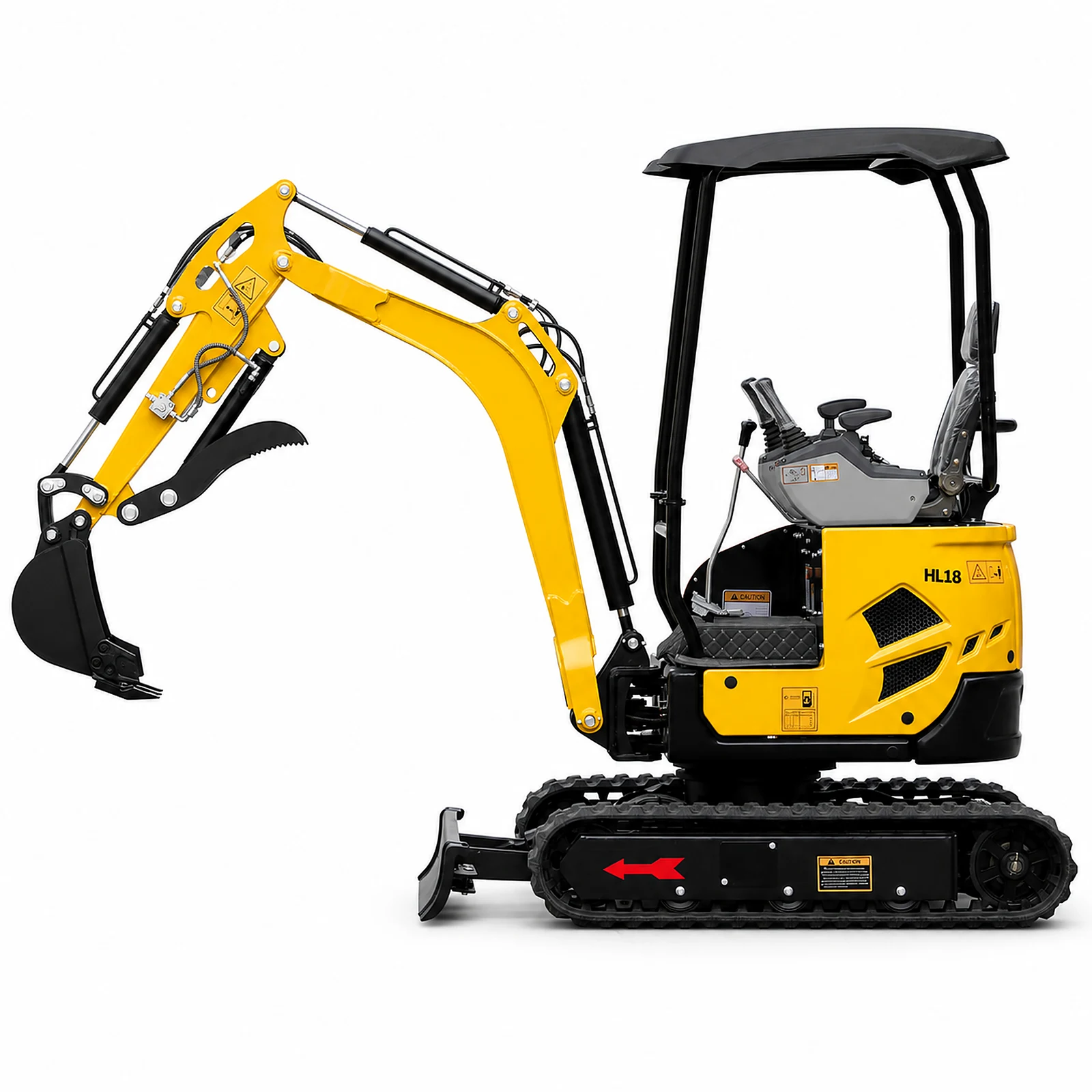
1.4 t catalog operating weight · 1,100 mm overall width · 0.04 m³ bucket · 2,258 mm maximum digging depth
The Hongli HL18 is a mini excavator from Tai’an Hongli Machinery Equipment Co., Ltd. The supplied catalog lists a 1.4-tonne operating weight, 1,100 mm overall width, a 0.04 m³ digging bucket and a maximum digging depth of 2,258 mm. Rubber tracks are listed for the catalog configuration. Engine choice, retractable undercarriage and cab equipment should be confirmed for the machine being quoted.
Send us your narrowest access width, required digging depth, main application, destination country and expected quantity. We can review whether the HL18 configuration fits the job or whether a neighboring model is a better starting point. Request an HL18 configuration review.
Buy the complete configuration, not just the engine badge
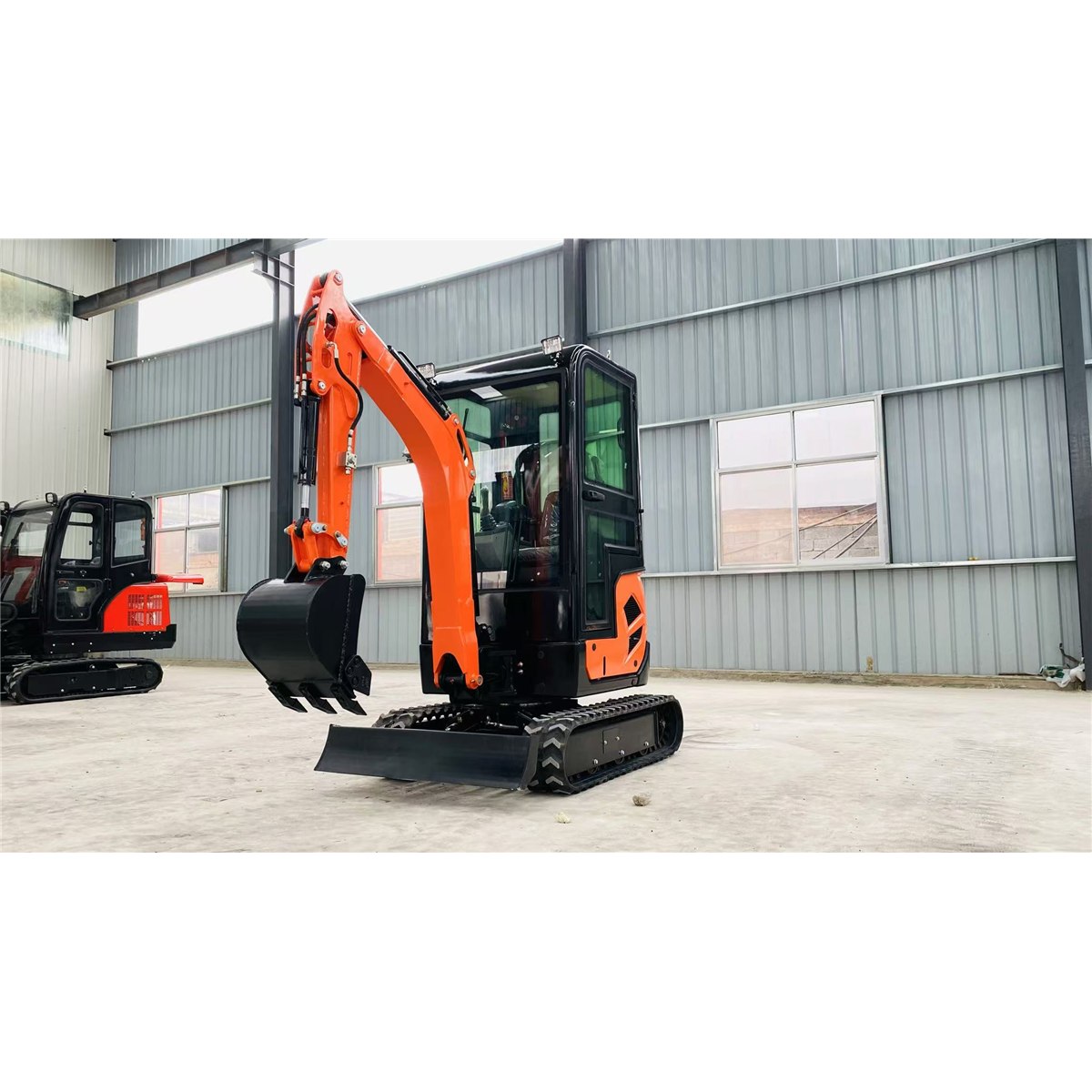
The HL18 catalog cover names Kubota and lists a Laidong engine among the options. That does not mean every HL18 offered for sale has the same engine, rated power, emissions documentation or equipment package. A model name identifies the machine family; it does not settle the specification of an individual order.
This matters when two quotations appear to describe the same excavator. One may include a different engine version, a retractable undercarriage, an enclosed cab or attachment equipment. Comparing only the engine brand or the headline machine price can hide the difference that determines whether the machine can actually do your work.
Start with three checks. First, establish the configuration that meets your task and access constraints. Second, specify the exact engine model and documentation required for the destination. Third, compare quotations with the same equipment included.
For an engine comparison, request rated power together with rated speed and the gross or net definition. A familiar model name does not make figures from different variants directly comparable. Ask for an identification-plate photograph and a configuration sheet that agree with the quotation. Our mini excavator engine buying checklist sets out the information to request.
Do not order a Kubota-equipped HL18 on the assumption that the brand itself establishes compliance. Equally, do not dismiss a quoted Laidong configuration without checking whether its specific version meets your destination requirements and service needs. The Laidong 385 vs Kubota D722 guide explains the comparison; the current order specification must identify which version is actually available.
The same discipline applies to the chassis. The catalog lists 1,100 mm overall width and a retractable undercarriage option, but it does not state the retracted and extended widths of that option. You cannot substitute the 945 mm body-width figure for the machine’s passage width. An engine upgrade does not solve an access problem, and a retractable chassis does not establish the engine documentation.
A useful HL18 quotation connects the engine, chassis and operator enclosure to your actual job. It should let you check what you are buying before the machine is packed.
Where the HL18 makes sense
Consider the HL18 for landscaping excavation, property maintenance and smaller trenching tasks when the required work falls within its confirmed working envelope. Its catalog dimensions make it worth reviewing where a larger excavator is difficult to position, but where the HL10’s depth or bucket size would be limiting.
The machine still needs an access route and working area appropriate to the selected configuration. Measure the full route, including corners, overhead obstacles and the space required to unload material. Do not judge suitability solely by the width of the entrance.
The HL18 is a poor choice if a fixed opening is narrower than the confirmed transit width, if the required depth lies beyond its useful working envelope, or if the job depends on a lifting capacity that has not been checked against a configuration-specific lift chart. If the work requires repeated handling of larger material volumes, compare a larger model instead of assuming that the largest available HL18 bucket will resolve the constraint.
HL18 catalog specifications
The following figures describe the supplied catalog configuration. The engine, cab, undercarriage and attachments on a particular order need their own specification confirmation.
| Parameter | Catalog specification |
|---|---|
| Model | HL18 |
| Operating weight | 1.4 t / 1,400 kg |
| Engine listing | Kubota on the catalog cover; Laidong listed as an option |
| Digging bucket capacity | 0.04 m³ |
| Bucket width | 420 mm |
| Overall length | 3,319 mm |
| Overall width | 1,100 mm |
| Overall height | 2,292 mm |
| Body width | 945 mm |
| Body swing radius, catalog label | 820 mm |
| Body swing angle | 360° |
| Boom swing angle, left/right | 55° / 45° |
| Maximum digging radius | 3,417 mm |
| Maximum digging depth | 2,258 mm |
| Maximum digging height | 2,840 mm |
| Maximum unloading height | 1,781 mm |
| Minimum swing radius, catalog working-range label | 1,487 mm |
| Maximum dozer blade digging depth | 274 mm |
| Maximum dozer blade lifting height | 120 mm |
| Track type | Rubber tracks |
| Track width | 230 mm |
| Track length | 1,503 mm |
| Fuel tank capacity | 13.5 L |
| Hydraulic tank capacity | 18 L |
Read the dimensions against the task
Overall width and body width answer different questions
For an entrance-width check, begin with the 1,100 mm overall-width specification, then confirm the actual travel configuration. The 945 mm body width describes a different part of the machine. The 420 mm bucket width is smaller again; it does not establish how narrow a route the excavator can pass through.
If retractable tracks are part of your order, request both width limits and the manufacturer’s instructions for using the undercarriage. Check any fitted equipment that extends beyond the machine. A statement that the chassis retracts is insufficient for a fixed-width gate.
Boom swing does not establish zero tail swing
The catalog lists left and right boom-swing angles of 55° and 45°. This describes the boom’s offset movement relative to the upper structure. It should not be used to classify the rear of the machine as zero tail swing.
Similarly, the 820 mm body-swing radius and the 1,487 mm minimum-swing-radius entry should not be treated as interchangeable dimensions. Confirm the rear swept envelope for the configuration you intend to use. The zero tail swing vs conventional mini excavator guide explains why passing through an entrance and having room to rotate are separate checks.
Digging depth is a limit, not a trench specification
The 2,258 mm maximum digging depth is useful for screening a task. It does not establish vertical-wall digging depth or the available depth at every horizontal radius. Review the working-range drawing against the planned machine position and excavation profile.
The 1,781 mm maximum unloading height also needs to be checked against the receiving location. Do not assume that it is available at the machine’s maximum digging radius. For bulk material, the 0.04 m³ bucket capacity does not by itself establish production per hour.
Cab height and transport weight follow the selected build
The catalog lists 2,292 mm overall height, but the order may have a canopy or an enclosed cab. Confirm the relevant height before checking an overhead entrance or planning transport. The catalog operating weight is not a shipment declaration for every engine, cab and attachment combination.
Which HL18 options deserve attention?
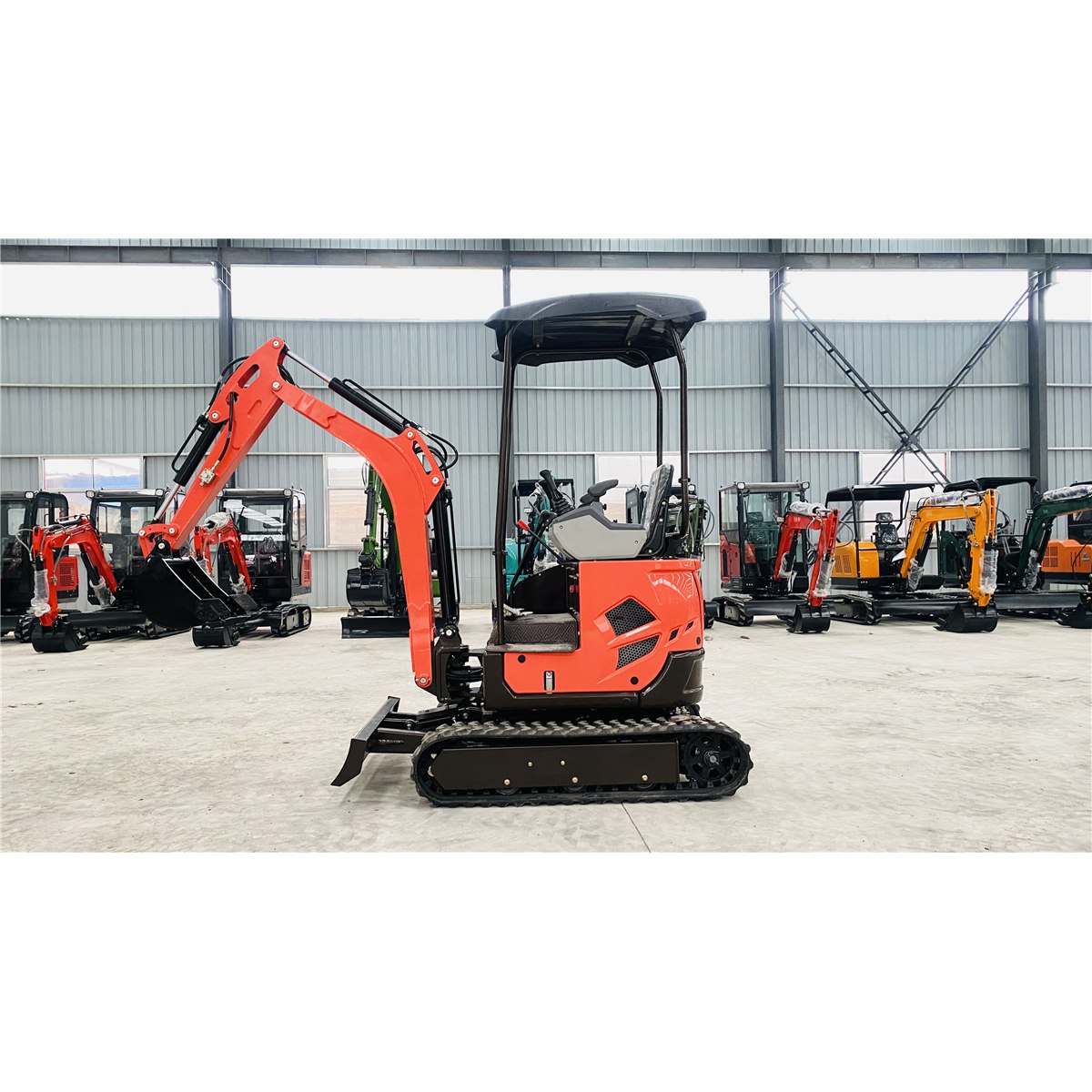
Retractable undercarriage: Discuss it first when access is the deciding constraint. Confirm its retracted and extended widths and the approved operating arrangement. Do not assume the body-width number is the retracted width.
Engine choice: Review exact model, documentation and practical service support for your location. Neither the catalog cover nor a brand badge establishes which engine is included in a quotation. Specify the selected version in writing; do not compare old upgrade prices with a current order.
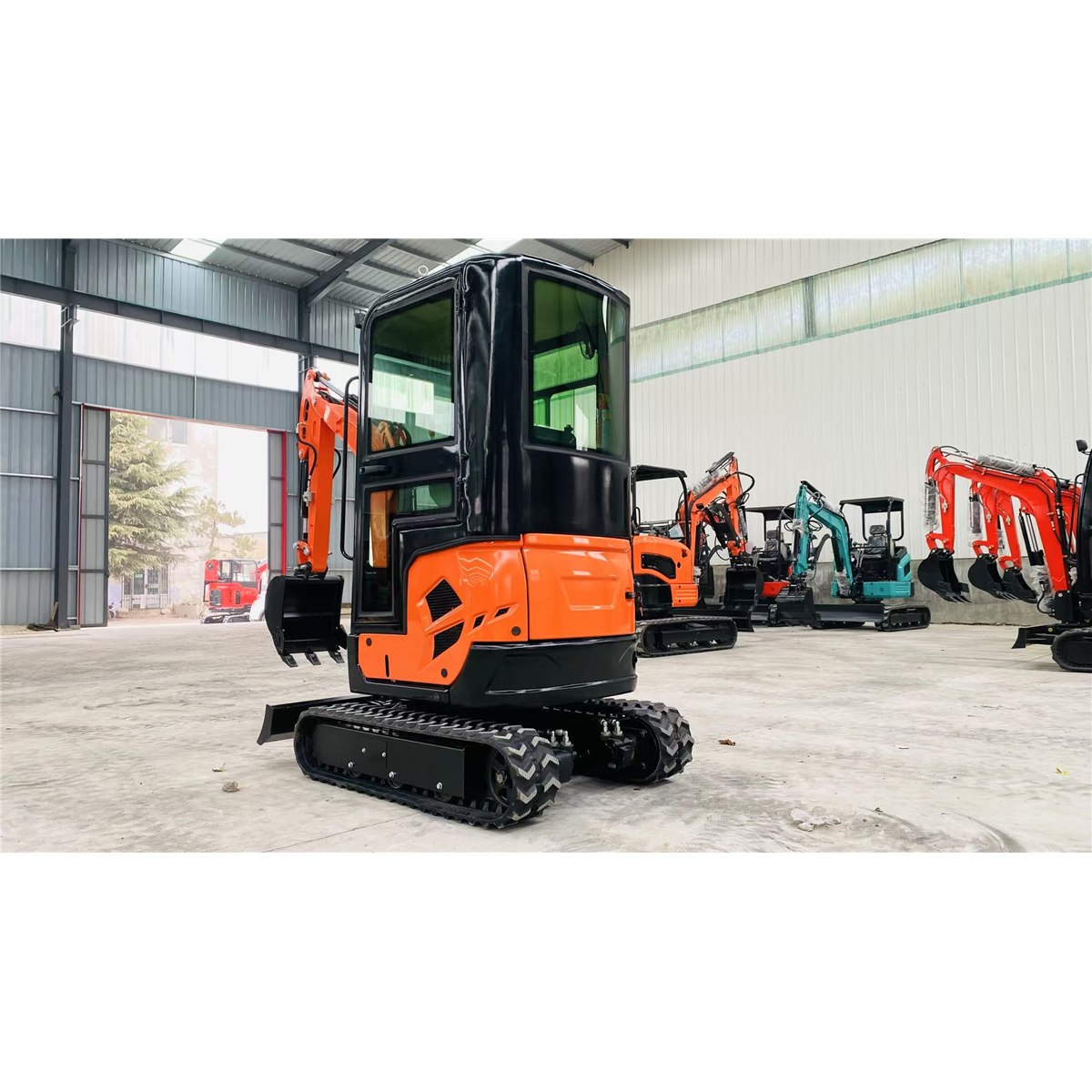
Enclosed cab and air conditioning: Consider the enclosure for your weather and working pattern, then confirm the included equipment, height and weight. The photographs illustrate cab and canopy arrangements, not a promise that both have identical transport dimensions or equipment.
Hydraulic quick coupler: Consider it if you expect frequent changes of tools. Confirm the interface, locking arrangement and permitted attachments. The added equipment needs to be included in the configuration review rather than treated as an invisible accessory.
Two-speed hydraulic travel motor: The catalog lists this option but does not give its speed values. Ask for the selected travel arrangement if movement around the site matters. Do not invent a faster cycle time from the option name.
Steel tracks: These are listed as an option to the catalog rubber-track configuration. Discuss the intended surface and undercarriage arrangement before choosing them. Rubber tracks do not guarantee that finished ground will remain unmarked, especially during turning or on unsuitable ground.
For powered attachments, request the HL18’s available auxiliary flow, pressure, return arrangement and any tool-specific requirements. A quick coupler establishes neither hydraulic compatibility nor lifting approval. Our mini excavator bucket compatibility guide covers the mechanical interface checks to make separately.
HL18 or HL10: decide what the extra size solves
The HL10 catalog lists 0.85 t operating weight, 935 mm overall width, a 0.018 m³ bucket and 1,560 mm maximum digging depth. The HL18 lists 1.4 t, 1,100 mm width, 0.04 m³ and 2,258 mm depth.
That is 165 mm additional catalog width in exchange for a different depth and bucket configuration. If your route accommodates the HL18 and the work needs its working envelope, those differences are a concrete reason to consider it. If access is the binding constraint and the task fits the HL10, the smaller machine remains worth reviewing.
The greater bucket volume is not a corresponding guarantee of greater hourly output. Match the material, excavation profile and unloading arrangement before comparing production. The mini excavator size chart can help you compare the relevant size measurements without treating the model number as the machine’s weight.
If neither model meets the job, review the current excavator range rather than trying to make a small-machine configuration satisfy a larger task.
HL18 buying questions
Is the HL18 a 1.8-tonne mini excavator?
The supplied catalog lists 1.4 t operating weight. HL18 is the model designation, not proof of a 1.8-tonne operating weight. Confirm the particular order’s engine, enclosure and equipment when requesting its weight.
Will it fit through a 1,000 mm opening?
The catalog overall width is 1,100 mm, so that configuration does not fit a 1,000 mm opening. If considering the retractable-undercarriage option, obtain its verified transit width before choosing it. The 945 mm body-width entry is not evidence that the whole machine fits.
Is Kubota the standard engine on every HL18?
Do not assume so. The catalog shows Kubota and lists Laidong as an option; the current quotation must state the exact engine included. Obtain its identification details and the documentation relevant to your destination.
Do the boom-swing angles mean it is zero tail swing?
No. Boom offset and rear swing clearance describe different movements. Request the rear swept-envelope dimensions for the selected configuration; the boom angles alone cannot establish zero tail swing.
Can I use 2,258 mm as its vertical-wall digging depth?
No. That is the listed maximum digging depth. The catalog does not provide a separate verified vertical-wall depth. Review the working-range drawing and the required excavation profile before selecting the machine.
Does the enclosed cab keep the same 1.4-tonne weight and height?
The catalog figures should not be extended automatically to every cab, engine and attachment combination. Request the specification and transport measurements of the actual build, including the enclosure and selected equipment.
Tell us the constraints before requesting a quotation
For an HL18 recommendation from Tai’an Hongli Machinery Equipment Co., Ltd., include:
- Destination country and destination port, if known.
- Main application, material and required digging depth.
- Narrowest entrance, overhead clearance and available working area.
- Preferred engine version and any documentation requirements.
- Cab or canopy preference, undercarriage choice and required attachments.
- Expected quantity, transport constraints and intended delivery timing.
Request the HL18 configuration and quotation, email hongli@hongli-mach.com, or contact WhatsApp +86 131 0548 1184. The objective is to choose a configuration that fits the work, including identifying when another model is the more suitable option.
About the author
Avicii Meng — Head of Technical Engineering | Hongli Machinery
Avicii Meng is a company partner at Tai’an Hongli Machinery Equipment Co., Ltd. This page uses the supplied HL18 catalog to explain the dimensions and configuration details buyers should confirm before ordering.