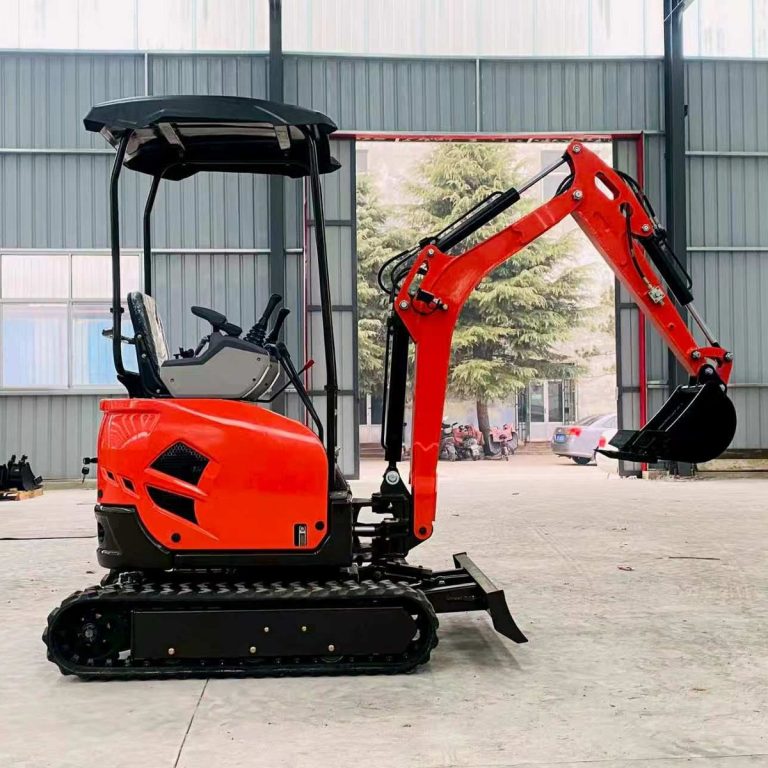
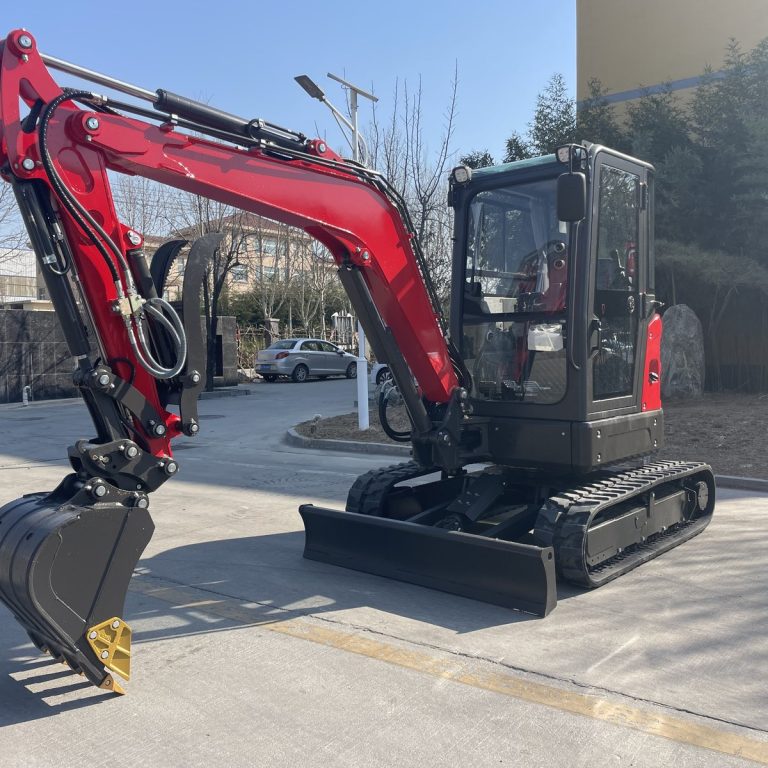
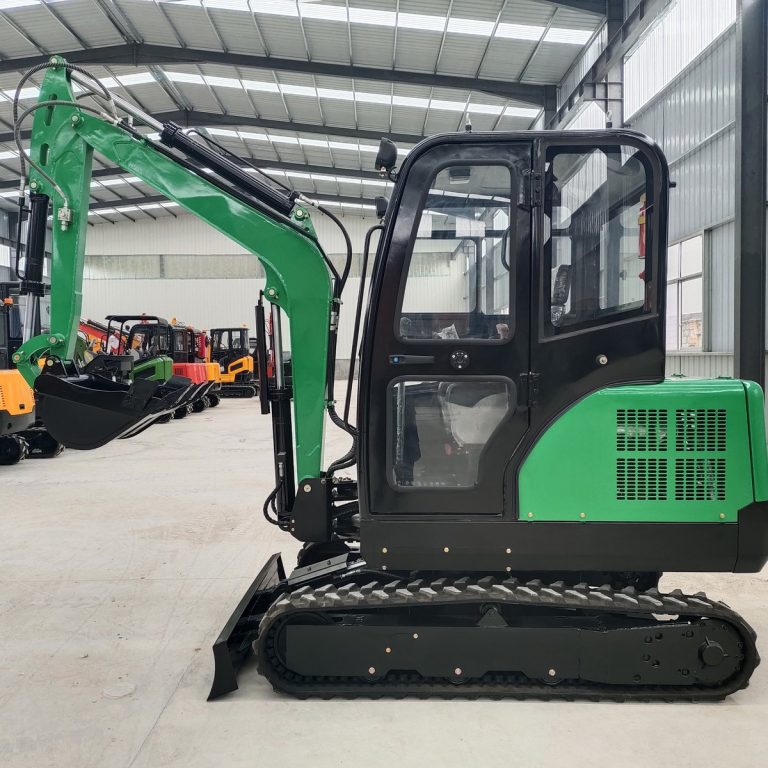
Most mini excavators ship with one bucket, and most buyers accept whatever width the supplier fits as standard. That decision costs money on every job the machine does afterwards — sometimes more than the bucket itself is worth.
A trenching bucket 150 mm wider than the trench you are digging means excavating 50% more material per metre, which significantly increases spoil handling, backfill volume, and compaction work. Over a season of utility work, that adds up to real money moved for no reason.
This guide covers the bucket types that matter on mini excavators, how to size them correctly, and the specification details — bucket capacity ratings, tooth configuration, quick couplers — that affect what the machine can actually do.
Quick Reference: Which Attachment for Which Job
| Job | Recommended attachment |
|---|---|
| Narrow utility trenching | Trenching bucket, sized to trench width |
| Finish grading and backfilling | Grading bucket (smooth edge) |
| Rocky or abrasive ground | Heavy-duty / rock bucket |
| Separating stone from soil | Skeleton bucket |
| Slope and batter finishing | Tilt bucket |
| Post holes and tree planting | Auger (requires auxiliary hydraulics) |
| Handling rocks, roots, logs | Hydraulic thumb |
| Frequent attachment changes | Quick coupler |
The sections below cover what each of these does, how to size it, and where the specification details matter.
The Bucket Types That Matter
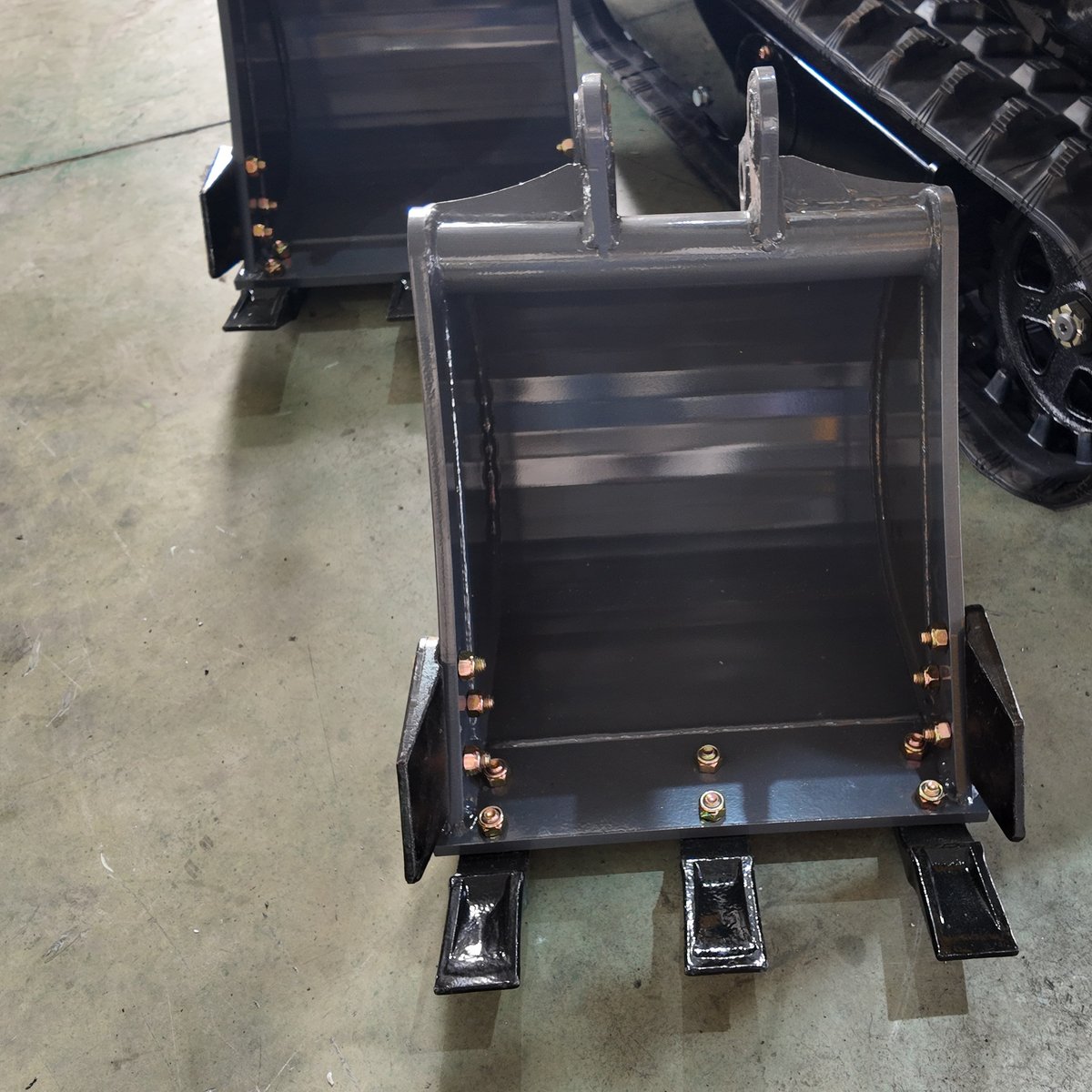
Trenching bucket (digging bucket)
A narrow, deep bucket commonly supplied as the standard digging bucket on mini excavators. Designed to cut a defined trench profile with straight sides, usually fitted with teeth.
Typical widths: 300–600 mm on machines in the 1–3 tonne range.
Use it for: utility trenching, drainage runs, irrigation lines, footings, and any application where you are digging a line rather than moving bulk material.
The specification that matters: width. See the sizing section below, because this is where most of the money is lost or saved.
Grading bucket (ditching bucket, mud bucket)
Wide, shallow, and usually without teeth — a smooth cutting edge instead. Sometimes called a ditch cleaning bucket.
Typical widths: 900–1,500 mm depending on machine size.
Use it for: finish grading, backfilling, levelling, ditch cleaning, sloping batters, and spreading material. The smooth edge leaves a clean surface that a toothed bucket cannot.
Why it matters: for landscaping, drainage, and finishing work, this often becomes one of the most frequently used attachments on site. It is the most common first addition to a machine that shipped with only a trenching bucket.
Many are available with a tilt function, which allows the bucket to angle for slope work without repositioning the machine — worth considering if batter grading is regular work.
Rock bucket / heavy-duty bucket
Reinforced structure, thicker wear plates, heavier teeth, and often side cutters. Similar profile to a trenching bucket but built to survive abrasive conditions.
Use it for: stony ground, demolition arisings, recycled aggregate, and any material that would rapidly destroy a standard bucket.
The trade-off: heavier than a standard bucket of the same capacity, which slightly reduces the machine’s usable lift capacity. On the small machines this is a real consideration.
Skeleton bucket (sorting bucket, riddle bucket)
Bars instead of a solid floor, allowing fine material to fall through while retaining rock, rubble, and debris.
Use it for: separating stone from soil, clearing rubble while retaining topsoil, land clearance, and demolition sorting.
Why buyers overlook it: it looks like a specialist tool. For anyone clearing stony ground or sorting demolition material, it eliminates a separate screening operation.
Tilt bucket
A bucket mounted on a mechanism that allows it to angle, typically around 45° each way, while remaining a bucket.
Use it for: slope and batter finishing, grading against a fall, working around obstacles, and any application where repositioning the machine to get the angle right is costing time.
Worth it when: slope work is regular rather than occasional. On general excavation the standard grading bucket does the job.
Tiltrotator
A different product entirely, and often confused with a tilt bucket. A tiltrotator is a coupler-mounted system that sits between the arm and the attachment, providing full rotation as well as tilt — and allowing multiple attachment types to be used through it.
What it changes: an operator can work at almost any angle from a single machine position, and change attachments without leaving the cab. On the right work it fundamentally changes what one machine and one operator can complete in a day.
The honest assessment: a tiltrotator is expensive, adds weight and length between the arm and the attachment, and requires additional hydraulic functions. On machines doing repetitive slope work, urban utility work, or varied tasks with frequent attachment changes, it pays back. On straightforward bulk excavation it does not.
Auger
Not a bucket, but the attachment most commonly added alongside one. Drives from the machine’s auxiliary hydraulic circuit.
Use it for: post holes, fence lines, tree planting, sign installation, and small pile foundations.
Specify auxiliary hydraulics at time of order. Retrofitting a hydraulic circuit costs considerably more than ordering it built in.
Hydraulic thumb / grapple
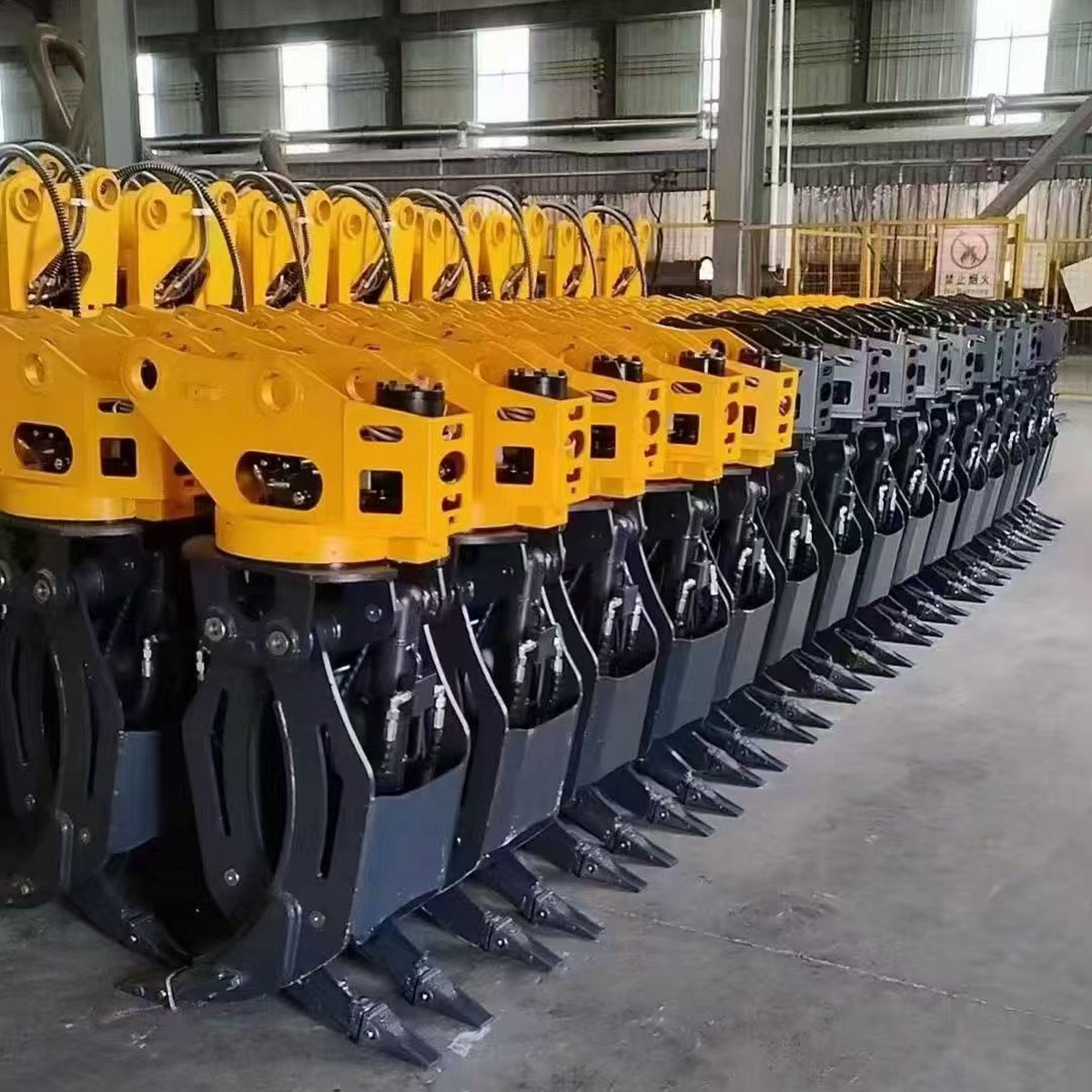
Opposes the bucket to grip material — rocks, roots, logs, pipe, and demolition debris.
Mechanical thumbs are fixed-position and set manually. Cheaper, adequate for occasional use.
Hydraulic thumbs adjust under power during the cycle, which makes them far more useful for repetitive handling.
For landscaping and land clearance work this is arguably the highest-value attachment after the buckets themselves — without it, every rock and root becomes manual labour.
Sizing a Trenching Bucket: Where the Money Is
This is the part most buyers skip, and it is where a bucket decision turns into a running cost.
Match the bucket to the trench, not to the machine
The temptation is to fit the widest bucket the machine can handle, on the logic that a bigger bucket moves more material. For bulk excavation that is correct. For trenching it is exactly backwards.
The arithmetic: a trench 1 metre deep and 10 metres long, dug at 300 mm width, produces 3 m³ of spoil. The same trench dug at 450 mm width produces 4.5 m³ — 50% more material to excavate, to move, to store, and to backfill and compact.
For a contractor doing a few hundred metres of trench in a season, the difference in excavation time, spoil handling, and imported backfill is substantial. And none of it produces any benefit, because the pipe or cable in the trench is the same size either way.
The rule: size the trenching bucket to the narrowest trench your work requires, allowing enough clearance for the pipe, bedding material, and any compaction equipment that has to go in the trench.
Common trench widths and matching buckets
- Irrigation and drip lines, small cable ducts: 300 mm bucket usually sufficient
- Standard residential water and electrical service: 300–400 mm
- Drainage and land drains: 400–450 mm depending on pipe diameter and bedding requirement
- Larger drainage, sewer connections: 450–600 mm
Check the compaction requirement. Some specifications require a plate compactor in the trench, which sets a minimum practical trench width regardless of pipe size.
Consider owning two
A narrow trenching bucket and a wide grading bucket cover the great majority of mini excavator work between them. That combination costs less than most single specialist attachments and it removes the compromise of using one bucket for everything.
Bucket Capacity: Read the Rating Carefully
Bucket capacity figures are quoted two ways, and manufacturers do not always specify which.
Struck capacity is the volume the bucket holds level with its edges — material struck off flat.
Heaped capacity is the volume including material heaped above the edges at a standard angle of repose, typically 1:1 or 2:1 depending on the standard used.
Heaped capacity is the larger figure, and it is what most specification sheets quote. The practical difference can be meaningful when calculating cycle counts for a volume of material.
When comparing machines or buckets, confirm which figure is quoted. A 0.05 m³ heaped bucket and a 0.05 m³ struck bucket are not the same bucket.
Also check the material. Capacity ratings assume a material density. Wet clay, saturated soil, and rock spoil weigh substantially more per cubic metre than dry sand or loose topsoil. A bucket filled with wet clay may exceed what the machine can lift safely at reach, even though the volume is within the bucket’s rating.
Teeth, Cutting Edges, and Side Cutters
Teeth concentrate the machine’s breakout force into small contact points, which is what allows a mini excavator to penetrate compacted ground. Tooth profiles vary — general purpose, penetration (sharper, for hard ground), and heavy-duty (blunter, for abrasive material).
Teeth are consumables. They wear, and worn teeth noticeably reduce digging performance long before they fail. Most systems use a pin-and-retainer arrangement allowing replacement without removing the bucket. Ask for the tooth part number when ordering the machine — sourcing teeth later without a part number is a common frustration.
Smooth cutting edges are used on grading buckets, where a toothed edge would leave a rippled surface. Some grading buckets have bolt-on edges, allowing replacement when worn.
Side cutters are wear plates on the bucket sides. On abrasive material they protect the bucket structure and can extend service life considerably. They also slightly widen the cut.
Quick Couplers: Convenient, But Read the Fine Print
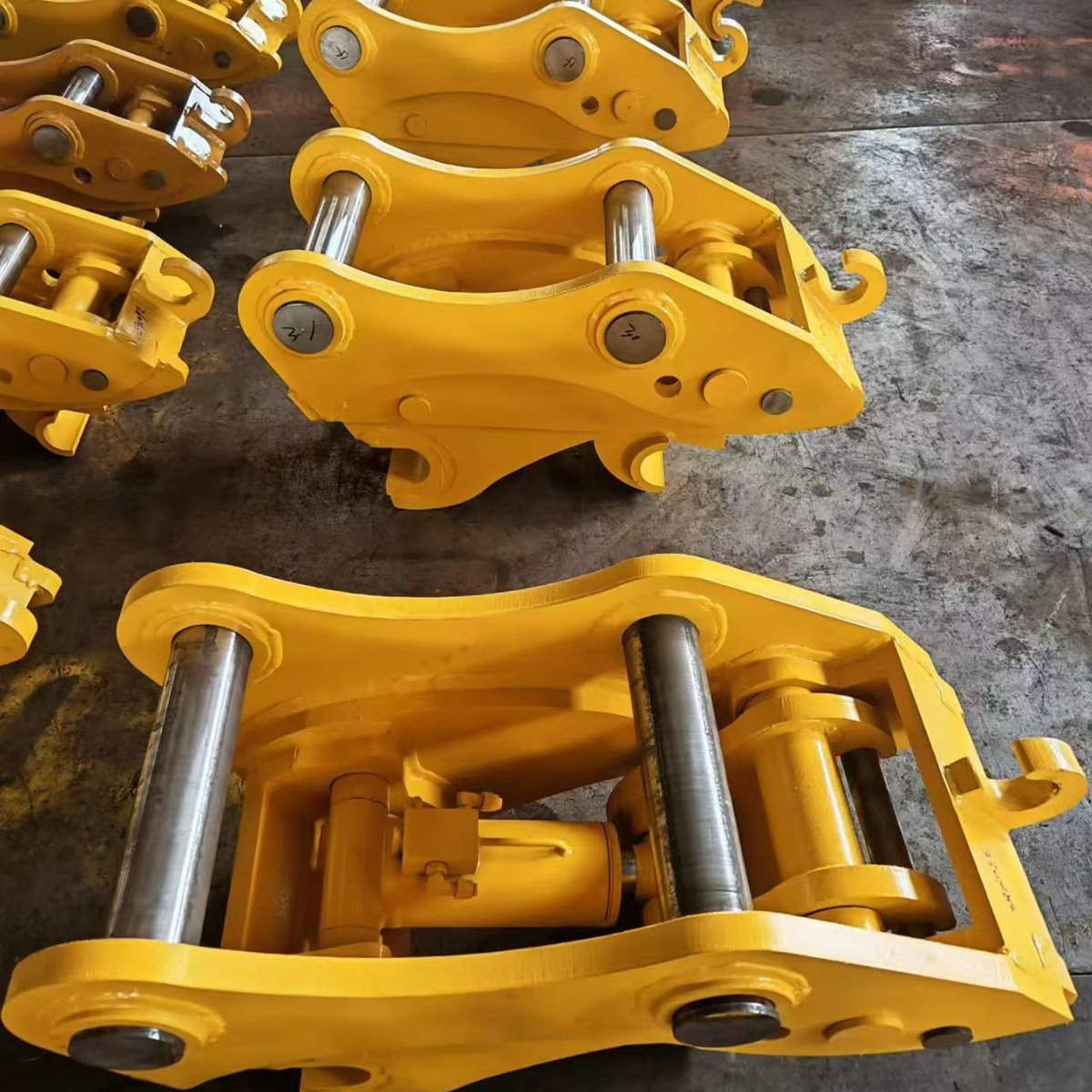
A quick coupler allows attachment changes in seconds rather than minutes of pin work. On a machine that alternates between bucket types daily, it pays back quickly.
Two things buyers should understand before specifying one:
A coupler changes the working geometry. It sits between the arm and the attachment, which alters the effective moment arm. Depending on the coupler design and pin arrangement, this can slightly reduce breakout force and shift the machine’s published reach and depth figures — which are measured with the bucket pinned directly to the arm, not through a coupler.
A coupler adds weight at the worst place. Extra mass at full reach reduces usable lift capacity more than the same mass closer to the machine.
Neither of these is a reason to skip a coupler on a machine running multiple attachments. They are reasons to confirm your actual working figures with the coupler fitted rather than relying on the brochure ones — particularly if your work sits close to the machine’s depth or lift limits. Ask the supplier for the figures with the coupler in place.
Mechanical couplers require the operator to leave the cab to engage a locking pin. Hydraulic couplers operate from the cab. If attachment changes happen several times a day, the hydraulic version pays for itself in operator time.
What Buyers Get Wrong
Accepting the standard bucket without checking the width. The bucket a machine ships with is the one the factory fits by default, not the one sized for your work. Ask what width is standard and specify what you actually need.
Buying one bucket for everything. A trenching bucket used for grading leaves a rippled surface. A grading bucket used for trenching cuts a wide trench slowly. Two buckets cost less than most people expect and eliminate the compromise.
Forgetting auxiliary hydraulics. Any hydraulic attachment — thumb, auger, breaker, tilt bucket — needs a hydraulic circuit. Specifying it at order costs a fraction of retrofitting it.
Ignoring bucket weight in lift calculations. A heavy-duty bucket weighs more than a standard bucket of the same capacity. That weight comes directly off usable lift capacity, which matters most at full reach.
Not asking for tooth and wear part numbers. These are consumables. Sourcing them without part references, from a machine that may be the only one of its type in your region, becomes a problem at exactly the wrong moment.
Assuming attachment compatibility. Attachments from other manufacturers may not fit without an adapter, and pin dimensions vary between machine sizes. Confirm compatibility before buying attachments separately.
A Practical Attachment Package
For a mini excavator doing general landscaping, drainage, and utility work, the combination that covers the most ground:
- Trenching bucket, sized to your narrowest routine trench
- Grading bucket, as wide as the machine comfortably handles
- Hydraulic thumb, with the auxiliary circuit specified at order
- Quick coupler, if attachment changes will be frequent
That package handles trenching, backfilling, finish grading, and material handling. Specialist attachments — augers, breakers, tilt rotators, skeleton buckets — are worth adding when a specific application justifies them, not as a general precaution.
For how attachment requirements interact with machine sizing, our mini excavator size chart covers what each class handles, and our guide to choosing a machine for residential landscaping covers the attachment package for that work specifically.
Frequently Asked Questions
What size bucket does a mini excavator need?
For trenching, size the bucket to the narrowest trench your work requires — a wider bucket excavates and backfills more material for no benefit. Typical trenching buckets on 1–3 tonne machines run 300–600 mm. For grading and backfilling, a wider bucket (900–1,500 mm depending on machine size) is more productive. Most contractors benefit from owning both.
What is the difference between struck and heaped bucket capacity?
Struck capacity is the volume level with the bucket edges. Heaped capacity includes material mounded above the edges at a standard angle, and is the larger figure that most specification sheets quote. When comparing buckets or calculating cycle counts, confirm which figure is being used.
Do I need a quick coupler?
If the machine will change attachments frequently, yes — the time saved adds up quickly. Be aware that a coupler adds length and weight between the arm and bucket, which slightly reduces maximum digging depth, breakout force, and lift capacity at reach. On machines working close to their limits, factor this in.
What attachments need auxiliary hydraulics?
Hydraulic thumbs, augers, breakers, tilt buckets, tilt rotators, compaction plates, and grapples all require a hydraulic circuit beyond the standard bucket functions. Specify auxiliary hydraulics at time of order — retrofitting costs substantially more than the factory option.
Are excavator buckets interchangeable between machines?
Not reliably. Pin diameters, pin spacing, and mounting dimensions vary between machine sizes and manufacturers. Attachments may fit with an adapter or may not fit at all. Confirm compatibility against your specific machine before purchasing attachments separately.
How often do bucket teeth need replacing?
Tooth life depends entirely on material abrasiveness and hours worked. What matters more than the replacement interval is noticing the wear — worn teeth reduce digging performance well before they fail, and operators often work with badly worn teeth without realising the productivity cost. Keep the tooth part number on file so replacements can be ordered before performance degrades.
Specifying Attachments With Your Machine
Ordering attachments with the machine is cheaper than adding them later, and it guarantees compatibility. When requesting a quotation, tell us:
Machine model or size class:
Narrowest routine trench width:
Whether finish grading is regular work:
Material worked (soil / clay / stony / demolition):
Hydraulic attachments planned (thumb / auger / breaker / other):
Quick coupler required (mechanical / hydraulic / none):
Destination country:
We will specify the attachment package against the work rather than sending a standard list — including telling you where an attachment you asked about is not worth the money for your application.
Contact: hongli@hongli-mach.com · WhatsApp +86 131 0548 1184
About the Author Avicii Meng is Head of Technical Engineering at Tai’an Hongli Machinery Equipment Co., Ltd., where he works on export-oriented excavator configurations, engine compliance requirements, and OEM manufacturing projects for international markets. Hongli manufactures mini and compact excavators, skid steer loaders, forklifts, and backhoe loaders for export to global markets. Contact: hongli@hongli-mach.com | hongli-mach.com