By Avicii Meng, Head of Technical Engineering | Hongli Machinery
For most residential landscaping work, the best mini excavator is a 1–2 ton machine with rubber tracks, a retractable undercarriage, and reduced tail swing. That configuration passes through standard garden gates, digs deep enough for irrigation and drainage lines, works close to fences and walls, and can often be transported on a light equipment trailer behind a properly rated pickup, subject to local towing and licensing limits.
That is the short answer. The rest of this guide explains why each of those specifications matters on landscaping jobs specifically, where buyers commonly get the sizing wrong, and what to check before ordering.
Landscaping Requirements vs Machine Specifications
| Landscaping Task | Typical Requirement | Specification That Matters |
|---|---|---|
| Irrigation and drip lines | 0.4 – 0.8 m depth | Any class; access is the real constraint |
| Drainage and French drains | 0.6 – 1.2 m depth | Mini class (1–2T) comfortable |
| Tree and shrub planting | 0.6 – 1.0 m depth, wide holes | Bucket width options, boom swing |
| Retaining wall footings | 0.8 – 1.5 m depth | 1–2T with adequate breakout force |
| Pond and water feature excavation | 1.0 – 2.0 m depth | 2–3T for volume work |
| Stump and root removal | Surface, high force | Breakout force, thumb attachment |
| Backyard access through gates | Under 1.0 m width | Retractable undercarriage |
| Working against fences and walls | Zero clearance behind | Reduced or zero tail swing |
Read that table from the bottom up. Depth requirements in residential landscaping are modest — nearly every mini excavator on the market digs deeper than a French drain needs. Access and tail swing are what actually decide whether a machine can do the job, and those are the specifications buyers most often skip past when comparing quotes.
Why 1–2 Ton Is the Landscaping Sweet Spot
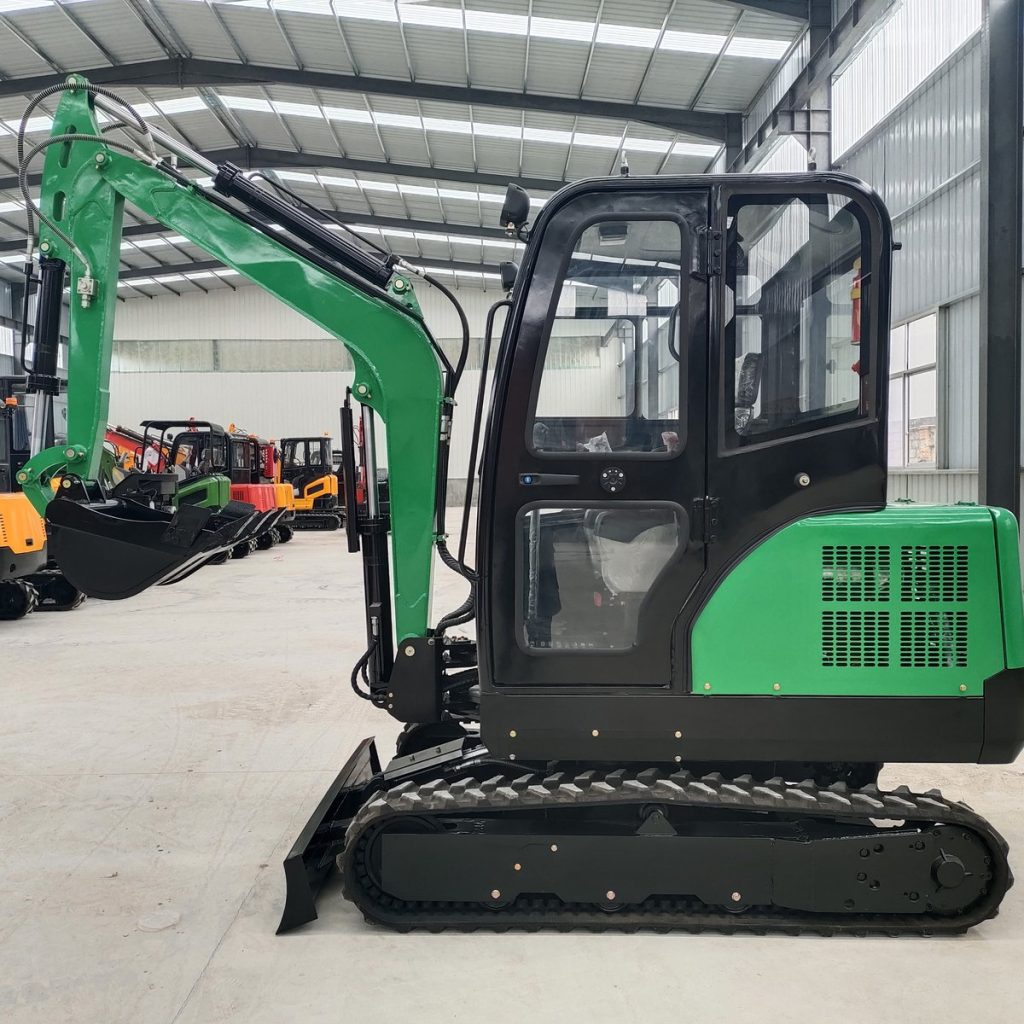
Gate access. Many residential side gates and backyard access points are around or below 1.0 m wide. Machines in the mini class with retractable undercarriages narrow to fit through, then extend for digging stability. What matters is the retracted width on the specification sheet measured against your own narrowest routine access point — larger machines simply do not get into the backyard, and no amount of capability compensates for that.
Lawn damage. Rubber tracks spread machine weight across a large contact area, producing ground pressure low enough to cross finished lawns without tearing turf. This matters commercially — a landscaping contractor who leaves ruts across a client’s front lawn spends the profit from the job repairing it.
Towability. Machines under about 2 tons can often move on a light equipment trailer behind a properly rated pickup, subject to local towing and licensing rules. For a landscaping business running several jobs a week, self-transport versus hired hauling is a meaningful difference in operating cost and scheduling flexibility.
Capability margin. A 1.8-ton machine typically reaches around 2.2–2.4 m dig depth — comfortable margin over the 1.2 m that drainage work demands, with enough breakout force for compacted clay and root-bound soil.
Machines under 1 ton are worth considering when access is extremely tight — courtyards, interior renovations, gates below 0.8 m. They trade away breakout force and stability, so they suit access-constrained work rather than general landscaping production.
For buyers comparing machines in this range, Hongli’s HL18 falls into the 1.8-ton class discussed throughout this guide.
The Specifications That Matter on Landscaping Jobs
Retractable undercarriage
Also called variable-width or expandable tracks. The undercarriage narrows for transit through gates and doorways, then widens for digging stability. For any contractor whose work involves backyard access, this is the single most valuable option in the mini class — it is the difference between taking the job and turning it down.
Ask specifically whether the model quoted offers it, and what the retracted and extended widths are. The retracted figure is the one that determines which gates you clear.
Reduced or zero tail swing
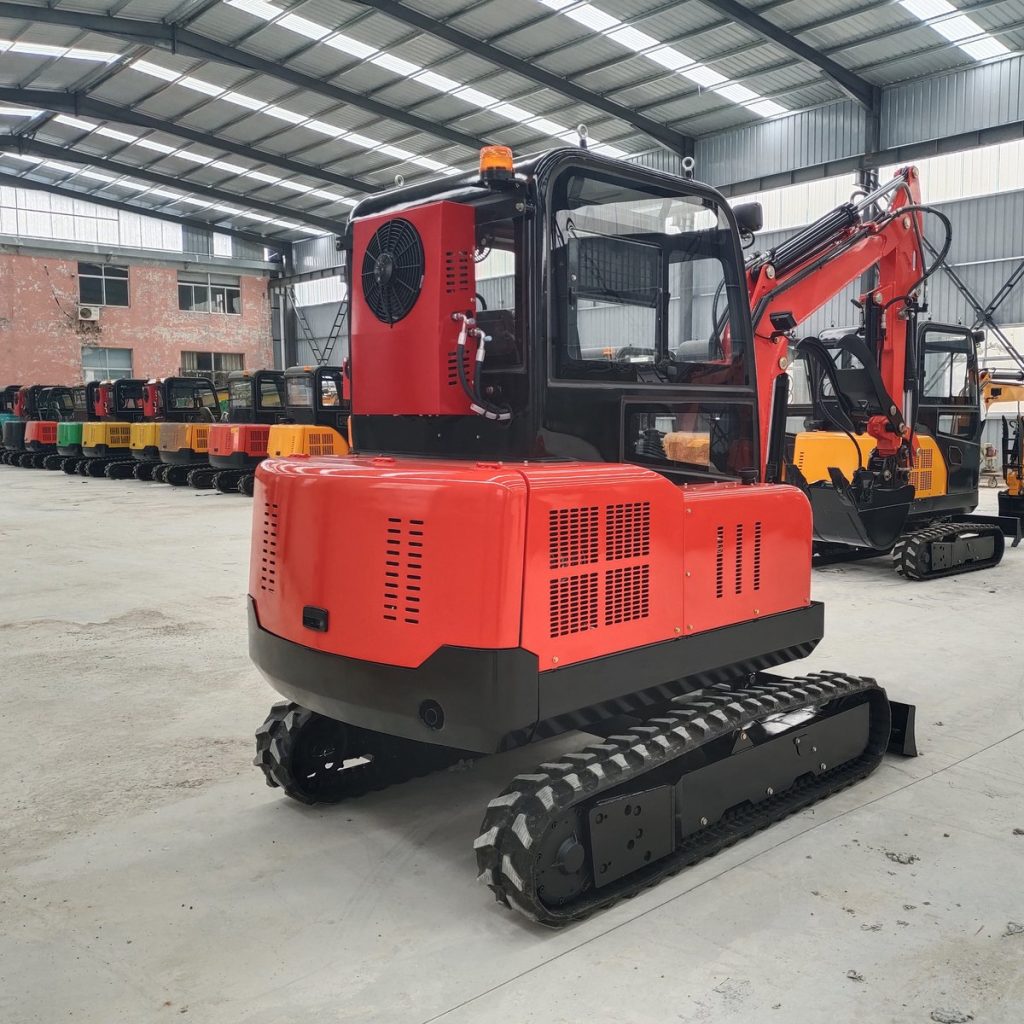
Conventional excavators swing their counterweight beyond the track width during rotation. On an open site that is irrelevant; in a backyard bounded by a fence, a wall, and a neighbour’s shed, it decides whether the machine can rotate at all.
Zero tail swing keeps the counterweight within track width. Reduced tail swing allows slight overhang. Both cost somewhat more than conventional designs and can trade away some over-side lift capacity — an easy trade for landscaping work, where lifting capacity is rarely the binding constraint and clearance always is.
Rubber tracks
Standard on most mini excavators and the correct choice for landscaping. Steel tracks damage finished surfaces, driveways, and turf. Steel is for rock and demolition — specify rubber for this work, and consider road pads if the machine will cross paved areas frequently.
Boom swing
Boom swing lets the boom pivot left or right independently of the house, allowing the operator to dig parallel to a wall or fence line without repositioning the whole machine. On landscaping jobs that involve trenching along property boundaries — irrigation lines, drainage runs beside foundations — this saves a considerable amount of repositioning time.
Attachments worth specifying
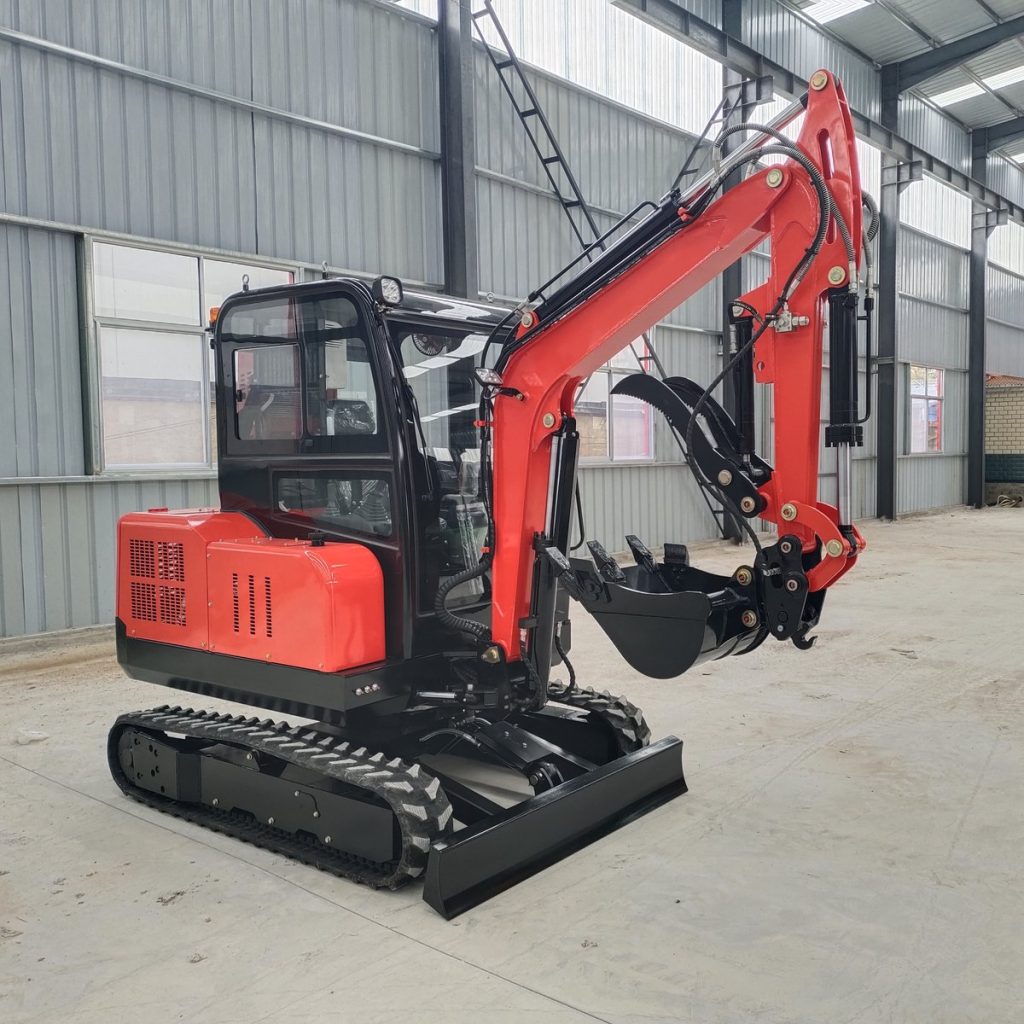
- Narrow bucket (300–400 mm) for irrigation and drainage trenching
- Wide grading bucket for finish grading and backfill
- Hydraulic thumb for handling rocks, roots, logs, and debris — arguably the highest-value landscaping attachment after the buckets
- Auger for post holes and tree planting, if fence or deck work is part of the business
Specify auxiliary hydraulics at time of order if any hydraulic attachment is planned. Retrofitting is possible but more expensive than ordering it built in.
Common Sizing Mistakes on Landscaping Purchases
Buying too big. The most frequent error. A 3-ton machine digs deeper and lifts more, and cannot get through a garden gate. Buyers who size for the occasional pond project end up with a machine that struggles on the routine backyard work that pays the bills.
Ignoring transport. A machine that requires hired hauling for every job carries a recurring cost that quietly erodes margin. Check machine weight plus trailer weight plus attachments against your vehicle’s rated towing capacity, and check licensing thresholds locally.
Overlooking tail swing until the first tight job. Tail swing is invisible on a spec sheet comparison focused on weight and dig depth. It becomes very visible the first time a machine cannot rotate between a fence and a foundation.
Specifying steel tracks to save money. The saving is small; the repair bill for a torn lawn or scarred driveway is not.
Skipping the thumb. Landscaping generates rocks, roots, and debris that need moving. A machine without a thumb turns those into manual labour.
Recommended Configuration for Residential Landscaping
Based on what actually gets specified for landscaping buyers, this is the configuration that fits most residential contractors:
| Specification | Recommendation | Why |
|---|---|---|
| Operating weight | 1.5 – 2.0 ton | Capability with towable transport |
| Undercarriage | Retractable (variable width) | Gate access without losing dig stability |
| Tail swing | Zero or reduced | Working against fences, walls, structures |
| Tracks | Rubber | Protects turf, driveways, finished surfaces |
| Boom | Boom swing | Trenching along boundaries without repositioning |
| Cab | Canopy or enclosed by climate | Enclosed with A/C for hot-climate full-shift work |
| Controls | Pilot | Comfort and precision on long finish-grading days |
| Attachments | Narrow + grading bucket, hydraulic thumb | Covers trenching, grading, and debris handling |
| Engine | Documented configuration for destination market | Compliance requirements vary by country |
For buyers cross-referencing this against our range: HL18 sits in the 1.8-ton class this configuration targets, and HL10 covers tighter-access work below it. Available options — undercarriage type, tail swing, cab, and engine — vary by configuration and destination market, so confirm against the specification sheet for the machine you intend to order.
Engine choice depends on where the machine will operate; our guide to mini excavator engine brands covers the options and what documentation each market requires. For how these specifications translate into price, see our China mini excavator price guide, and for sizing beyond the landscaping use case, our mini excavator size chart covers every class.
Planning a landscaping machine purchase? Send us your narrowest access width, deepest routine dig requirement, destination country, attachment needs, and expected quantity — we can recommend a configuration without any purchase commitment. hongli@hongli-mach.com or WhatsApp +86 13181780976.
Frequently Asked Questions
What size mini excavator is best for landscaping?
A 1.5–2.0 ton machine suits most residential landscaping work. It digs deeper than drainage and irrigation require, fits through standard gates when equipped with a retractable undercarriage, and tows behind a properly rated pickup. Machines under 1 ton are better where access is extremely tight; 2–3 ton machines make sense when pond excavation or heavier earthmoving is routine rather than occasional.
Will a mini excavator damage my lawn?
Rubber tracks distribute machine weight across a large contact area, producing ground pressure low enough that a mini excavator can cross finished turf with minimal marking, particularly when the ground is not saturated. Steel tracks will damage lawns and paved surfaces. For landscaping work, specify rubber tracks and consider plywood or track mats over particularly sensitive areas.
Can a mini excavator fit through a garden gate?
Machines in the micro and mini classes with retractable undercarriages typically narrow to under 1.0 m, which clears most standard residential side gates. Confirm the retracted width in the specification sheet against your narrowest routine access point before ordering — retracted width, not operating width, is the figure that matters for access.
Do I need zero tail swing for landscaping work?
If the work involves rotating close to fences, walls, foundations, or structures — which describes most backyard landscaping — zero or reduced tail swing is worth specifying. On open sites it offers no advantage. Zero tail swing typically costs slightly more and may reduce over-side lift capacity, which is rarely the limiting factor on landscaping jobs.
What attachments do I need for landscaping?
A narrow bucket (300–400 mm) for trenching, a wider grading bucket for finish work and backfill, and a hydraulic thumb for handling rocks, roots, and debris cover the large majority of residential landscaping tasks. An auger is worth adding if post holes or tree planting are regular work. Specify auxiliary hydraulics at time of order for any hydraulic attachment.
Conclusion
Choosing a landscaping machine is mostly an access problem disguised as a capability problem. Dig depth requirements in residential work are modest, and nearly any mini excavator clears them. What separates a machine that earns money from one that sits on the trailer is whether it fits through the gate, rotates against the fence, and crosses the lawn without leaving a repair bill behind.
Specify for access and surface protection first, then confirm the capability margin. Buyers who reverse that order tend to buy a larger machine than the work requires and discover the constraint on the first backyard job.
About the Author
Avicii Meng is Head of Technical Engineering at Tai’an Hongli Machinery Equipment Co., Ltd., where he works on export-oriented excavator configurations, engine compliance requirements, and OEM manufacturing projects for international markets. Hongli manufactures mini and compact excavators, skid steer loaders, forklifts, and backhoe loaders for export to global markets. Contact: hongli@hongli-mach.com | hongli-mach.com