Compare litres per engine hour, litres per completed task, and total job cost—using the same work conditions.
Mini excavator fuel consumption depends on the machine configuration, workload, engine speed and time spent waiting. Litres per hour helps estimate fuel demand, but it does not show how economically a machine completes a job. A useful comparison records both fuel consumed and acceptable work completed, then adds labour, equipment and transport costs.
At Tai’an Hongli Machinery Equipment Co., Ltd., our recommendation is to start with the job: access width, soil, digging dimensions, attachment and working schedule. An engine name or a low hourly fuel claim is not enough to choose a machine.
Send your country, main task, access limit and expected quantity to hongli@hongli-mach.com. We can review the configuration and identify what evidence is still needed before comparing running costs.
The hidden trap: a lower hourly average can hide a slower job
Imagine two records from the same excavator. One covers steady digging. The other includes long waits for material handling. During those waits, the engine uses fuel without completing excavation.
Because idling can use less fuel per hour than loaded digging, adding idle time can bring down the average litres per engine hour. The number looks better while the job takes longer and consumes additional fuel.
This is a mathematical effect, not a claim that every idle period has the same consumption. It is why a supplier’s “average fuel use” needs a description of the work behind it.
Calculate three separate measures:
- Hourly fuel consumption: litres used ÷ engine-running hours.
- Fuel per task: litres used ÷ completed work units.
- Fuel cost per task: litres per work unit × your fuel price per litre.
For trenching, a work unit might be one metre at a defined width and depth. For excavation, it might be one cubic metre measured in its original position. For repetitive loading, it could be a verified material quantity.
Define the unit before testing. Ten metres of shallow trench and ten metres of deeper trench are not equivalent output. Loose material in a bucket also cannot automatically be compared with undisturbed ground volume: excavation changes how material occupies space.
A worked example—not machine test data
The following numbers are deliberately hypothetical. They demonstrate the calculation, not expected consumption for any Hongli model or weight class.
Assume the same defined excavation takes four hours of loaded work at an assumed 3.0 L/h. In the second scenario, the same work also includes two additional engine-running hours waiting, at an assumed 0.8 L/h.
| Measurement | Work without the extra wait | Same work plus extra waiting |
|---|---|---|
| Loaded working time | 4 h | 4 h |
| Additional engine-running waiting time | 0 h | 2 h |
| Assumed loaded fuel rate | 3.0 L/h | 3.0 L/h |
| Assumed waiting fuel rate | 0.8 L/h | 0.8 L/h |
| Calculated total fuel | 12.0 L | 13.6 L |
| Total engine-running time | 4 h | 6 h |
| Calculated average fuel consumption | 3.00 L/h | 2.27 L/h |
| Fuel cost at an assumed US$1.50/L | US$18.00 | US$20.40 |
The second record advertises a lower hourly average, yet burns 1.6 litres more for the same output. If an operator is paid throughout the wait, labour cost also increases.
An engine-hour record and a paid shift are different clocks. Engine-off delays can add labour or rental cost without appearing in litres per engine hour. Keep both clocks in your job estimate.
When a small excavator is—and is not—the economical choice
A compact machine can be a sensible choice when access, transport or delicate positioning constrains the work. If a larger machine cannot reach the digging location, its theoretical production advantage may have little practical value.
But a small machine is not automatically economical because its engine consumes less fuel per hour. Repeated repositioning, inadequate reach or a bucket poorly matched to the ground can increase the time needed for the same result.
Before comparing fuel, establish which machines can actually do the job. Our mini excavator size guide explains the dimensions to check.
Do not buy one of our smaller machines simply to obtain a lower hourly fuel figure if access permits a larger machine and your work depends on sustained excavation output. Compare a suitable larger machine, including its transport and site costs.
Likewise, occasional use may favour hiring a locally supported machine rather than owning an imported one. Fuel savings alone cannot justify a purchase that adds storage, maintenance and support obligations disproportionate to the work.
Why the same excavator uses different amounts of fuel
Soil, depth and material handling
A fuel figure from shallow digging in loose ground cannot reliably price deeper work in compacted material. Record the actual task, including where the spoil goes and whether material is handled again.
Loading into a waiting vehicle and placing spoil alongside a trench create different work cycles. Even with the same machine, changes in positioning and waiting can change both fuel consumption and output.
Engine speed and hydraulic demand
Full engine speed is not automatically the most economical setting for every task. Equally, reducing speed until hydraulic response becomes inadequate can lengthen the work.
Use the operating modes and speed range specified for the machine and attachment. Compare completed output as well as litres when evaluating a setting. Do not adjust hydraulic relief pressures or engine controls simply to chase a fuel number.
Caterpillar’s fuel-efficiency guidance similarly treats fuel use alongside output, idle time, operator technique and site setup. Its discussion supports measuring the complete operation; it does not establish a consumption figure for a Hongli excavator.
Bucket and attachment selection
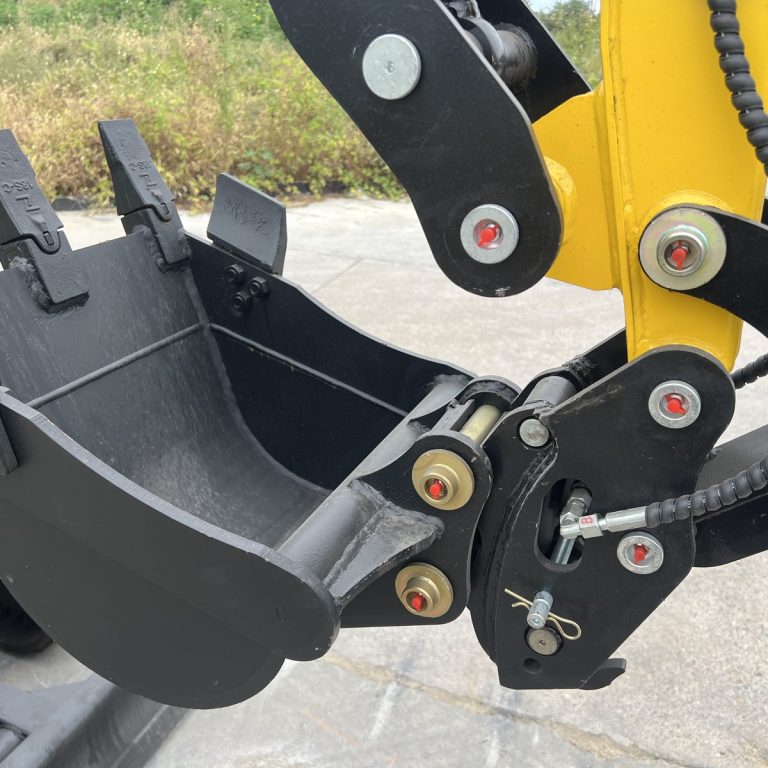
An attachment changes the task the engine and hydraulic system must perform. A breaker, auger and digging bucket should not share an unexplained “average working” fuel figure.
Bucket width also changes how much material must be removed. For a rectangular trench of unchanged length and depth, increasing width increases the theoretical excavation volume proportionally. Actual excavation may differ because of ground conditions and the required trench profile.
Choose dimensions to meet the work specification and safe excavation requirements, not just to make a fuel comparison look favourable. See our mini excavator bucket types guide for task matching.
Condition and maintenance
Record maintenance condition when comparing machines. A worn attachment, incorrect track adjustment or a machine with an unresolved fault is a poor basis for judging a model.
Follow the manufacturer’s maintenance instructions. If fuel consumption changes sharply under comparable work, investigate the cause rather than assuming that higher consumption is normal ageing. A fuel log identifies a change; it does not diagnose the fault by itself.
How to measure your own fuel consumption
1. Define the work and the clocks
Write down the machine configuration, attachment, operator, soil and required result. Note whether the record covers digging only or the complete operation, including travel and waiting.
Use engine-running time for L/h and elapsed job time for scheduling and labour. Confirm how the installed hour meter records time; if its basis is uncertain, document running time separately.
2. Measure fuel consistently
Follow the operator manual’s refuelling procedure. Use a consistent, manufacturer-permitted filling reference with the machine parked appropriately, and measure the quantity added with suitable equipment.
For a refill-based check, begin and finish at the same reference level. Include any fuel added during the interval. Do not rely on dashboard gauge segments as precise litre measurements, and do not fill beyond the approved level to create a reference.
A short test using very little fuel can be strongly affected by filling variation. Repeating representative work over longer intervals can provide a more useful record than reporting a very precise number from one brief demonstration.
3. Record acceptable output
Record completed trench dimensions, excavation quantity or another task-specific measure. Include finishing and rework if these belong to the quoted job.
A fast first pass that leaves the wrong depth or requires substantial cleanup is not equivalent to completed work. State the acceptance condition before comparing operators or machines.
4. Repeat and retain the conditions
One trial describes one set of conditions. Repeat representative tasks and keep individual results, including explanations for delays or unusual ground.
When combining records, divide total litres by total hours. Do not take a simple average of individual L/h figures unless the time intervals are equal. Similarly, calculate overall litres per metre from total litres and total comparable metres.
Turn fuel use into a realistic job estimate
Fuel is one line in the estimate. Build the rest around the way you actually pay for and use the equipment.
A practical calculation is:
Job cost = fuel + labour + equipment allocation + transport + task-specific costs.
Fuel cost is measured litres multiplied by the applicable price per litre. Labour follows paid time, which may include setup, waiting and cleanup. Equipment allocation should reflect either the rental arrangement or an ownership calculation appropriate to your expected use.
For an owned machine, consider maintenance, wear, depreciation and other applicable ownership expenses. Do not add a separate allowance for something already included in your hourly rate. For rented equipment, check included hours, excess charges and transport terms before comparing it with ownership.
Task-specific expenses may include attachment hire, material disposal or site restoration. Include them consistently across alternatives.
Suppose one configuration finishes earlier but requires more expensive transport. Its advantage depends on how much time it saves and the costs of that time. A fuel-only comparison cannot settle the decision.
For purchase budgeting, use the China mini excavator price guide alongside the running-cost record. Keep acquisition costs and individual job expenses clearly separated to avoid counting the same cost twice.
Which options deserve attention?
Ask whether the quoted machine includes automatic idle, which operating modes are available and how they function. Do not assume a feature shown on another model is fitted to the machine being offered.
Automatic idle may reduce engine speed during inactivity; automatic shutdown stops the engine under specified conditions. These are different functions. Their usefulness depends on the work pattern and the manufacturer’s operating requirements.
For an engine upgrade, ask for comparable consumption evidence before paying a premium on fuel-saving grounds. The engine’s brand alone does not establish the installed machine’s fuel use. Our mini excavator engine guide covers the broader selection questions.
Do not infer machine consumption directly from rated power or a single engine fuel-map point. Installed operation involves changing load, speed and hydraulic demand.
If measured annual fuel savings are available, divide the additional purchase cost by the annual fuel-cost saving to estimate simple fuel-only payback. State the hours, fuel price and comparison conditions. If the saving has not been demonstrated, leave the payback unclaimed.
Questions to ask before accepting a fuel claim
Ask the supplier for the exact configuration, test duration, measured fuel quantity, completed output and time spent waiting. Request the attachment, ground description and engine setting as well.
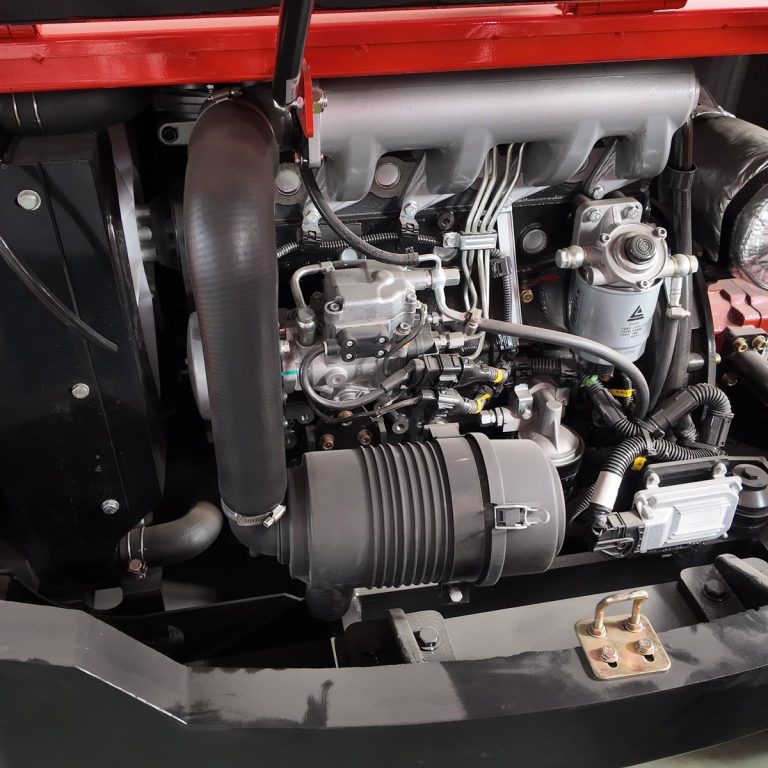
A photograph of the engine label identifies important configuration information, but it is not a fuel test. A video of the machine moving proves neither the litres consumed nor the amount of acceptable work completed.
For Tai’an Hongli Machinery Equipment Co., Ltd., the same standard should apply: ask us what the figure represents. If comparable records are unavailable, treat a consumption estimate as provisional and define the demonstration needed to check it.
Frequently asked questions
How much diesel does a mini excavator use per hour?
There is no single reliable figure for every mini excavator or job. Request a measurement for the specified configuration and duty cycle. Divide measured litres by engine-running hours, and keep the work description beside the result. An unsupported range by tonnage can hide substantial differences in use.
Does a smaller mini excavator always use less fuel per job?
No. It may consume less per hour yet take longer to complete the same work. Compare total fuel for an equivalent accepted result, then include labour and transport. Access restrictions can still make the smaller machine the practical choice.
Can I estimate runtime from fuel-tank capacity?
Only approximately. Divide usable fuel by a representative consumption rate, allowing for the manufacturer’s operating requirements. Nominal tank capacity is not necessarily the quantity you should plan to consume, and changing loads make runtime variable. Do not plan to run the tank dry.
Should I run at low rpm to save fuel?
Use the speed or operating mode appropriate to the task and attachment, following the manual. A lower setting is useful only if the machine maintains suitable operation and output. Record litres per completed task rather than assuming the lowest rpm produces the lowest job cost.
Does a Kubota engine guarantee lower fuel consumption?
No. A brand name is insufficient evidence. Compare the exact engine versions, installed machine configurations and equivalent work. Service availability and other ownership considerations also matter; they should not be presented as measured fuel savings.
What should I do when the excavator spends time waiting?
Identify the cause first: material handling, access, instructions or another part of the operation. Improve coordination where possible, and use fitted idle or shutdown functions according to the manual. Required warm-up, cooldown and any aftertreatment procedures still apply.
Send the job details before choosing the machine
Send your destination country, soil and main task, required digging dimensions, narrowest access, attachment needs, expected annual hours and expected quantity. If available, include local diesel price and a fuel-and-output record from your current machine.
Tai’an Hongli Machinery Equipment Co., Ltd. can use those details to discuss a suitable configuration and the comparison evidence you need—including when a different machine size or local rental deserves consideration.
Email: hongli@hongli-mach.com
WhatsApp: +86 131 0548 1184
About the Author
Avicii Meng — Head of Technical Engineering | Hongli Machinery
Avicii Meng works on equipment configuration and buyer guidance at Tai’an Hongli Machinery Equipment Co., Ltd., focusing on how machine specifications relate to actual working requirements.