Chinese mini excavators are typically priced substantially lower than equivalent Japanese machines at initial purchase — based on typical factory-direct quotations for 1.5–2.0 ton machines against published dealer pricing in major markets, the gap is often large enough to change fleet purchasing math entirely, though the exact difference varies by engine, certification, attachments, freight, and dealer markup. Japanese brands, meanwhile, generally hold stronger resale value, denser dealer networks, and more standardized quality control. Neither option is universally better — the right choice depends on your budget, operating region, service infrastructure, and how long you plan to keep the machine.
As a Chinese manufacturer, we have an obvious interest in this comparison. That is exactly why this guide focuses on verifiable differences rather than marketing claims — including the areas where Japanese brands genuinely lead. Buyers who understand both sides make better procurement decisions, and better-informed buyers are the customers we prefer to work with.
Quick Comparison: Chinese vs Japanese Mini Excavators
| Factor | Chinese Machines | Japanese Machines (Kubota, Yanmar, Takeuchi, etc.) |
|---|---|---|
| Acquisition cost (1.8T class) | Substantially lower (factory-direct FOB) | Higher (dealer retail) |
| Engine options | Configurable (domestic or imported) | Predefined by manufacturer; limited buyer customization |
| Configuration flexibility | High — engine, cab, hydraulics, tracks | Limited to factory options |
| Dealer network (U.S./EU) | Limited or importer-dependent | Extensive, established |
| Parts availability | Variable — common wear parts often easy to source; model-specific structural or electrical parts depend on manufacturer or importer | Generally excellent |
| Resale value | Lower | Higher |
| Quality consistency | Varies by manufacturer | Generally more standardized |
| Lead time | Factory order (typically weeks, confirm per model) | Often available from dealer stock |
| Warranty support | Varies; often importer-managed | Standardized dealer programs |
The Japanese side of this comparison includes brands such as Kubota, Yanmar, Takeuchi, Komatsu, Hitachi, and Kobelco; this guide focuses on the first three, which dominate the compact classes most buyers cross-shop against Chinese machines.
The rest of this guide explains what sits behind each of these rows — and which factors actually matter for different types of buyers.
Where Japanese Brands Genuinely Lead
Being honest about this section is the point of the article.
Dealer and service infrastructure. Kubota, Yanmar, and Takeuchi have spent decades building dealer networks across North America, Europe, and Australia. When a machine goes down on a job site, the distance to the nearest qualified technician and the lead time on parts matter more than almost any specification. For contractors billing daily rates who cannot tolerate downtime, this infrastructure is worth real money.
Resale value. A three-year-old Kubota with documented service history sells quickly and holds a substantial portion of its original price. Chinese machines depreciate faster on secondary markets, partly due to brand recognition and partly due to buyer uncertainty about component sourcing. If your ownership model involves selling machines every few years, resale economics can offset a significant portion of the acquisition premium.
Quality consistency. Japanese manufacturers run mature, highly standardized production systems. Two Kubota U17s built a year apart will be essentially identical. Chinese manufacturing spans a wide quality range — from factories with rigorous process control to assemblers of variable consistency. The variance itself is the risk: buyers cannot assume that a good experience with one Chinese machine predicts the next one, unless they are buying from the same verified manufacturer with the same specification.
Refinement. Hydraulic smoothness, noise and vibration levels, control calibration, and operator ergonomics are areas where the accumulated engineering iteration of Japanese brands shows. Operators who run machines eight hours a day notice these differences even when spec sheets look similar.
Where Chinese Machines Genuinely Lead
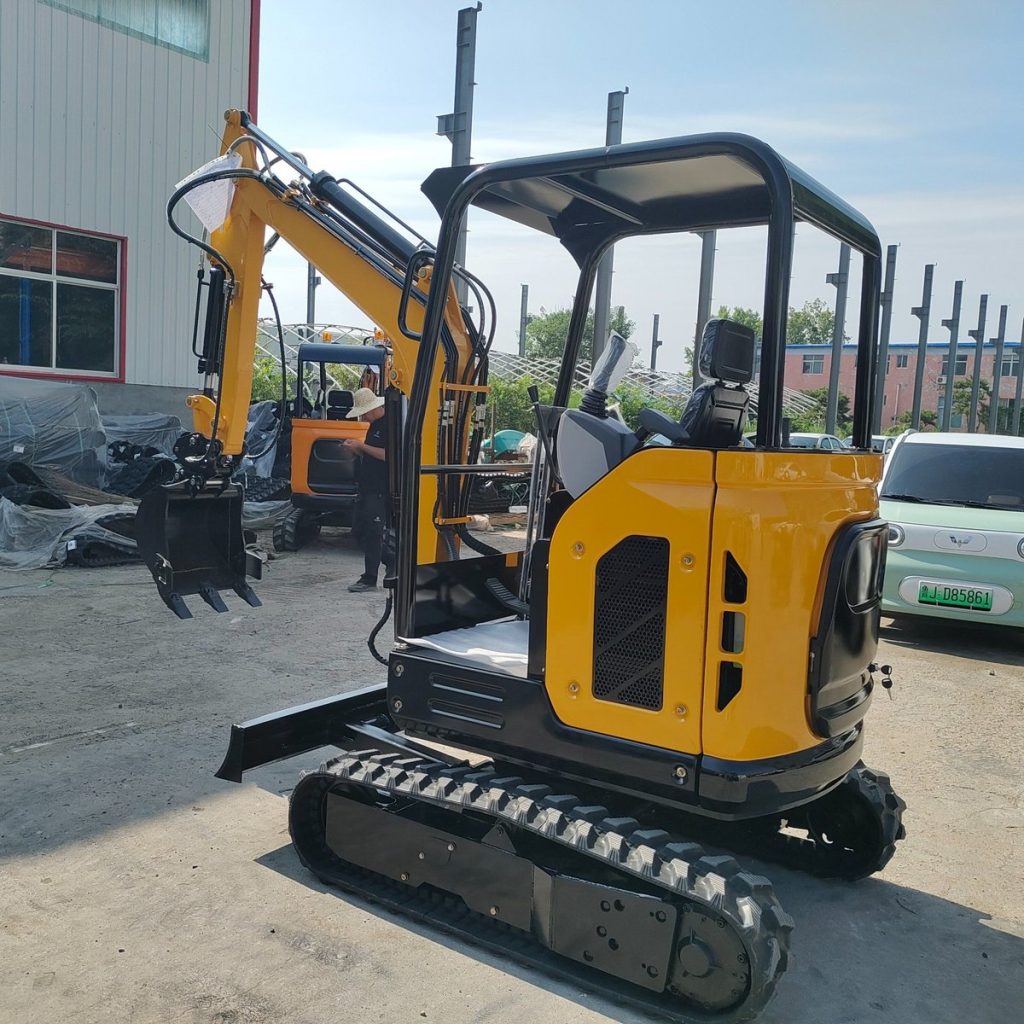
Acquisition cost. The gap is large and structural, not a temporary discount. Shorter supply chains, lower labor costs, factory-direct sales models, and the absence of dealer margin stack up. For many buyers comparing a 1.8-ton class machine, the difference is large enough to change fleet math entirely. Our China mini excavator price guide breaks down current FOB ranges by size class.
Configuration flexibility. This is underappreciated by buyers who have only purchased from dealers. A Chinese factory-direct order can specify the engine brand, emission configuration, hydraulic grade, cab type, track type, and attachments individually. A buyer in a non-regulated market can delete the certification premium entirely; a buyer in a regulated market can specify a documented imported-engine configuration. Japanese machines come as the factory built them. For a detailed look at what engine options exist, see our guide to mini excavator engine brands.
Improvement trajectory. The quality gap between Chinese and Japanese machines is real but has narrowed meaningfully over the past decade. Depending on the model and buyer specification, Chinese mini excavators may be configured with Kubota, Yanmar, Perkins, Laidong, Changchai, or other engine options, and hydraulic systems may use domestic or imported pumps and valves. Component brand alone does not guarantee overall machine quality, however — installation, calibration, hose routing, cleanliness, and factory inspection remain equally important, and these are where manufacturer discipline still separates good machines from poor ones.
Fleet economics for specific use cases. For rental fleets serving light residential work, farms using a machine a few hundred hours a year, or contractors in markets where Japanese dealer coverage is thin anyway, the Japanese premium buys infrastructure the buyer will rarely use. In those cases the arithmetic favors the lower acquisition cost clearly.
The Decision Framework: Which Buyer Are You?
| Buyer Profile | Likely Better Fit | Why |
|---|---|---|
| Contractor billing daily, zero downtime tolerance, strong local Kubota/Yanmar dealer | Japanese | Service infrastructure is worth the premium |
| Rental fleet, light residential duty, cost-sensitive | Chinese | Payback economics favor lower acquisition cost |
| Farm or estate use, few hundred hours/year | Chinese | Premium buys infrastructure that idle hours never use |
| Buyer planning resale within 3–4 years | Japanese | Resale value recovers much of the premium |
| Buyer in region with weak Japanese dealer coverage | Chinese | The main Japanese advantage is unavailable anyway |
| Fleet buyer standardizing on specific engine/parts | Either | Depends on which parts ecosystem is locally supported |
| First-time importer, regulated market | Either — with caution | Compliance documentation matters more than origin |
Two questions cut through most of the noise:
First: what does machine downtime actually cost you? If a stopped machine costs you $1,000+ per day in billed work, service infrastructure dominates the decision. If the machine is one of several, or utilization is intermittent, downtime cost is lower and acquisition price matters more.
Second: how long will you keep it? Short ownership cycles favor Japanese resale value. Long ownership cycles — running a machine to the end of its service life — favor the lower entry price, because resale value eventually converges toward zero for everything.
A complete comparison should be run as total ownership cost over your expected holding period, not purchase price alone: initial purchase, freight and duties, estimated maintenance, expected downtime cost at your utilization level, and projected resale value at disposal. The purchase-price gap favors Chinese machines; resale and downtime typically favor Japanese machines; which side wins depends on your specific numbers, not on anyone’s general claim.
Not sure which side of this comparison fits your operation? Send us your expected working hours, destination country, preferred tonnage, and local service conditions — we can recommend a configuration without requiring any purchase commitment. hongli@hongli-mach.com
The Questions That Matter More Than Country of Origin
In practice, we see buyers spend weeks on the “Chinese vs Japanese” question while skipping the questions that better predict their actual ownership experience:
What exact engine is installed, and what documentation covers it? A Chinese machine with a properly documented imported-engine configuration and a Chinese machine with an unlabeled domestic engine are entirely different purchases — read our guide to EPA-compliant excavators before specifying for a regulated market.
Who services the machine in your region? Not the brand’s global network — your region specifically. A Japanese brand with no dealer within four hours and a Chinese machine with a locally supported engine family may invert the expected service equation.
What does the warranty actually cover, and who administers it? Dealer-administered warranty programs and importer-managed warranty arrangements behave very differently when a claim is filed. Ask for specifics in writing before purchase, whichever direction you choose.
Can the supplier provide verifiable references? For Chinese factory-direct purchases especially, ask for buyer references in your region, inspection documentation, and component specifications in writing. A manufacturer confident in its machines provides these without friction.
What a Well-Specified Chinese Machine Looks Like
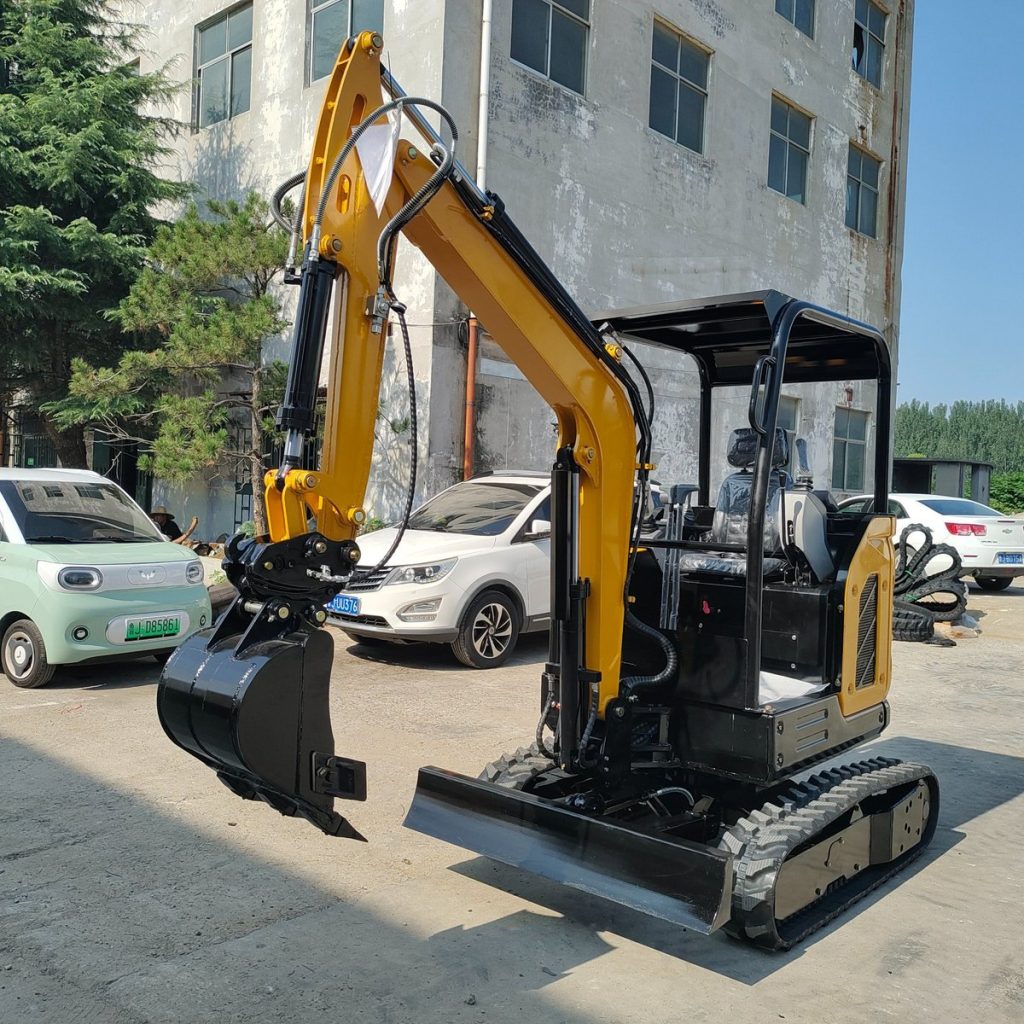
For buyers who conclude that the economics favor a Chinese machine, the difference between a good and poor outcome is specification discipline:
- Engine: a documented configuration appropriate for your market — imported engine family with verifiable certification for regulated markets, or a domestic engine chosen deliberately for cost in non-regulated markets
- Hydraulics: piston pump and load-sensitive valves for production use; gear pump acceptable for light intermittent duty
- Controls: pilot control for daily operators; mechanical acceptable for occasional use
- Documentation: engine emission label, certificate references, packing list, and inspection records requested before payment
- Support plan: confirmed parts source for wear items in your region before the machine ships
At Hongli, machines from the HL10 and HL18 in the 1–2 ton class through the HL26 and HL65 in larger classes are configured to order against exactly these variables. Send us your destination country, required engine configuration, and intended application, and we will return an itemized quotation — typically within 24 hours — at hongli@hongli-mach.com or WhatsApp +86 13181780976.
Frequently Asked Questions
Are Chinese mini excavators any good in 2026?
Quality varies significantly by manufacturer, which is precisely the point buyers should understand. Well-specified machines from established factories — with documented engines, proper hydraulic components, and verifiable quality control — perform reliably in daily commercial use worldwide. Poorly specified machines from inconsistent assemblers do not. Judge the specific manufacturer and configuration, not the country label.
How much cheaper are Chinese mini excavators than Kubota or Yanmar?
At the 1.8-ton class, Chinese factory-direct FOB prices are commonly well below equivalent Japanese dealer retail prices — the exact gap depends on the engine and configuration specified, and on which prices are being compared (FOB versus landed, new versus dealer-stock). Landed cost narrows the difference once freight, duties, and compliance documentation are added, but the gap remains substantial for most configurations. See our price guide for current FOB ranges by size.
Do Chinese mini excavators use Japanese engines?
Many Chinese manufacturers offer imported engine options — including Kubota and Yanmar engine families — alongside domestic alternatives. The engine brand alone does not establish emission compliance for regulated markets; the specific engine family, model year, and certification documentation must be verified for the destination market.
Which lasts longer, a Chinese or Japanese mini excavator?
Service life depends more on component specification, maintenance practices, and operating intensity than on country of origin. A well-maintained, properly specified machine from either origin can provide years of productive service. Japanese machines hold an advantage in consistency — the confidence that every unit performs alike — rather than a categorical advantage in maximum lifespan.
Is it safe to buy a mini excavator directly from a Chinese factory?
Factory-direct purchase is a standard procurement channel used by fleet buyers and dealers worldwide, but it shifts verification work to the buyer. Reduce risk by requesting itemized quotations, component documentation, third-party or pre-shipment inspection, buyer references in your region, and clear warranty terms in writing before payment.
Conclusion
The honest answer to “Chinese or Japanese” is that the question is a proxy for other questions: what downtime costs you, how long you will own the machine, what service exists in your region, and how disciplined your specification process is.
Japanese machines sell certainty — consistent quality, dense service networks, strong resale — at a substantial premium. Chinese machines sell value and flexibility — much lower acquisition cost and buildable configurations — with outcomes that depend heavily on choosing the right manufacturer and specifying carefully.
Buyers who match the machine to their actual operating economics, rather than to a country label in either direction, are the ones who end up satisfied three years later.
About the Author
Avicii Meng is Head of Technical Engineering at Tai’an Hongli Machinery Equipment Co., Ltd., where he works on export-oriented excavator configurations, engine compliance requirements, and OEM manufacturing projects for international markets. Hongli manufactures mini and compact excavators, skid steer loaders, forklifts, and backhoe loaders for export to global markets. Contact: hongli@hongli-mach.com | hongli-mach.com