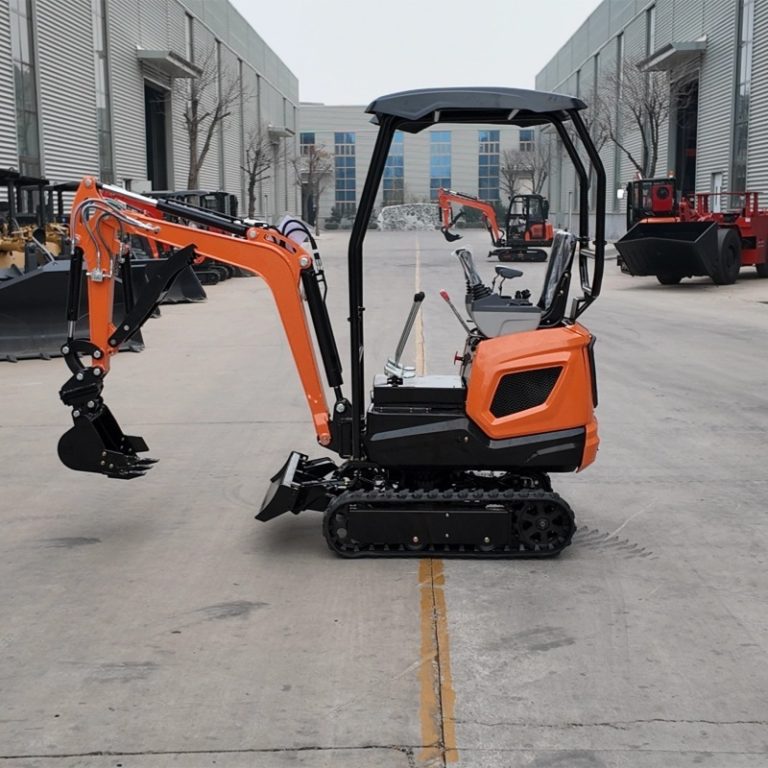
You need a mini excavator for a drainage trench, some grading, and a small landscaping project. The digging may take only a few days. But the pipe delivery, inspection, backfilling, and final landscaping could stretch across several weeks.
Should you rent a machine for each stage, keep one on hire, or buy a machine and sell it afterward?
Compare the cost of completing the same work over the same period. For renting, use the actual booking and transport charges. For buying, include acquisition, ownership expenses, and a cautious estimate of net resale proceeds. Working days alone do not settle the decision.
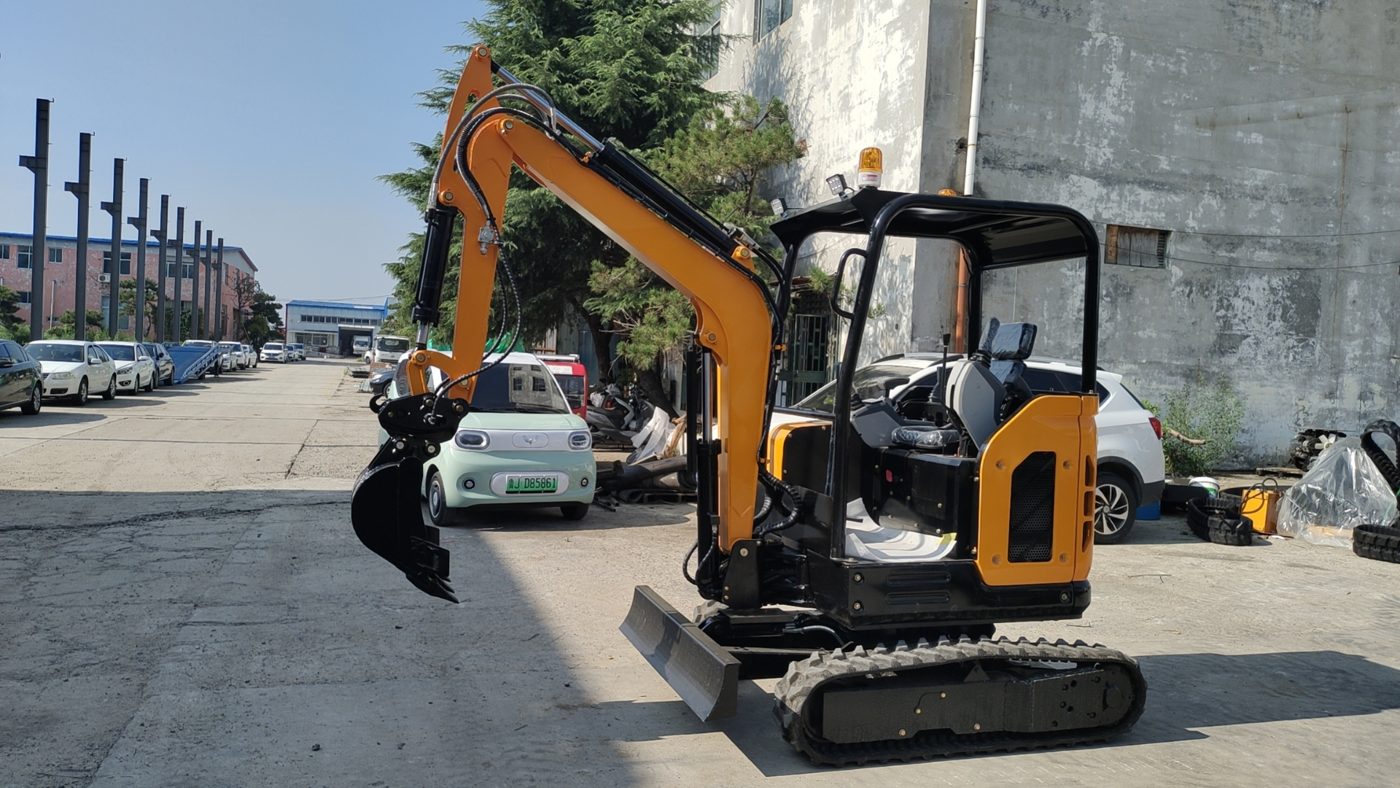
The important question is not simply how many days the engine will run. It is how long you need access to the machine—and what happens between the days it works.
Six Days of Digging Can Mean Six Weeks of Access
Consider a hypothetical homeowner completing a project in three stages over six weeks. Each stage needs two working days with an excavator. The machine requirements are the same throughout.
There are three possible arrangements:
- Rent for three separate two-day bookings and return the machine between stages.
- Keep a rental machine for the entire six-week period.
- Buy a suitable machine, use it throughout the project, then sell it.
The third option may sound attractive because the owner can work whenever materials and other trades are ready. However, that convenience has a cost, and resale is not guaranteed at the hoped-for price.
The first option can avoid paying for idle weeks, but requires three successful bookings and three rounds of transport. Keeping a rental continuously may reduce repeated transport, but it charges for access during periods when the machine is not digging.
These are different services. Compare the complete arrangements rather than multiplying six working days by one advertised rate.
A Worked Example: Renting Wins Until the Assumptions Change
The following figures are invented solely to explain the calculation. They are not Hongli prices, market rental rates, or resale forecasts. All amounts use the same illustrative currency units, abbreviated CU.
Assume the separate rental offer is 200 CU per day and 300 CU for delivery and collection per booking. Assume another offer covers six continuous weeks for 3,600 CU, plus one 300 CU delivery-and-collection charge.
For buying, assume a complete acquisition cost of 12,000 CU, 600 CU in additional ownership expenses over the project, and net resale proceeds of 10,000 CU. The acquisition figure includes the required bucket and initial delivery. The resale figure is after selling expenses. The 600 CU allowance covers project-period maintenance, storage, and insurance assumptions without counting delivery twice.
| Arrangement | Calculation | Illustrative project cost |
|---|---|---|
| Three separate rentals | 6 days × 200 CU + 3 bookings × 300 CU transport | 2,100 CU |
| One six-week rental | 3,600 CU booking + 300 CU transport | 3,900 CU |
| Buy, use, then sell | 12,000 CU acquisition + 600 CU ownership expenses − 10,000 CU net resale | 2,600 CU |
Under these assumptions, three short rentals cost 500 CU less than buying and selling. Buying costs less than keeping the rental for six weeks, but it requires much more cash up front and leaves the buyer responsible for selling the machine.
The example assumes equivalent machine capability, attachments, operator arrangements, and fuel use. Shared operating costs are excluded from all three options. There is no borrowing, and transaction charges are assumed included in the quoted amounts. Your calculation must add any real differences, financing costs, applicable charges, or expenses not covered by your offers.
What would reverse the result?
Suppose the project expands to four separate two-day stages. At the same hypothetical rates, rental becomes 8 × 200 + 4 × 300 = 2,800 CU. If ownership expenses and resale remain unchanged, buying would then cost 200 CU less.
That is a narrow advantage. If net resale instead falls from 10,000 CU to 9,000 CU, ownership cost rises to 3,600 CU. The apparent saving disappears. Extra work may also increase wear and ownership expenses, so holding those figures constant is an assumption to test, not a promise.
For the original six-day project, buying would match the 2,100 CU rental total only if net resale reached 10,500 CU, with every other assumption unchanged: 12,000 + 600 − 2,100 = 10,500.
This gives you a useful question to investigate: is that resale outcome supported by evidence for comparable machines, or merely by optimistic asking prices? An advertised price is not proof of what you will receive or how quickly the machine will sell.
The Scheduling Detail That Changes the Rental Bill
Ask the rental supplier to quote the actual calendar, including the gaps between excavation stages.
For example, a trench may be ready before the next part of the project can proceed. If another trade is delayed, can you return the machine and book it again? Is a suitable machine and bucket available for the next stage? Would extending the existing booking cost less than another collection and delivery?
Do not assume an unused day is free. Equally, do not assume a longer booking must be charged as a series of individual daily rentals. The agreement determines the billing period, included operating hours, extra-hour charges, return arrangements, and treatment of early completion or delays.
Ask when charging stops: when you request collection, when collection occurs, or at another agreed point. Confirm any applicable fuel, cleaning, damage, or other charges. These details belong in the quotation before you compare it with ownership.
The practical benefit of ownership is flexible access to the machine. Give that flexibility a realistic value based on your schedule; do not use it as an excuse to ignore the cost difference.
First Check That Both Machines Can Finish the Same Job
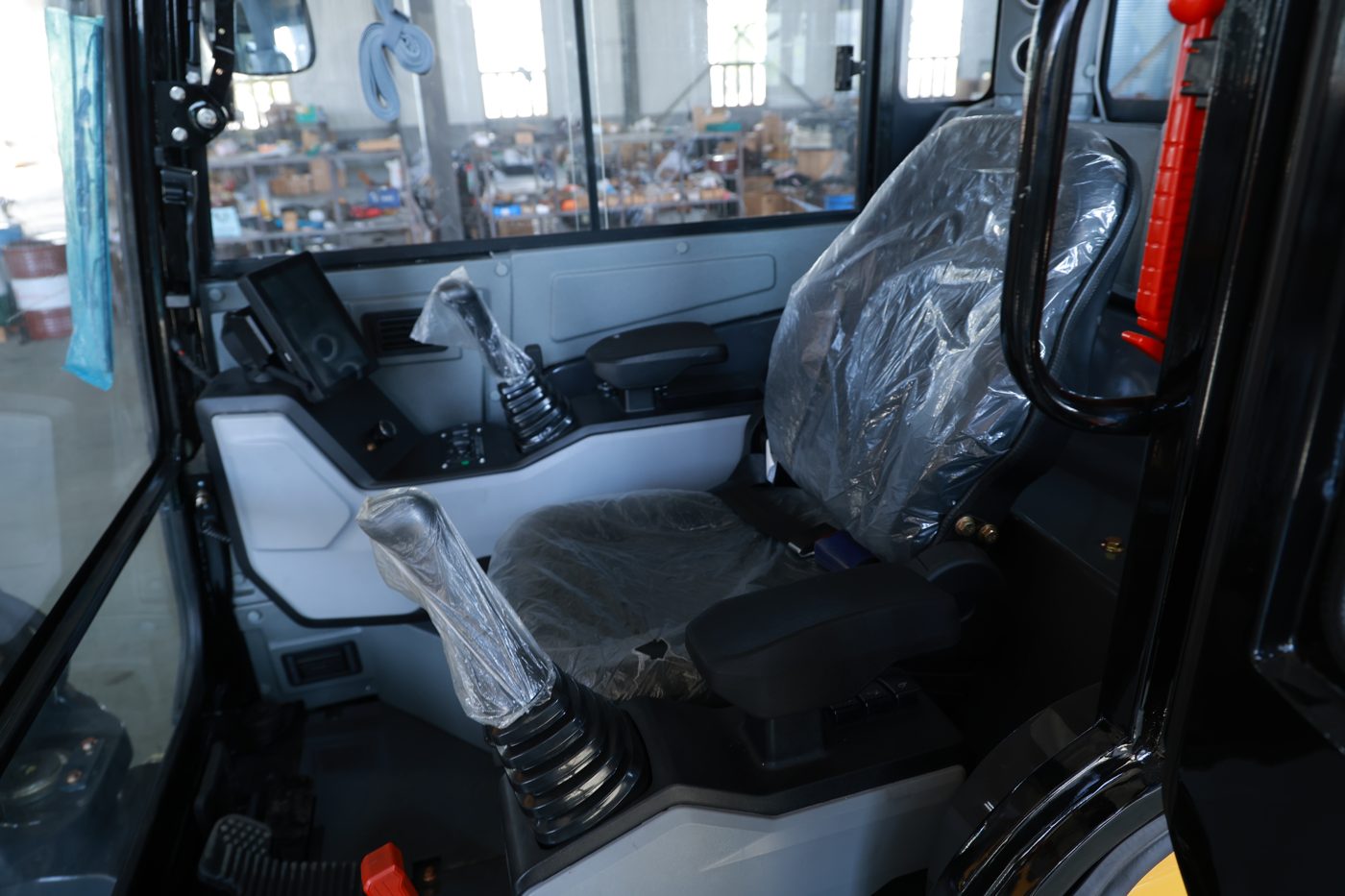
The arithmetic is useless if the cheaper option is unsuitable.
A compact machine that fits through a garden gate may still lack the working reach required from the available setup position. A larger machine may suit the excavation but fail the access or transport constraints. Establish the task before comparing acquisition methods.
Record the narrowest access point, working space, required trench profile, ground conditions, and where spoil will go. Identify the bucket and any other attachment needed. For powered attachments, confirm the machine’s hydraulic compatibility as well as the mechanical fit.
Compare complete configurations. A rental with the necessary bucket and a purchase offer without it are not equivalent. Nor should a low purchase price persuade you to buy a machine that still leaves you renting another excavator to complete the difficult part.
Use the mini excavator size guide to organize the selection questions. Final suitability depends on the actual configuration and site requirements, not just the model’s advertised size class.
Buying for One Project Is Also a Resale Project
When you plan to sell afterward, finding the next buyer becomes part of the job.
Consider how long you could keep the machine if it does not sell promptly. Storage and any financing obligations may continue after the excavation ends. Transport, advertising, inspection requests, or sales-related fees may reduce what you ultimately retain.
Use net resale proceeds in your calculation. Do not subtract a hoped-for selling price while forgetting the costs of completing the sale. Also avoid counting depreciation twice: acquisition cost minus resale already represents the change in the asset’s value for this comparison.
If you buy used, include any inspection and work needed to make the machine ready. If you buy new, confirm delivery timing, included equipment, and practical parts and service support. Our new versus used mini excavator guide covers that next decision.
Do not assume you can recover nearly all of the purchase price after one project. A plan that works only at a favorable resale figure is vulnerable to an ordinary change in buyer demand or machine condition.
When We Would Tell You to Keep Renting
For a one-off project with no established work afterward, a suitable local rental is worth pricing first. This is especially true when the work can be grouped into a short booking and delivery arrangements are straightforward.
Buying a Hongli excavator would be premature if you cannot yet define the required machine, cannot accommodate the up-front payment, or have no workable storage and service arrangements. If the job starts soon and a suitable rental is available locally, an imported machine that arrives too late does not solve the immediate problem.
There is another reason to rent first: uncertainty about the work itself. Experience on a real project can clarify whether the selected size, bucket, and access plan work as expected. Record what limits the job rather than assuming a larger machine is automatically the answer.
You should not have to invent future projects to justify a purchase for the one you already have.
When Ownership Becomes More Convincing
Ownership deserves closer examination when the same configuration serves recurring, confirmed work and you have the means to move, store, maintain, and operate it.
For a contractor, repeated short jobs can make immediate availability valuable. But an owned machine still needs transport between sites. Include the actual cost of your transporter or your own transport arrangement; ownership does not make those movements free.
Separate confirmed projects from possible ones. Check whether the machine fits the ordinary workload or only a small part of it. A workable fleet decision may be to own for recurring jobs and rent for occasional tasks that require different equipment.
The strongest case for buying survives a quieter schedule, a realistic maintenance allowance, and a cautious resale estimate. It does not depend entirely on the busiest possible year.
What to Put on Your Comparison Sheet
Begin with the task and dates. Then request rental prices for both separate bookings and continuous hire where those are genuine options. Ask for the complete charge, the included attachments, transport, operating-hour limits, and return terms.
For buying, record the complete acquisition cost, project-period ownership expenses, any borrowing costs, and estimated net resale. Keep the comparison period and workload consistent. Show cash needed before work starts separately from the eventual net cost.
Finally, change the uncertain inputs. Test a delayed project, one additional booking, lower resale proceeds, and an ownership expense above the original allowance. If a small change reverses the answer, acknowledge that uncertainty rather than presenting the result as a guaranteed saving.
Frequently Asked Questions
Is it cheaper to rent or buy a mini excavator for one project?
There is no universal answer. Compare the full rental arrangement with acquisition plus ownership expenses minus cautious net resale proceeds. For a short, organized project, renting may avoid substantial up-front cash and the responsibility of selling afterward.
How many rental days justify buying?
A fixed day count overlooks booking terms, repeated transport, machine suitability, and resale. In the example above, changing the booking pattern or resale assumption changes the result without establishing a general break-even threshold.
Should I keep a rental excavator between stages of a project?
Request both prices: continuous hire and separate bookings with collection and redelivery. Compare them against the expected gaps and availability. Check the rental agreement rather than assuming idle time is uncharged.
Can I buy a mini excavator and sell it after the work?
Yes, but allow for uncertainty in selling price and timing. Budget for ownership expenses and selling costs, and consider whether you can keep the machine longer than planned if a buyer is not immediately available.
Is a cheaper, smaller excavator a substitute for renting a larger one?
Only if it can perform the required work within the site’s constraints. Establish reach, excavation requirements, access, and attachment suitability before comparing costs. Needing a second machine can undo the apparent saving.
What should I send Hongli if I am considering buying?
Send the delivery country, intended tasks, access limits, digging requirements, essential attachments, expected job schedule, transport arrangements, and expected quantity. Explain whether the work is a single project or a recurring requirement.
Compare a Purchase Offer Against Your Actual Rental Plan
If ownership still makes sense after the calculation, send Hongli your project requirements. Tai’an Hongli Machinery Equipment Co., Ltd. can discuss a suitable machine configuration and the scope of a purchase quotation.
Bring the rental arrangement into that comparison: what equipment is included, how many bookings you expect, and how transport is charged. The right purchase is one that fits the work and the complete cost—not simply one with an attractive machine price.
About the Author
Avicii Meng is Head of Technical Engineering at Hongli Machinery. For machine configuration enquiries, contact hongli@hongli-mach.com.