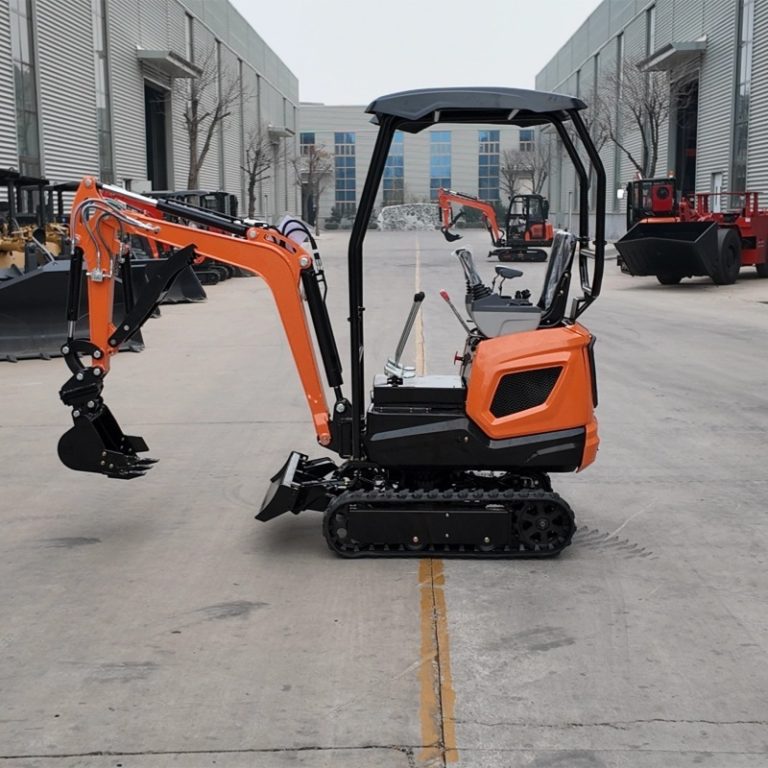
A 36-inch gate gives you 36 inches to work with only if that is the clear opening with the gate secured open. A 35-inch excavator would leave just one inch total on a straight, level approach. If a hinge projects an inch into that opening, the apparent clearance disappears.
To answer whether a mini excavator will fit, you need three measurements: the narrowest clear opening along the route, the widest part of the machine in its approved travel configuration, and the space available to approach the opening straight. Here is how to compare them before booking a rental or placing an order.
Start with the space between the obstructions
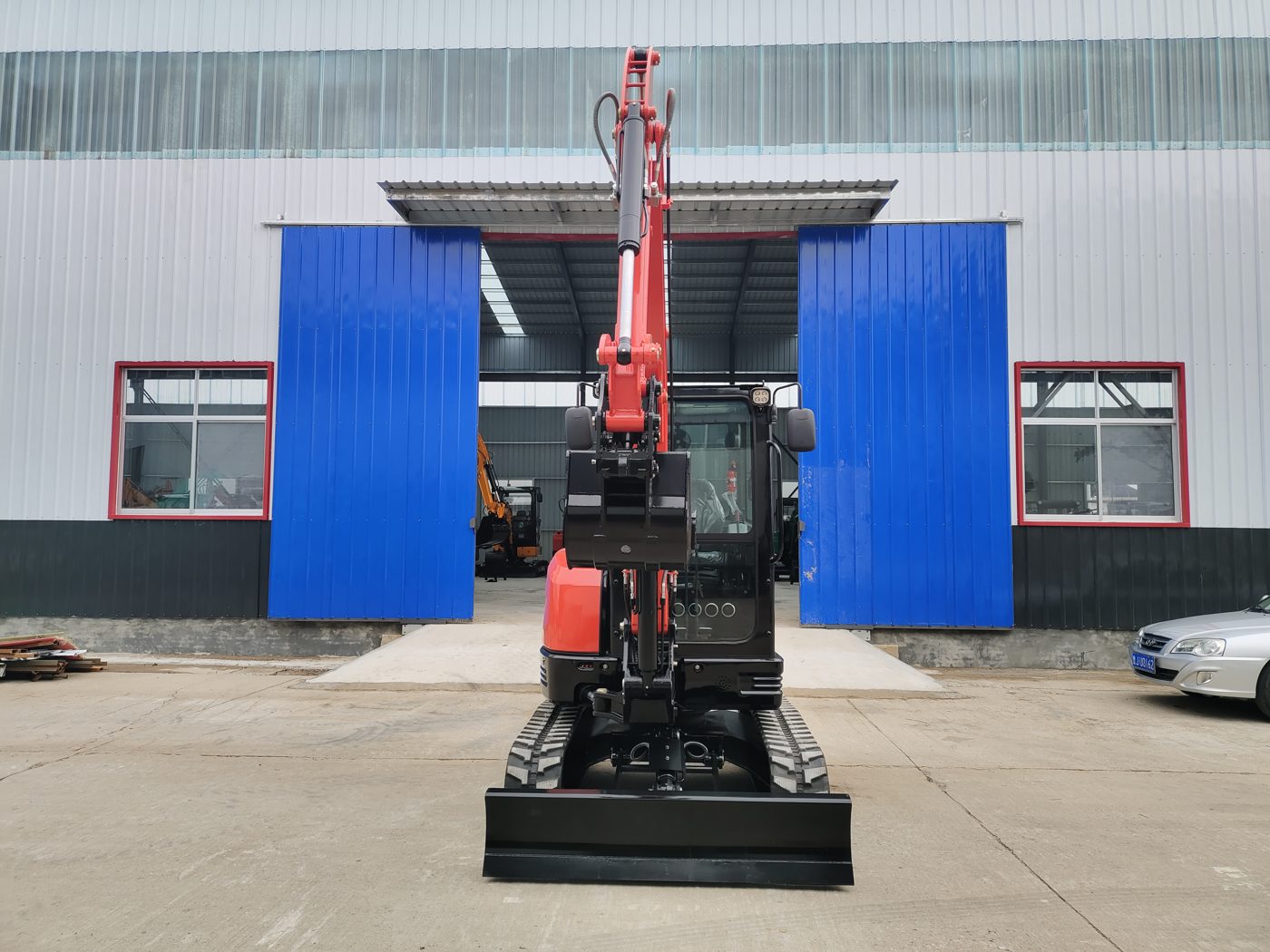
Picture a side gate between a house and a fence. The owner measures 36 inches between the posts. With the gate open, the latch takes up an inch. A concrete edging strip farther down the passage leaves only 34 inches at track height. Which number should go on the rental request? Send all three, with a photo showing where each was taken. The 34-inch section controls track clearance, while a different restriction higher up may control clearance for the canopy.
Measure the route in the condition the machine will actually encounter. A gate leaf that opens fully against a fence gives a different opening from one that stops against a wall. Check for hinges, latches, downpipes and low eaves. Include the approach from the unloading point and the exit route. A gate in the middle of a straight path presents a different problem from an identical gate immediately after a right-angle turn.
Ask what the width on the specification sheet measures
A useful width figure names both the component and the configuration. Ask whether the quoted dimension measures across the tracks, across the blade, or across the widest point of the complete machine. Request the dimensions for the exact model and attachments being supplied.
Some mini excavators have a variable-width undercarriage. For example, Bobcat lists a 28-inch retracted undercarriage for its E10 and describes a retractable blade. That is a model-specific specification. It illustrates why you need both measurements: a narrow track setting is useful only when the blade and the rest of the machine also clear the route. Other machines may have fixed tracks, a different blade arrangement, or a different overall width.
For a Hongli quotation, ask for the dimension drawing of the quoted build. If an offer gives one figure called “track width,” clarify whether it means the width of one track shoe or the distance across the outside edges of both tracks. Those figures answer very different questions.
A 36-inch gate example you can use on your own site
Suppose a supplier confirms a hypothetical machine measures 32 inches at its widest point in the approved travel configuration. These figures illustrate the arithmetic only. They do not establish a safe clearance allowance.
| What you actually measure | Clearance calculation | What the result tells you |
|---|---|---|
| 36 inches clear, straight approach | 36 − 32 = 4 inches total | Centered exactly, that leaves 2 inches per side. Send the route details for review. |
| 34 inches clear at a projecting latch | 34 − 32 = 2 inches total | The latch halves the available margin. |
| 32 inches clear beside a downpipe | 32 − 32 = 0 | The proposed machine has no lateral clearance there. |
| 36 inches clear, with a turn at the entrance | Straight-width calculation alone is insufficient | The supplier needs the approach dimensions and machine length to assess the turn. |
The frequently missed detail is total clearance versus clearance on each side. Four spare inches across a gate do not give the operator four inches on the house side and another four on the fence side. Nor does a positive result account for uneven ground, steering corrections or movement of the gate. Have the supplier and competent operator assess the route against the manufacturer’s instructions before attempting access.
Why the turn can rule out a machine that fits on paper
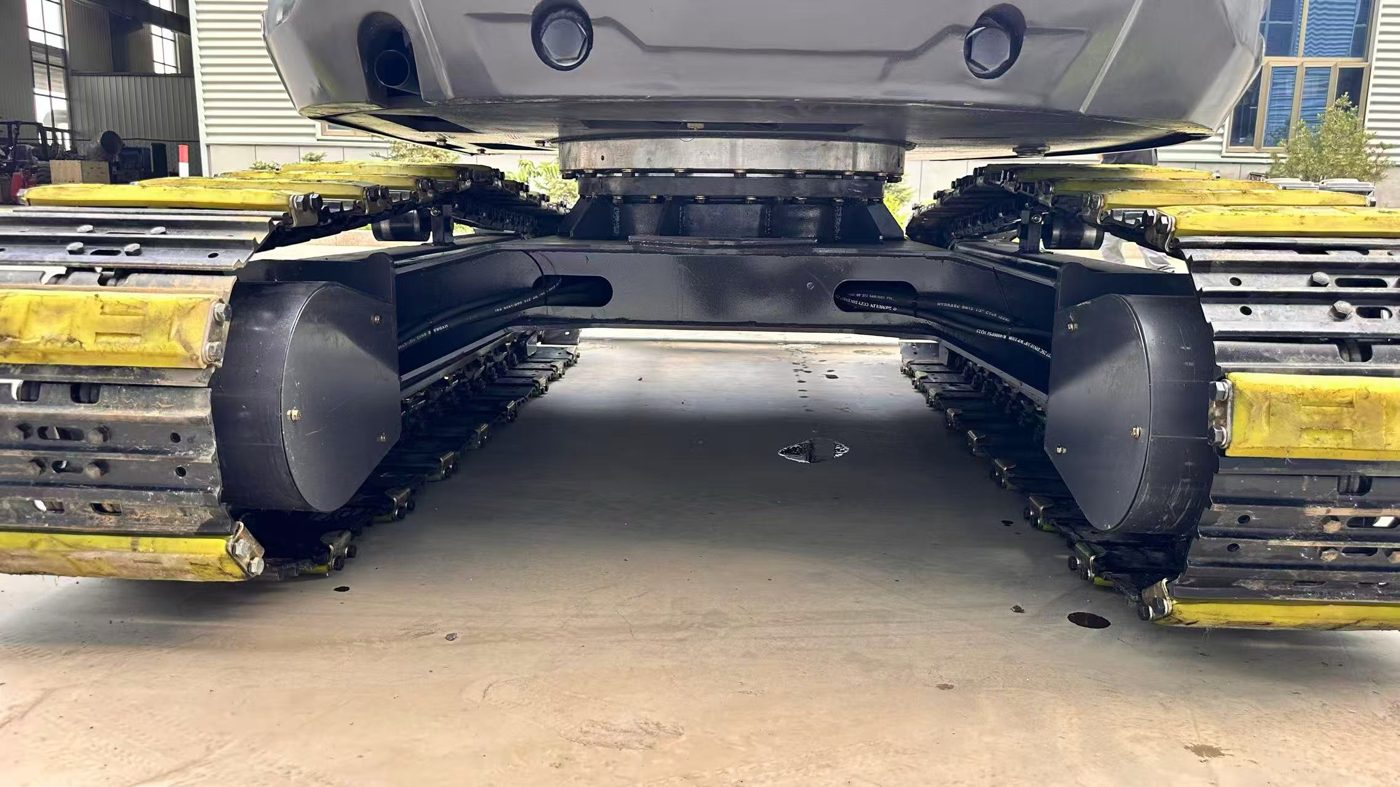
Imagine carrying a long rectangular table through a doorway. It fits when pointed straight ahead, but a shallow hallway opposite the door can prevent you from lining it up. An excavator presents a similar planning problem. Track length, blade position, attachment position and the available approach space all affect the path its outer corners need.
For a corner entrance, sketch the passage on both sides of the opening. Mark the distance to the opposite wall and show which way the gate swings. Include a photo from each direction with a tape measure visible. That gives the supplier enough context to identify a questionable turn before the machine reaches your property. A photo looking straight through the opening alone can hide the very wall that prevents entry.
Can the excavator do the job once it gets inside?
A buyer may spend days finding a machine narrow enough for the gate and only then discover that the backyard is too confined for the planned trench. Walk from the gate to the actual digging position. Where will the tracks sit? Where can the bucket discharge? Is there room for the rear of the upper structure and for the boom and bucket through the planned movement?
If the undercarriage retracts, get both the access width and the manufacturer’s required operating configuration. Check that there is space to use the machine as instructed once it reaches the work area. Do not assume the narrowest travel setting is suitable for excavation.
This is where choosing the smallest available excavator can backfire. If the trench cannot be reached from the available setup position, a narrower machine alone will not solve the job. Compare the mini excavator size guide with the digging depth guide before committing to a model. If no suitable configuration can both enter and work, reconsider the access route or job method before buying.
Questions buyers ask about narrow access
Will a one-ton mini excavator fit through a garden gate?
Weight class alone cannot establish width. Ask for the complete machine’s maximum width in the configuration approved for passage, then compare it with the narrowest measured opening and the approach geometry.
Is a 36-inch gate wide enough for a 36-inch excavator?
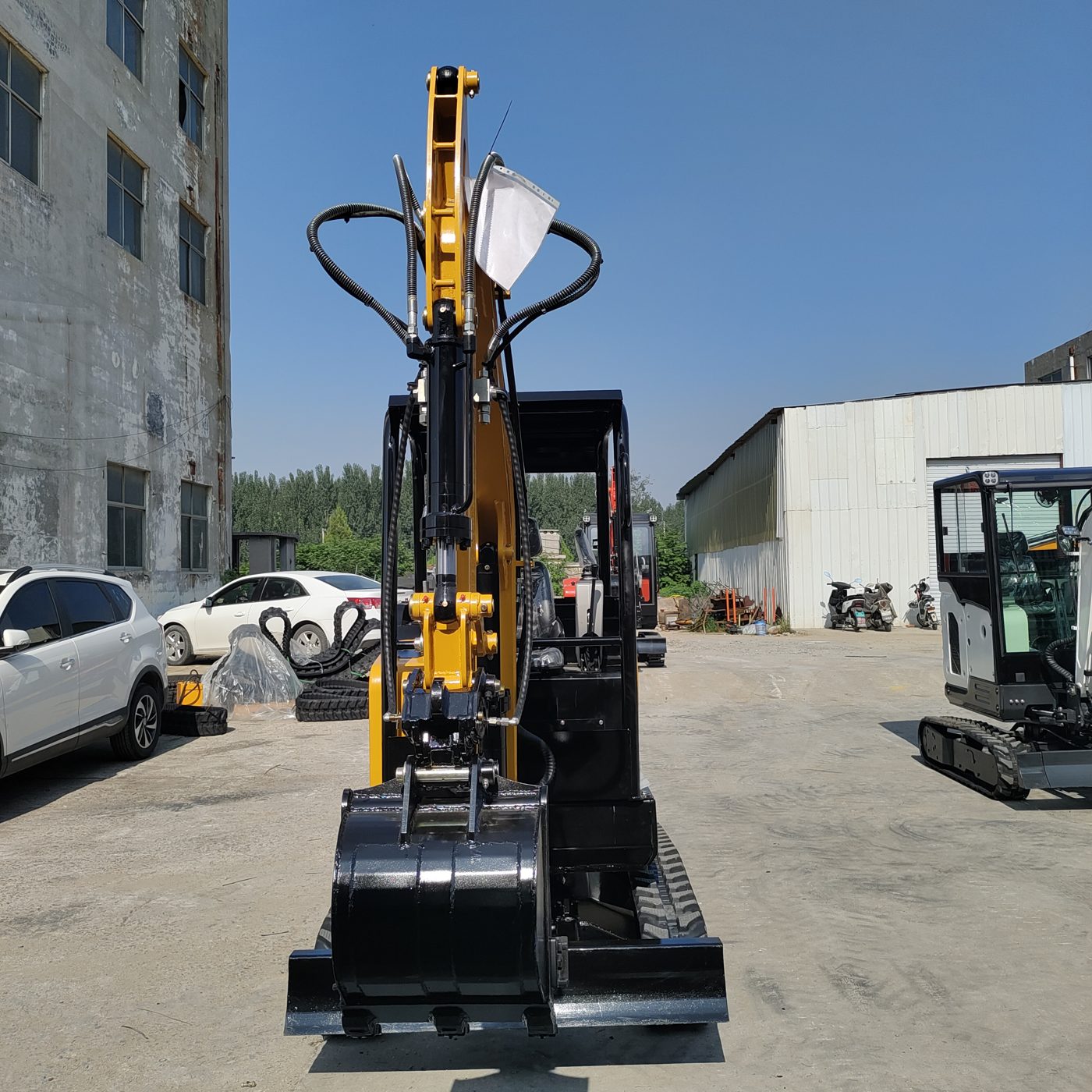
If both dimensions are exactly 36 inches, there is zero lateral clearance. Recheck the actual opening and ask for a different configuration or access plan.
Does zero tail swing mean the machine will fit?
Zero tail swing describes rear movement during upper-structure rotation. You still need travel width, height and approach dimensions to assess entry, and room for the front equipment once the machine is inside.
Should I remove the bucket or fold the blade to get through?
Ask the supplier which travel configuration the manufacturer approves and which component determines maximum width in that configuration. Removing a narrow bucket would accomplish nothing if a wider fixed blade is the limiting part. Use only the manufacturer’s procedures for the actual machine.
What should I send for a width check?
Send the narrowest measured width and height, a sketch of any turn, photos of both approaches, and the required trench depth and bucket width. Include the delivery country, intended attachment and quantity. Request a Hongli configuration check and ask for the quoted machine’s access and working dimensions in writing.
Specification reference: Bobcat E10 compact excavator, manufacturer’s North American product specification. The E10 example illustrates a retractable undercarriage and blade. The gate calculations are hypothetical.
By Avicii Meng, Head of Technical Engineering | Hongli Machinery.