By Avicii Meng, Head of Technical Engineering | Hongli Machinery
Most mini excavator reviews online fall into two categories: dealer content that recommends whatever the dealer sells, and affiliate roundups that rank machines the writer has never operated. Neither helps much when you are about to spend five figures.
This guide takes a different approach. Instead of telling you which machine to buy, it shows you how to evaluate any machine yourself — which specifications actually predict performance, which ones are marketing, what to ask a supplier, and which documents to verify before money changes hands. We manufacture excavators, so we have an obvious interest in you buying one. What we do not have is an interest in you buying the wrong one, because machines that disappoint generate warranty claims and reputation damage that cost more than the sale was worth.
The Specifications That Actually Predict Performance
Spec sheets list twenty numbers. Four of them determine whether the machine does your work.
1. Operating weight — and what it excludes
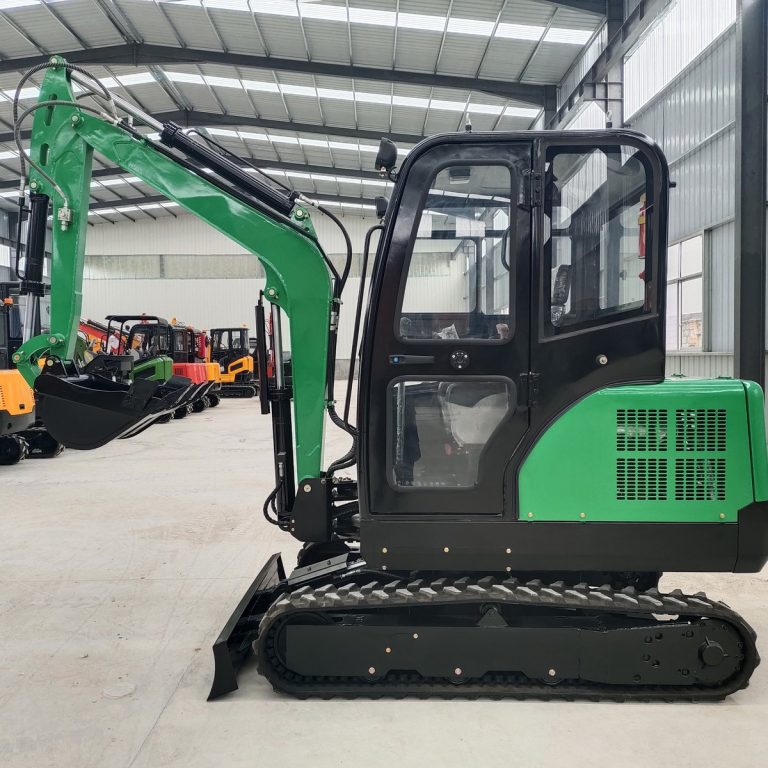
Operating weight sets the machine’s class, but the figure hides variation. It typically covers the machine with standard tracks, standard bucket, and full fluids. It usually excludes attachments, and cab configuration changes it — an enclosed cab with air conditioning can push a “1.8-ton” machine past 2 tonnes, which matters for trailer capacity and licensing thresholds.
What to ask: the operating weight of the exact configuration quoted, including the cab type you are ordering.
2. Dig depth — with the margin rule
Maximum digging depth is measured at optimum boom and arm geometry. A machine working at the limit of that geometry digs slowly and awkwardly.
The rule that avoids regret: specify 20–30% more dig depth than your deepest routine task. If you routinely trench to 1.8 m, look at machines reaching 2.3 m or more. The productivity difference at your actual working depth is significant.
Watch for a second figure some manufacturers publish: vertical digging depth, which is what the machine achieves digging straight down against a wall rather than at optimum angle. If you excavate against structures, sheet piling, or in confined shafts, that is your operative number, and it is always lower than the headline figure.
3. Tail swing — the specification buyers skip
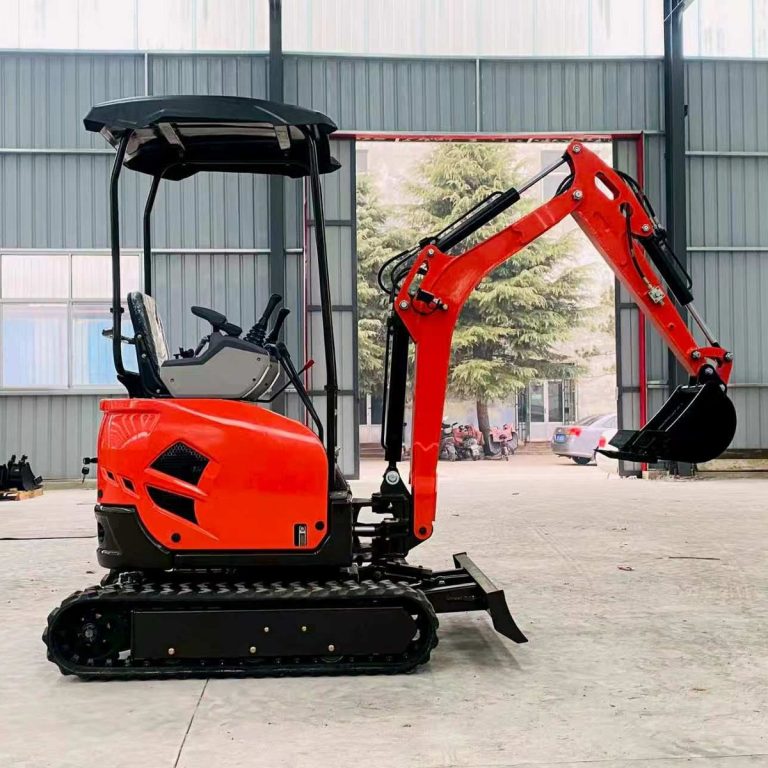
Conventional excavators swing their counterweight beyond the tracks during rotation. On open ground that costs nothing. Against a wall, fence, or parked vehicle, it decides whether the machine can rotate at all — and a machine that cannot rotate has to be repositioned for every load.
Two numbers describe this: body swing radius (how far the rotating structure extends from centre) and minimum swing radius (total clearance needed to rotate). Compare body swing radius against body width. If the swing radius is meaningfully smaller than half the body width, you are looking at a short tail swing design.
What to ask: both figures, and whether the model is described as conventional, reduced, or zero tail swing.
4. Hydraulic system grade
Rarely on a spec sheet, always in the operating experience. Three tiers:
- Gear pump with standard valves — functional for light work, less responsive under continuous load
- Piston pump with load-sensing valves — better efficiency and control, runs cooler on sustained work
- Pilot control — hydraulic joysticks replacing mechanical levers; better precision, materially less operator fatigue
Two machines with identical weight, dig depth, and bucket capacity can feel completely different depending on hydraulic specification. Buyers who compare only the published numbers miss this entirely.
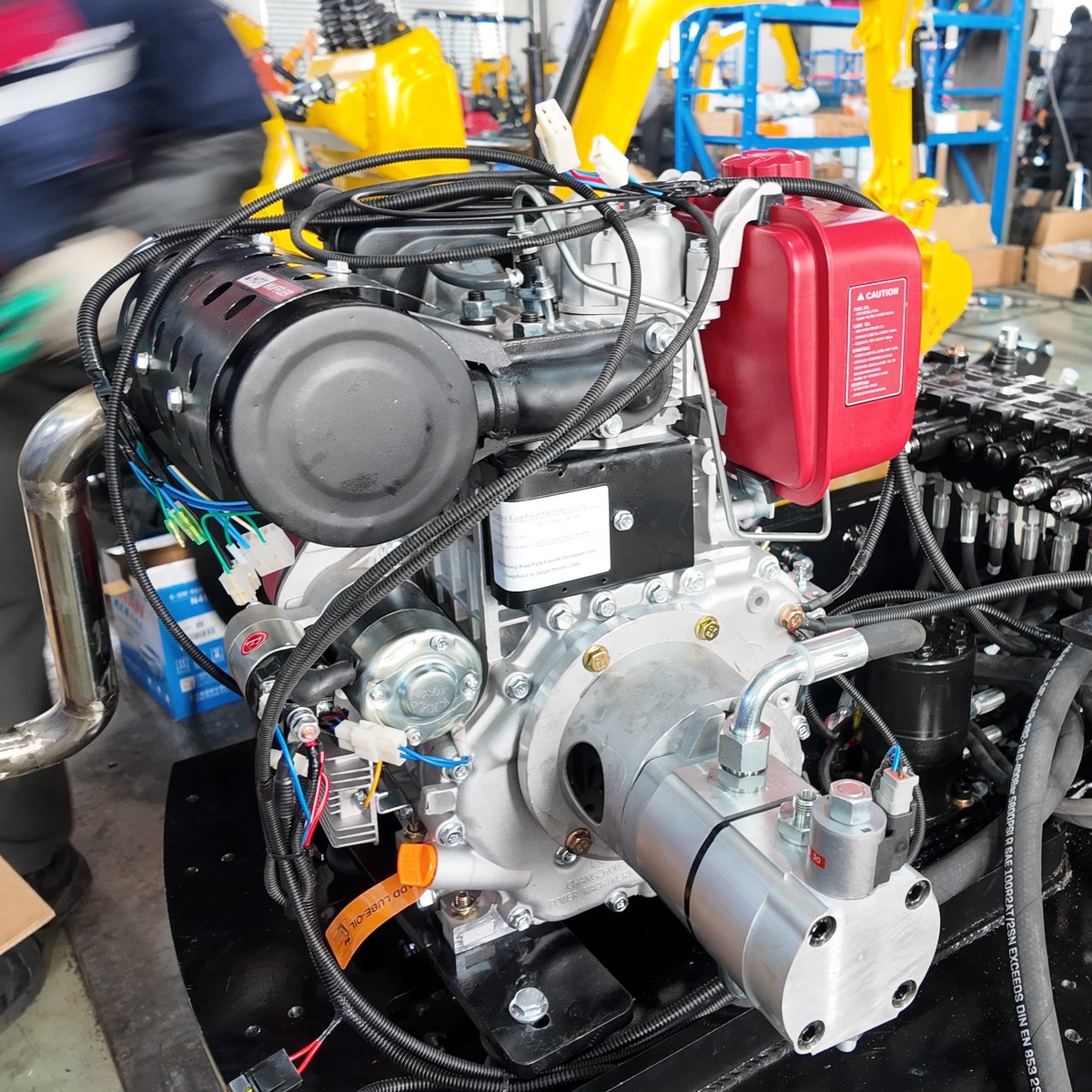
What to ask: pump type, valve type, and whether pilot control is standard or optional.
The Specifications That Get Overweighted
Engine horsepower. Useful context, poor predictor. Hydraulic system design determines how that power reaches the ground. In practice, engine power alone is a weak comparison metric: hydraulic efficiency and matching can allow a lower-powered machine to outperform a higher-powered but poorly matched one across certain digging cycles.
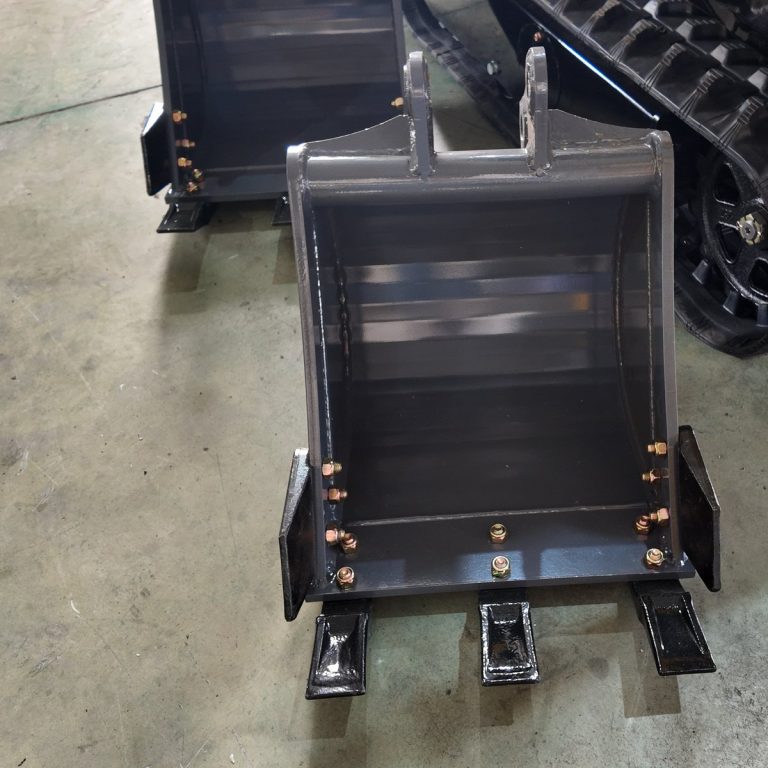
Bucket capacity in isolation. Bucket size tells you how much fits. Breakout force tells you whether it fills. In soft soil the two align; in compacted clay, stony ground, or frozen surface layers they diverge sharply, and a big bucket on a weak machine simply travels through the cut half full.
Maximum travel speed. Relevant only if you move between work areas frequently on the same site. Most mini excavator time is spent digging, not travelling.
Brand name of components. A Kubota engine in a machine with poor hydraulic matching and sloppy assembly is not a good machine. Component brand is one input among several, not a verdict.
Reading Between the Lines of a Spec Sheet
Model numbers are marketing, not measurements. Across the industry — Chinese, Japanese, European manufacturers alike — a model number suggesting a weight class is a naming convention. Machines sold as “1-ton class” range from roughly 0.8 to 1.2 tonnes in actual operating weight. Always confirm the real figure.
Missing specifications are information. If a spec sheet omits breakout force, tipping load, or ground pressure, that is worth noting. It may be an oversight. It may also be that the figure is not competitive. Ask for it; a manufacturer confident in the machine will supply it.
Ranges without conditions are incomplete. “Bucket capacity 0.53–0.64 m³” is normal at medium size, because the correct bucket depends on material density. “Operating weight 2.1–2.5 tonnes” without explaining what changes is less useful — ask what configuration produces each end of the range.
Ratios tell you more than absolutes on some figures. A few worth checking on any excavator:
- Vertical digging depth against maximum digging depth. The maximum figure is measured at optimum boom geometry; the vertical figure is what the machine achieves digging straight down. A high ratio indicates boom and arm geometry that holds its capability when working against a wall.
- Body swing radius against body width. This tells you how far the counterweight extends during rotation relative to the machine itself, which is what determines whether it can work alongside structures.
- Bucket capacity against breakout force. A large bucket on a machine with modest breakout force will travel through hard material half full.
- Transport width against operating weight. Two machines at the same weight can differ substantially in width, and width is usually the harder constraint to work around.
What to Ask a Supplier — and What the Answers Tell You
The questions matter less than how they are answered. A supplier who answers precisely, in writing, without deflection is demonstrating something the spec sheet cannot.
“What is the exact engine model and engine family number?” Not the brand — the model designation and family. A supplier who cannot produce this quickly either does not know or does not want to say. This is also the information you need to verify emission compliance.
“What emission certification does this configuration carry for my destination?” Engine brand alone does not establish compliance. The specific engine family, model year, emissions label, and certificate coverage must align with your destination market’s current requirements. Our guide to EPA-compliant excavators covers the documentation to request.
“What hydraulic pump and valve configuration is fitted?” Tests whether the supplier understands their own product. Answers like “high quality hydraulic system” mean the person you are talking to is a salesperson without technical support behind them.
“What is the retracted width if the telescopic undercarriage is specified?” Only relevant if access matters, but it separates suppliers who know their machines from those reading a brochure.
“Can you provide buyer references in my region?” Not every manufacturer can, and inability is not automatically disqualifying for a newer export relationship. But willingness to try tells you something.
“What documentation ships with the machine?” Expect: operation manual, parts catalogue, engine emission label photograph, certificate references, packing list, and inspection records. Vagueness here predicts vagueness later.
Verifying Before You Pay
Emission documentation. For regulated markets this is not optional — a non-compliant engine can be held at the border. Request the certificate reference and verify it against the relevant regulator’s database before payment, not after shipping.
Pre-shipment inspection. Third-party pre-shipment inspection is commonly used in international machinery procurement and is inexpensive relative to machine value. It confirms the machine built matches the machine ordered — configuration, components, and condition.
Photographic verification of the actual machine. Not stock photos. Ask for photographs of your machine before it ships, including the engine emission label, serial plate, and hydraulic configuration.
Packing list and loading plan. Confirms what physically arrives, including attachments, spares, and documentation. It also lets your freight forwarder plan accurately.
How to Compare Two Machines Fairly
Line up the specifications that matter, in this order:
- Access dimensions — width, height, and swing radius against your narrowest routine constraint
- Dig depth — with the 20–30% margin against your deepest routine task
- Hydraulic specification — pump type, valve type, pilot control availability
- Engine and compliance — exact model, family, and certification for your destination
- Bucket and breakout force together — never bucket size alone
- Documented support — parts availability in your region, warranty terms in writing
Then compare price. Buyers who compare price first end up justifying a machine that does not fit the work.
Our mini excavator size chart covers how each class compares across these dimensions, and our price guide explains what drives cost differences between configurations at the same tonnage.
What a Real Mini Excavator Review Should Evaluate
Most published reviews assess the machine that arrives at a press event. What matters to a buyer is a different set of observations — things visible during a demonstration, a factory visit, or an inspection of a machine already working.
If you are reading someone else’s review, these are the categories worth looking for. If you are inspecting a machine yourself, these are what to watch.
| Category | What good looks like | Red flag |
|---|---|---|
| Hydraulics | Smooth simultaneous movements — boom, arm and swing together without one starving another | Boom slows noticeably when tracking, or swing stalls under load |
| Engine | Documented model, engine family number, and emission label visible on the machine | Engine brand named with no model or family detail |
| Digging | Machine stays planted at rated depth and full reach | Excessive rocking or front-end lift during a normal cycle |
| Controls | Progressive joystick response, movement proportional to input | Abrupt starts, delayed response, or dead zone at the centre |
| Build quality | Clean consistent welds, hoses routed and protected, guards fitted | Exposed hose routing, rough welds, missing guarding |
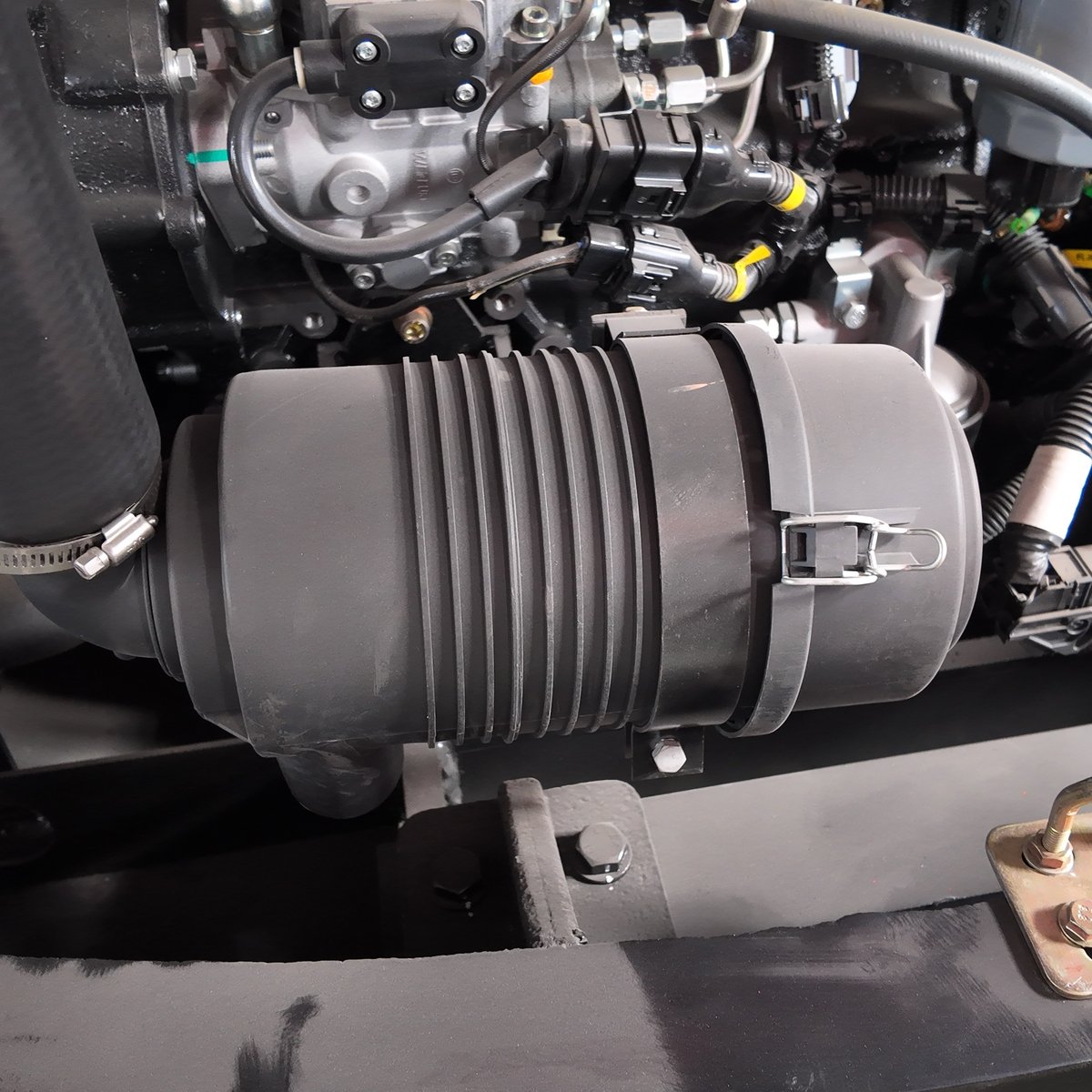
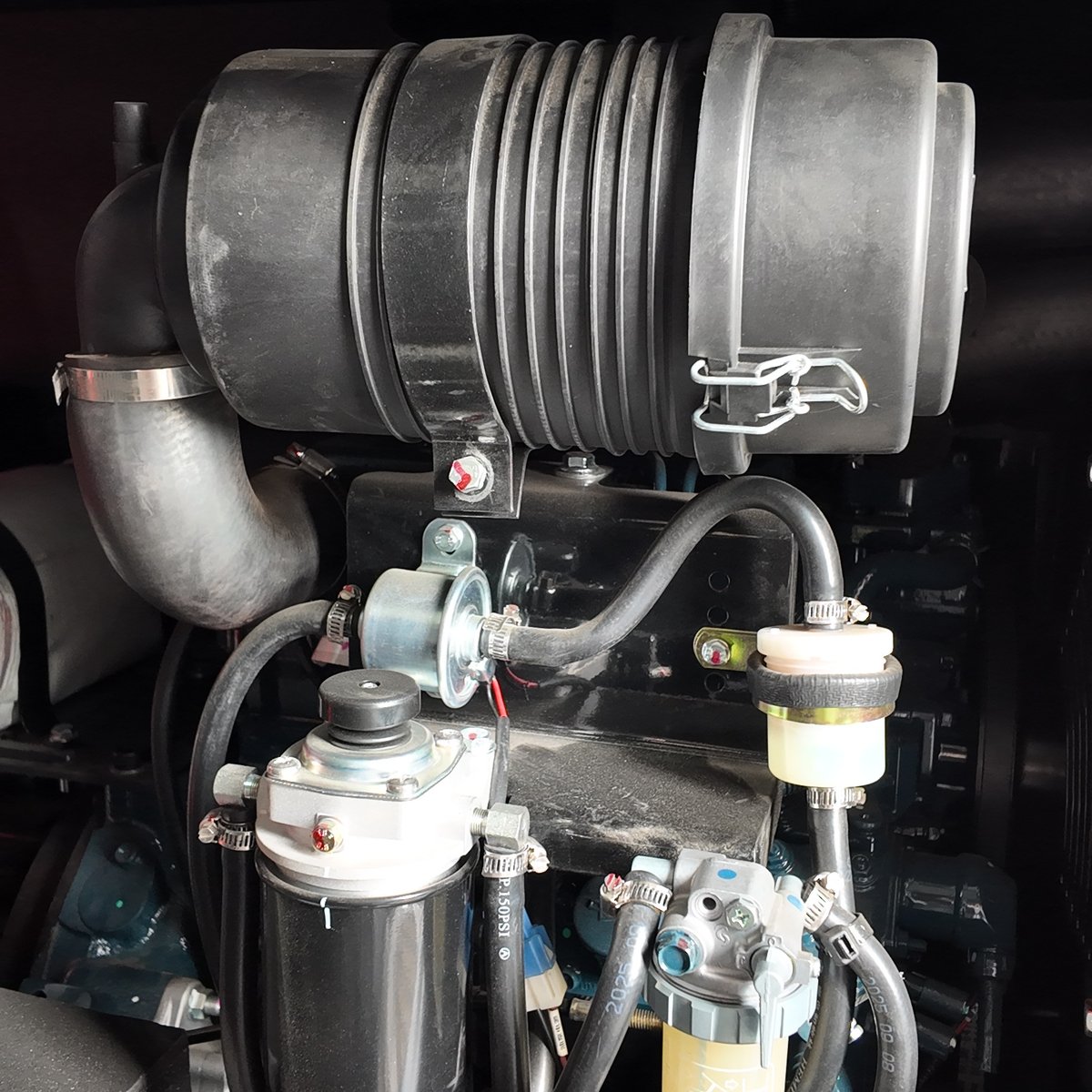
| Serviceability | Filters and daily check points reachable without tools | Panels requiring removal for routine checks |
| Parts and support | Supplier provides a parts catalogue with part numbers | “Parts are available” with no documentation |
A 7-point framework for evaluating any mini excavator
Working through these in order gives you a structured assessment rather than a general impression:
- Hydraulic response — run boom, arm, bucket and swing together. Watch whether any function starves when others are active.
- Stability — dig at full reach and rated depth. The machine should stay settled; front-end lift or rocking indicates the geometry or counterweight is marginal for the work.
- Digging geometry — check maximum depth and, separately, vertical digging depth against a wall or trench face.
- Engine and compliance — confirm the model, engine family, emission label, and certificate coverage for your destination market.
- Serviceability — open the panels. Check whether daily service points are reachable, whether filters are standard sizes, and whether the layout suggests the machine was designed to be maintained.
- Build quality — look at welds, hose routing, guarding, and paint preparation. These are visible indicators of assembly discipline, which correlates with the things you cannot see.
- Parts and support — ask for the parts catalogue. A manufacturer that supplies one with part numbers is a manufacturer that expects you to order parts from them for years.
Comparing two machines and not sure which differences matter? Send us both spec sheets. We will point out the specifications that actually separate them — including where the difference is marketing rather than capability. hongli@hongli-mach.com
Where Reviews Are Genuinely Useful
Independent evaluation has real value in areas specifications cannot capture:
Operator feedback on control feel. Hydraulic smoothness, joystick calibration, and visibility from the cab are experiential. Operators who have run a machine for hundreds of hours know things a spec sheet cannot express.
Long-term reliability patterns. Which components fail, at what hours, and how easily they are replaced. This information accumulates in owner forums and rental fleet experience rather than in manufacturer literature.
Parts availability in practice. Not the manufacturer’s global dealer count — the actual lead time on a hydraulic hose in your city. Local owners know this.
Where to find it: equipment owner forums, rental company staff (who see many brands under hard use), and independent operators in your region. Ask specific questions rather than “is brand X any good” — that phrasing invites brand loyalty rather than information.
Frequently Asked Questions
What specifications matter most when comparing mini excavators?
Four: operating weight of the exact configuration, dig depth with a 20–30% margin over your routine requirement, tail swing type and swing radius, and hydraulic system grade. Engine horsepower and bucket capacity in isolation are weaker predictors of real performance than buyers usually assume.
How do I know if a mini excavator is EPA compliant?
Request the exact engine model, engine family number, model year, and Certificate of Conformity reference, then verify against the regulator’s records before payment. Engine brand alone does not establish compliance — a Kubota or Yanmar engine can be supplied in configurations that are not certified for a given market.
What are the best mini excavator brands?
There is no single best brand for every buyer. For dealer network density and resale value, established Japanese and American brands generally lead. For lower acquisition cost and configurable OEM specification, Chinese manufacturers can be competitive. The more useful comparison is based on your application, compliance requirements, hydraulic specification, parts support in your region, and total landed cost rather than brand ranking. Our comparison of Chinese and Japanese mini excavators sets out where each genuinely leads.
Are Chinese mini excavators reliable?
Reliability varies by manufacturer and by specification, which is why evaluating the machine rather than the country of origin is the useful approach. A well-specified machine with a documented engine, appropriate hydraulics, and verifiable quality control performs reliably. A machine with an unlabelled engine and no documentation is a risk at any price. Our comparison of Chinese and Japanese machines covers this honestly, including where Japanese brands genuinely lead.
Should I buy based on online reviews?
Use reviews for what specifications cannot tell you — control feel, long-term reliability patterns, and real parts availability in your area. Do not use them as a substitute for verifying specifications and documentation on the specific machine you are buying, since review content frequently covers a different configuration than the one you will receive.
What is the most common mistake buyers make?
Comparing price before confirming fit. A machine that cannot reach the work, cannot rotate in the space available, or cannot dig to the required depth is not a bargain regardless of price. Confirm access, depth, and hydraulic specification first; compare price among the machines that qualify.
Conclusion
The most useful review of a mini excavator is the one you conduct yourself, against your own site conditions, depth requirements, and access constraints. Specifications are a tool for that assessment, not a substitute for it.
Buyers who work through access, depth, hydraulics, and compliance in that order — asking precise questions and verifying answers in writing — end up with machines that do the work. Buyers who start with a price comparison and a brand preference sometimes end up with an expensive lesson in what they should have asked.
Working through a specification? Send us your access constraints, deepest routine dig requirement, destination country, and intended application. We will tell you which size class fits — including if that means a machine we do not make. hongli@hongli-mach.com · WhatsApp +86 131 0548 1184
About the Author Avicii Meng is Head of Technical Engineering at Tai’an Hongli Machinery Equipment Co., Ltd., where he works on export-oriented excavator configurations, engine compliance requirements, and OEM manufacturing projects for international markets. Hongli manufactures mini and compact excavators, skid steer loaders, forklifts, and backhoe loaders for export to global markets. Contact: hongli@hongli-mach.com | hongli-mach.com