Check access width, operating width, rear swing radius, front clearance and working reach separately. A zero-tail-swing label answers only part of the space question.
A zero-tail-swing mini excavator keeps its rear counterweight within the track footprint during rotation in the configuration specified by its manufacturer. A conventional-tail-swing machine extends behind that footprint. Neither description establishes whether the complete machine can pass a gate, turn a corner, dig beside a wall or discharge its bucket into a waiting dumper. Those decisions require dimensions for the actual configuration and the full working cycle.
Send Tai’an Hongli Machinery Equipment Co., Ltd. your narrowest access measurements, a site sketch, destination country, expected quantity and the work you need to complete. We can review the constraints before recommending a configuration. Email hongli@hongli-mach.com or WhatsApp +86 131 0548 1184.
The overlooked difference: getting in versus getting the work done
Picture a machine that passes through a side gate, reaches the garden and starts digging. Its rear clears the fence. But the bucket cannot reach the dumper without crossing the patio, and the operator cannot reposition because the excavated material occupies the remaining space.
The machine passed the access test. The work arrangement failed.
When comparing zero tail swing vs conventional mini excavators, check the complete access route and the movements needed to finish the job. A single overall-width measurement cannot describe both.
Separate the purchase decision into three checks:
- Travel: the machine must negotiate the entire route, including changes of direction, overhead obstructions and projecting fittings.
- Set-up: there must be space for the operating configuration required by the manual, the operator’s access and the attachment being used.
- Work: digging, slewing, unloading and repositioning must fit the layout without depending on an obstruction disappearing later.
Consider a purely illustrative gate opening of 1,000 mm and a quoted machine width of 980 mm. The arithmetic leaves 20 mm in total, or 10 mm per side if perfectly centered. That is a dimensional comparison, not an acceptable clearance recommendation. A projecting latch, uneven approach or a wider blade can invalidate it. Obtain the actual dimensions and the clearance requirements for the proposed movement.
Now consider a narrower entrance leading into a wider work area. An approved variable-width undercarriage may help with that particular problem. It does not help if the work area itself remains too narrow for the configuration needed to operate. Manufacturer guidance also treats access and working width as separate questions; see Bobcat’s discussion of compact excavators in small spaces.
What zero, reduced and conventional tail swing actually tell you
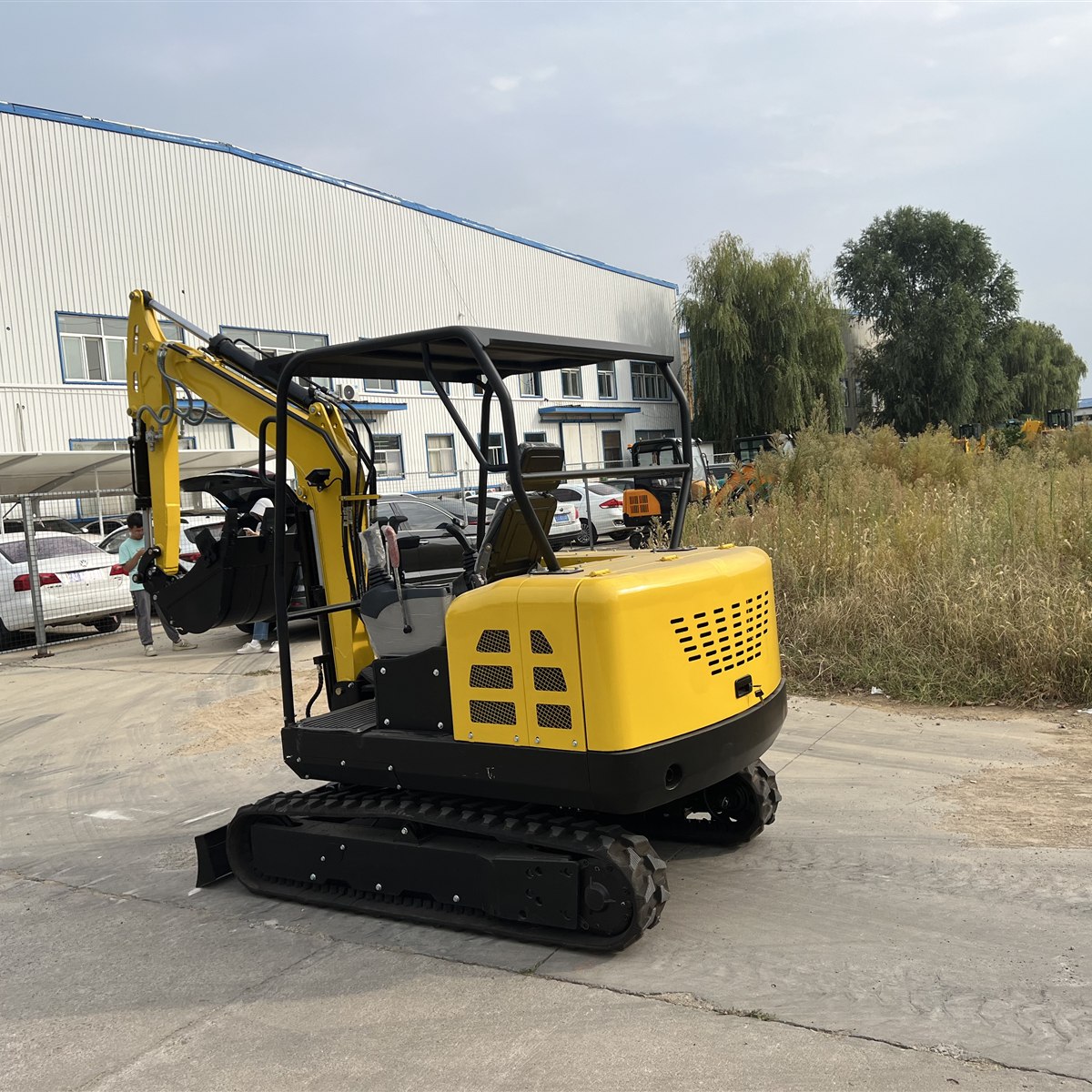
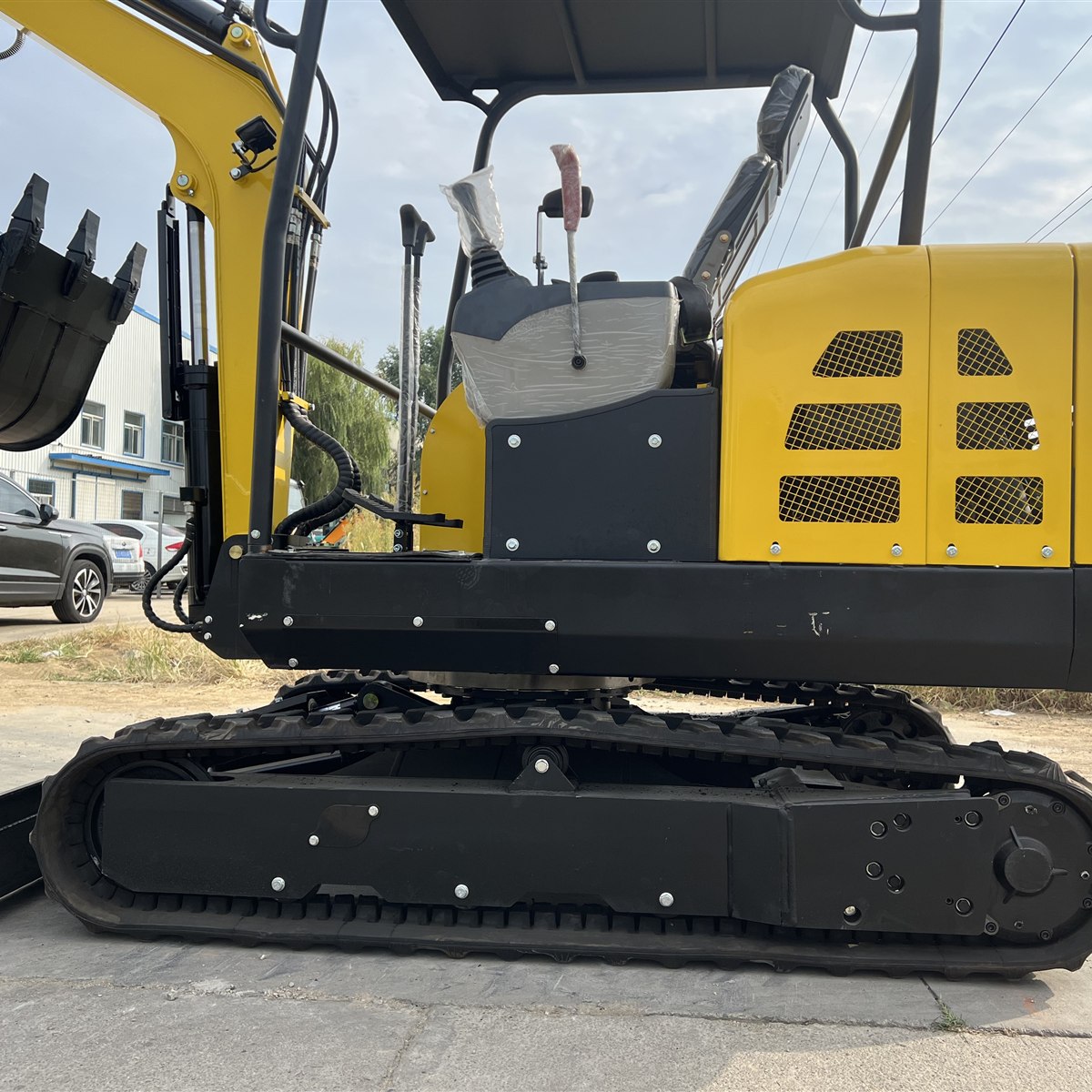
Zero tail swing describes the rear of the rotating upper structure relative to the tracks. Confirm the undercarriage position and fitted counterweight covered by that description. Do not assume a claim for one configuration applies with tracks retracted or with different equipment fitted.
Reduced or minimal tail swing means there is some rear projection. Ask for its dimension and the drawing that defines it. The word “minimal” cannot tell you whether it clears your wall.
Conventional tail swing requires room for the rear counterweight beyond the tracks during rotation. That may be entirely acceptable on an open site. A machine with this layout should not be rejected merely because another has a more compact rear.
The front is a separate issue. Cab corners, boom fittings, the arm and the attachment have their own paths. Do not treat a zero-tail-swing claim as confirmation that every part of the upper structure stays within the tracks. Ask the supplier to distinguish rear clearance from the complete upper-structure envelope. Even a compact upper structure does not contain the extended working equipment inside the track footprint. Bobcat’s explanation of tail-swing types defines the classification around the rear counterweight.
Ask for a plan-view drawing rather than accepting a photograph labeled “zero swing.” A photograph taken with the upper structure aligned with the tracks cannot show the complete swept path.
When a compact tail helps—and when not to pay for it
A compact rear is worth evaluating when repeated operations place the counterweight near fixed objects. Examples include digging along an existing building, working between established landscape features, or repositioning in a restricted courtyard. The benefit is relevant when the rear path is actually one of the constraints.
It is less decisive when your limiting factor is something else: a gate narrower than the machine, insufficient digging reach, an unsuitable attachment or no place to receive spoil. Changing the rear layout does not resolve those problems.
Do not buy a Hongli machine simply because it is the narrowest option we can quote. If it enters the site but cannot complete the required work in its permitted operating configuration, it is the wrong recommendation. A different size, another equipment type or hiring a suitable machine for an occasional restricted-access job may make more sense.
Likewise, do not pay a premium for zero tail swing solely as an insurance policy against every possible future job. Compare the actual quotations and the proportion of work where rear clearance changes your options. There is no universal price premium or productivity saving to insert into that calculation.
If you are still choosing the basic weight class, start with the mini excavator size guide. Then compare the available layouts within the classes capable of doing your work.
The dimensions to request before accepting a quote
Use this single specification checklist for each shortlisted configuration. It deliberately leaves model values to the supplier: an invented “typical” width is not useful when a few centimeters determine access.
| Specification | What to request | What it answers |
|---|---|---|
| Overall travel width | Widest fitted component in the approved travel configuration | Can the complete machine pass the route? |
| Undercarriage width | Retracted and extended values, if adjustable | Is there space for the required operating configuration? |
| Blade width | Width in each approved position | Does the blade create a wider access requirement? |
| Overall height | Actual cab or canopy configuration | Do openings and overhead structures restrict access? |
| Rear swing radius | Dimension from the swing center, with configuration stated | What path does the rear describe during rotation? |
| Rear overhang | Projection beyond the track edge, with definition stated | How much additional rear space is required? |
| Front swing envelope | Upper-structure and equipment clearances in relevant positions | What could project toward the opposite obstruction? |
| Boom offset | Left/right limits and relevant working dimensions | Can the planned digging line be reached from the available position? |
| Working reach and depth | Diagram for the quoted arm and attachment | Can the machine reach the cut and unloading point? |
| Operating weight and lift chart | Exact equipment, track and counterweight configuration | Is the proposed machine suitable for the load and site assessment? |
Treat the drawing and specification sheet as a matched pair. If the quotation changes from canopy to cab, adds a counterweight or substitutes an attachment, recheck the affected dimensions. Record the configuration beside the numbers so two quotations remain comparable.
Read the geometry, not just the headline specification
Rear radius is not the same as rear overhang
A radius measured from the swing center and an overhang measured beyond the tracks use different reference points. Comparing them as if they were the same number can make one machine appear dramatically more compact than it is.
Ask the supplier to mark both dimensions on the same plan view, with the swing center and track edges identified. Confirm whether the drawing shows retracted or extended tracks. Use the complete swept envelope for the fitted configuration; a single radius does not describe every projecting part or the clearance required beside an obstacle.
Reach has to connect two useful positions
Maximum reach tells you little about whether a bucket can move from the planned cut to the receiving vehicle in your particular layout. Mark both positions. Then consider the equipment path between them, the unloading height and where the carrier must stand.
A longer arm may bring an unloading point within reach, but that alone does not establish suitability. Compare the applicable working-range diagram and load chart. Do not exchange adequate capacity at the working radius for reach that only looks attractive on the specification sheet.
Available room changes during the job
A clear garden before excavation is not the same space after spoil, materials and delivery equipment arrive. Reserve locations for those items on the sketch. Otherwise, the initial machine selection can be correct while the planned work sequence remains impractical.
This is particularly relevant to repeated residential work. The residential landscaping guide addresses the broader choice of machine; this clearance check tests whether that choice fits a particular layout.
Which options are worth checking?
Variable-width tracks: useful when access and operating-space requirements differ. Request both widths and the manual’s instructions for changing configuration and operating in each position. Do not assume the narrow position has the same permitted capability as the extended position.
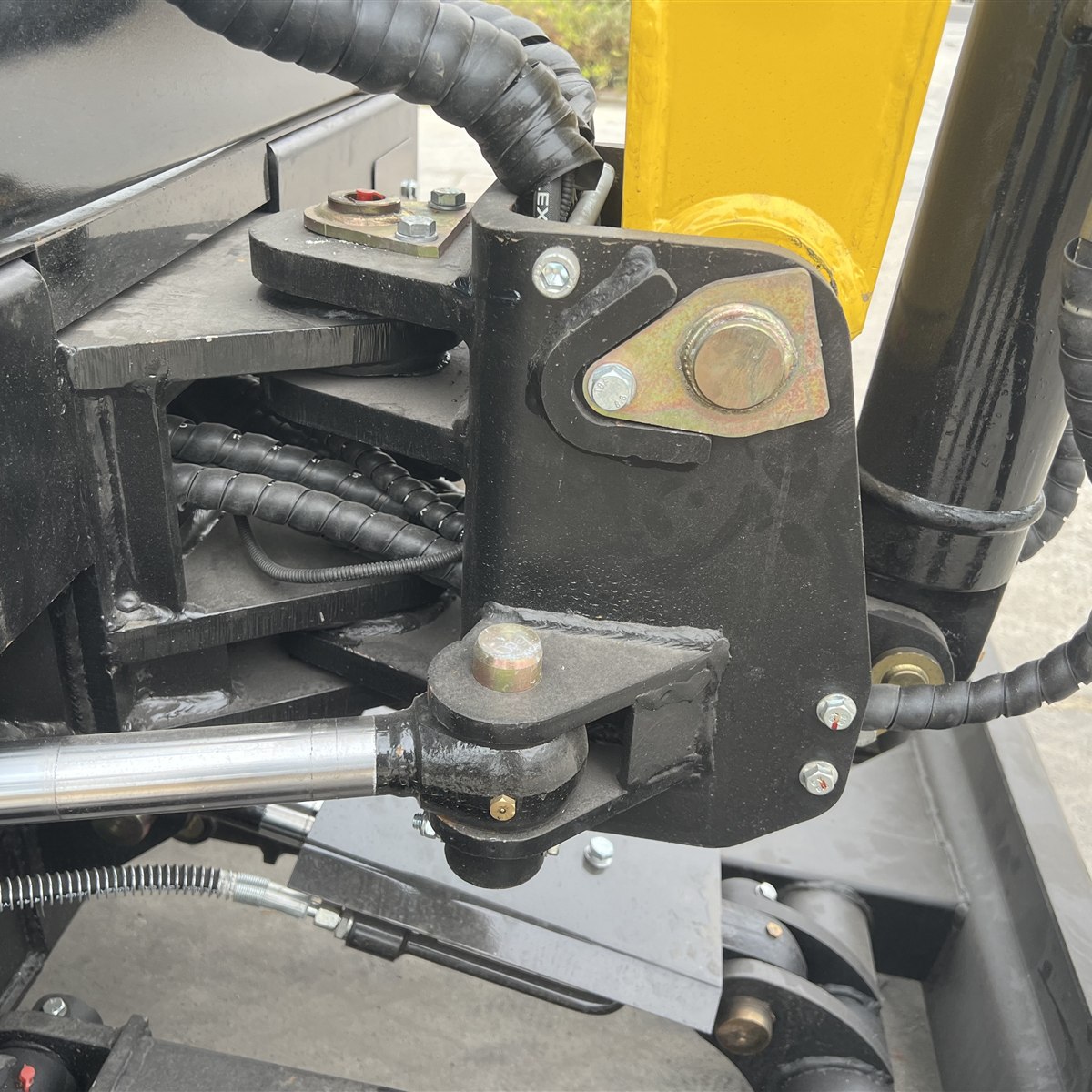
Boom swing or offset: moves the digging equipment relative to the carrier and may help align a trench beside an obstacle. It is different from rotating the whole upper structure. Ask for the relevant geometry with the intended bucket, rather than treating a swing-angle number as a guaranteed wall clearance.
Cab versus canopy: compare the actual width, height, visibility, door movement and access arrangements. A cab door that cannot be used in the planned position is a practical problem even if the tracks fit. Do not remove or modify protective structures to make a route work; use an approved configuration.
Couplers and attachments: include them in the layout. A wider bucket or additional coupling assembly changes the equipment you are trying to maneuver. Confirm the assembled dimensions instead of relying on a drawing for a different bucket. Our mini excavator attachments guide explains the separate mechanical and hydraulic checks.
Cameras and mirrors: evaluate them for visibility, but do not count them as a reduction in the physical clearance required. The machine still occupies the same space.
Compare neighboring machine sizes without guessing
Start with the smallest candidate that satisfies the documented task requirements, then compare the next size up against the same site drawing. The larger machine may fail the entrance check. Alternatively, it may fit and complete the work with a configuration better suited to the attachment or required reach.
Do not infer lifting ability from tail-swing type. Compare manufacturer load charts at the same radius, height, direction and stated machine configuration. A generic claim that conventional always lifts more, or that zero tail swing always has better stability, is not a valid comparison between two quotations.
For the Hongli range, request the dimensions for the exact model and equipment package under consideration. Tai’an Hongli Machinery Equipment Co., Ltd. should provide a configuration-specific answer rather than asking you to infer dimensions or tail-swing type from an HL model name.
Before ordering, ask for evidence targeted to the unresolved question: a labeled dimension drawing, a measurement of the widest fitted part, or a controlled demonstration of the proposed configuration. A video showing an unrelated machine passing an unrelated doorway does not verify your route.
Frequently asked questions
Is a zero-tail-swing mini excavator always narrower?
No. Tail swing describes rear projection during rotation, not overall travel width. Compare the actual widths of the candidate configurations. A conventional-tail-swing machine may still be the better access choice if its dimensions suit the route and the site has room for its rear movement.
Can a zero-tail-swing excavator work directly against a wall?
The label alone cannot establish that. Check the rear envelope, front corners, boom, attachment, operator access and the clearance required for the planned movements. The wall’s position relative to the digging line matters as well.
Can I dig with retractable tracks in the narrow position?
Follow the specific machine’s manual. A retracted configuration is not automatically approved for the same work or loads as the extended configuration. If the site cannot accommodate the operating position required for your task, choose another arrangement rather than relying on access width alone.
Is boom swing the same as zero tail swing?
No. Boom swing changes the boom’s alignment relative to the upper structure. Tail swing describes the rear path when the upper structure rotates. They address different clearance questions and must be evaluated separately.
Does zero tail swing reduce lifting capacity?
There is no reliable answer from the label alone. Use the load charts for the two exact configurations at matching working positions. Attachment weight, counterweight, undercarriage position and the chart’s stated conditions affect the comparison.
What measurements should I send before requesting a machine?
Send the narrowest clear width and height along the complete route, corner layouts, available work-area dimensions, required digging depth and reach, and the proposed spoil or unloading location. Include attachment details and photographs with a visible scale where practical.
Send us the constraints before choosing the machine
For a useful recommendation from Tai’an Hongli Machinery Equipment Co., Ltd., include:
- Destination country and expected quantity.
- Narrowest clear entrance width, overhead clearance and route sketch.
- Available working area and nearby fixed obstructions.
- Required trench depth, working reach and unloading arrangement.
- Intended attachment, material and any planned lifting task.
- Transport constraints and preferred cab or canopy configuration.
We can then review the configuration against the information supplied, including where a Hongli option is not suitable. A remote quotation is not a replacement for the operator’s manual or a competent assessment of actual site conditions.
Email hongli@hongli-mach.com, message WhatsApp +86 131 0548 1184, or send your requirements through our contact page.
About the Author
Avicii Meng, Head of Technical Engineering | Hongli Machinery
Tai’an Hongli Machinery Equipment Co., Ltd. supplies construction machinery for international buyers. Contact: hongli@hongli-mach.com.